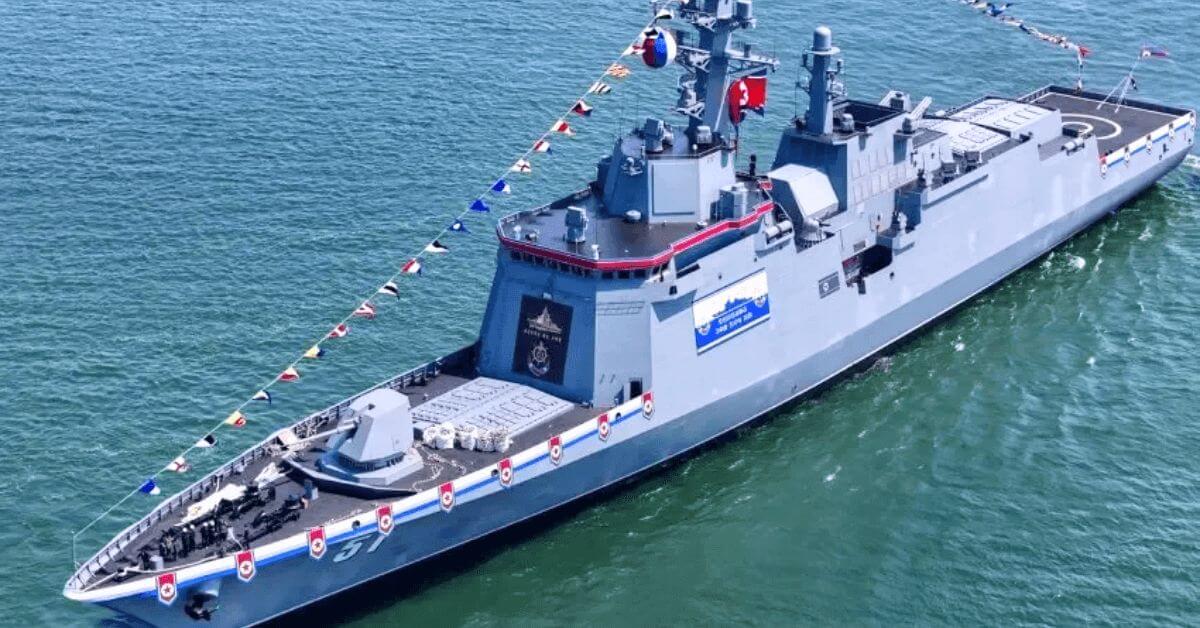
The timing of North Korea's commissioning of the 5,000-ton, nuclear-capable destroyer *Kang Kon* is not a coincidence; it is a calculated counter-signal. The vessel entered service the day before the United States, South Korea, and Japan launched their five-day Freedom Edge exercise. For observers of maritime security, this is a textbook escalation cycle: a show of allied force met with a domestic demonstration of offensive capability. The destroyer itself is not a surprise, but its debut on this specific calendar date tells us that Pyongyang's naval modernization is oriented less toward blue-water ambition and more toward deterrence signaling in its immediate neighborhood.
This move should be read alongside other developments in the region's naval posture. India Projects Expanded Naval Fleet to Navigate Evolving Maritime Landscape shows a similar pattern of fleet expansion, though New Delhi frames it as a long-term hedge for a contested Indian Ocean. Meanwhile, Phased Negotiations Aim to Ease Restrictions on Strait of Hormuz reminds us that diplomatic off-ramps still exist even in high-tension maritime chokepoints. What distinguishes the North Korean case is the absence of any parallel negotiation track. The *Kang Kon* is a weapon system designed for a specific strategic purpose, and its commissioning is a direct reply to trilateral security cooperation that has grown more institutionalized over the past year. That is not speculation; it is the only logical reading of the operational timeline.
For our readers, the practical takeaway is about the changing nature of deterrence in Northeast Asia. A nuclear-capable surface combatant changes the risk calculus for any potential blockade or maritime interception operation. It does not mean the *Kang Kon* can challenge a combined allied fleet in open battle, but it does mean that any future crisis response must account for a more capable, more survivable North Korean surface force. This is no longer a coastal navy of patrol boats and missile craft. The question is not whether this destroyer will be tested, but under what conditions. The related report on a Kiwi Frigate Monitors Sanctions, Enhancing Global Maritime Security Intelligence underscores that sanctions enforcement and intelligence gathering are now standard practice in these waters. A ship like the *Kang Kon* complicates those missions, because it forces commanders to weigh the risk of inadvertent escalation against the value of a single hull.
What we would tell a reader who asks us directly: watch the *Kang Kon*'s first operational deployment. The commissioning itself is symbolic; where the ship sails, and whether it shadows allied vessels during future exercises, will reveal whether this is a prestige platform or a genuine shift in North Korean naval doctrine. The open question is whether the Freedom Edge exercise will adjust its own rules of engagement in response, or hold its current posture and accept the added risk. That decision will define the next phase of maritime competition in this region.