nuclear
3 stories filed under nuclear on World Data Ocean. The newest of them: “Mapping the global nuclear arsenal: validated data on sovereign stockpiles”, “North Korea Launches Nuclear-Capable Destroyer Amidst Military Exercises”, and “Beyond Polluter Pays: Shared Responsibility for Deep-Sea Mining Impacts”. Nine countries hold nearly all the world's nuclear weapons, and the validated data on sovereign stockpiles reveals a stark concentration of power. North Korea commissioned a nuclear-capable destroyer just as the United States, South Korea, and Japan prepared to launch their five-day Freedom Edge exercise. A Global Hub for Ocean Intelligence 4 World Data Ocean is a centralized digital platform where researchers, scientists, and ocean enthusiasts converge to… The list below is every nuclear story on World Data Ocean, newest first.
Mapping the global nuclear arsenal: validated data on sovereign stockpiles
Nine countries hold nearly all the world's nuclear weapons, and the validated data on sovereign stockpiles reveals a stark concentration of power. These arsenals are measurable, empirical facts of global security, not abstract threats. Understanding the precise numbers is a form of ocean intelligence for the geopolitical realm. For a parallel in how validated data reshapes our understanding of long-term human behavior, see our related piece on the "Centuries of empirical data reveal a measurable decline in global homicide rates."
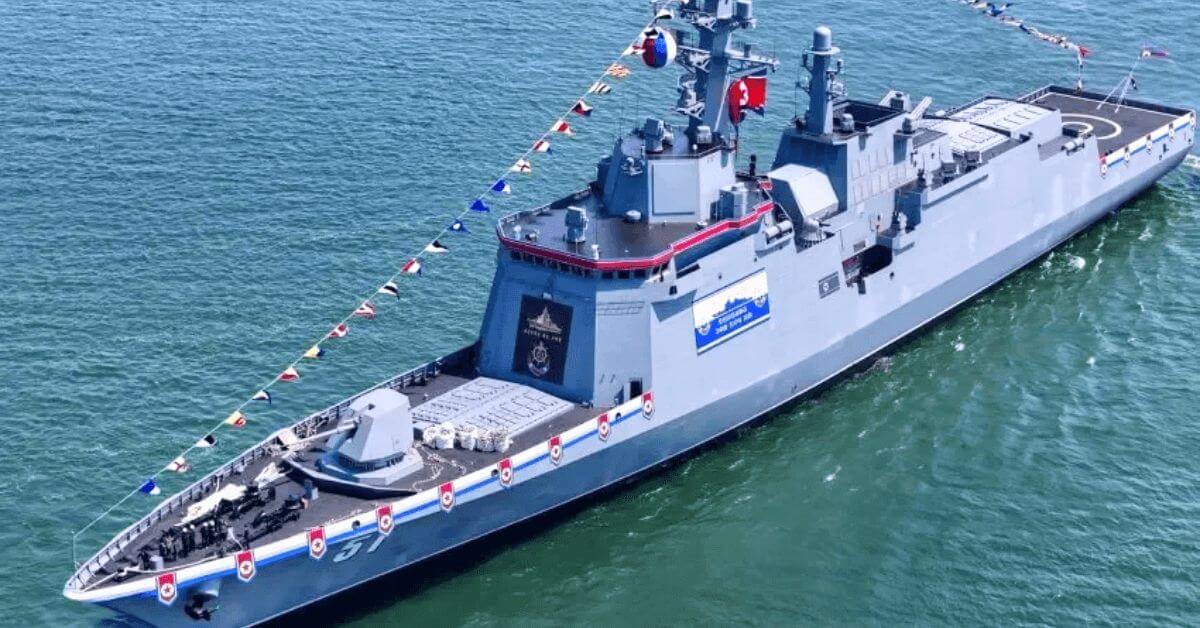
North Korea Launches Nuclear-Capable Destroyer Amidst Military Exercises
North Korea commissioned a nuclear-capable destroyer just as the United States, South Korea, and Japan prepared to launch their five-day Freedom Edge exercise. The timing is deliberate, a signal of resolve that widens an already tense maritime theater. Warships are political statements, and this one speaks clearly. For a fuller picture of regional naval competition, see our piece on India's projected fleet expansion. Understanding these moves matters; the ocean is where deterrence meets diplomacy.

Beyond Polluter Pays: Shared Responsibility for Deep-Sea Mining Impacts
The deep seabed's environmental risks demand more than a single-actor liability model. Our analysis of the Environmental Compensation Fund reveals that the Polluter Pays Principle, while foundational, falls short when causation is indivisible among multiple actors. Shared responsibility, drawn from oil, nuclear, and hazardous-substance precedents, offers structural alignment with the common heritage of mankind. We propose integrating it as a complement, not a replacement, to close regulatory gaps. For broader context on international maritime pressures, see our coverage of the Strait of Hormuz reopening.