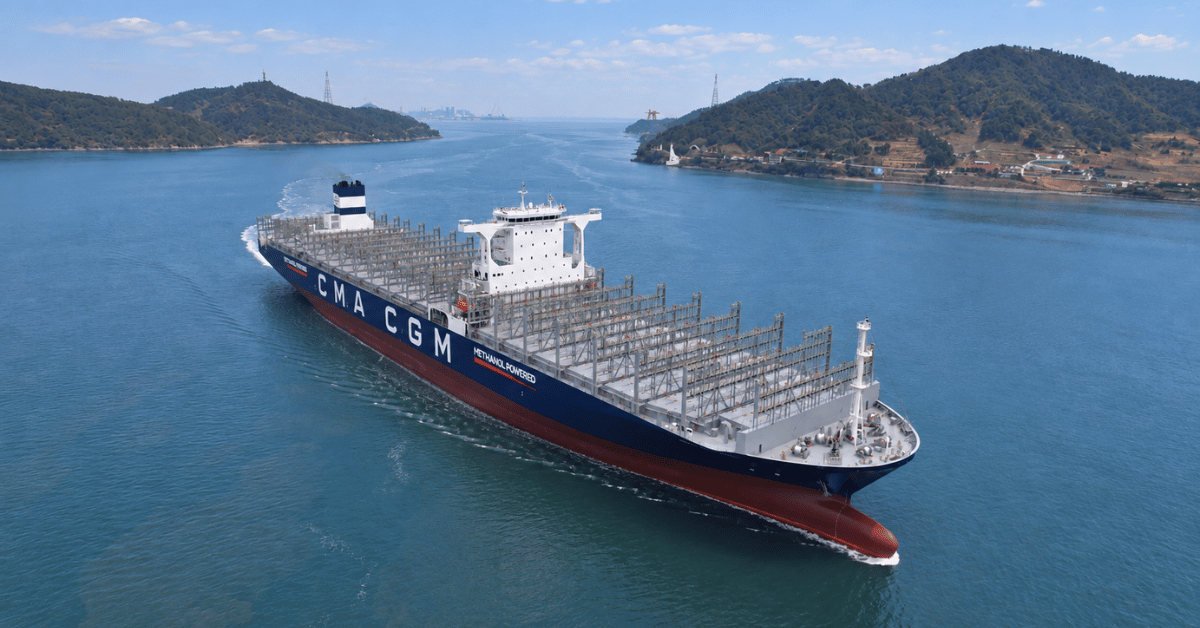
The most dangerous job in shipping has been the manual lashing of containers, workers climbing towering stacks at sea, securing steel boxes with chains and turnbuckles in conditions that can turn lethal in minutes. HD Hyundai has now delivered the world's first lashing-free container ship, a 13,000-TEU vessel for a French shipping company that eliminates that entire process. This is not an incremental safety tweak; it is a fundamental redesign of how container ships handle cargo, and it changes the risk equation for the industry. Coordinated response enables medical evacuation in Andaman Sea transit reminds us that maritime emergencies often begin with preventable onboard hazards, removing one of the most persistent physical dangers from the deck is a measurable step toward reducing the need for such rescues in the first place.
The innovation is deceptively simple in concept but validated through rigorous engineering. HD Hyundai extended the cell guides, the vertical rails that keep containers aligned in the hold, all the way above deck, then developed a standardized portable bench that fits between those guides like a 40-foot container. Because the bench matches container dimensions, existing port cranes handle it without any new terminal equipment. The company also created a Twistlock Rooting System that fastens containers outside the cell guide area directly to the vessel's structure. The result is more than just eliminating lashing: the ship can carry over 10 percent additional cargo weight on deck, and sea trials showed significantly reduced vibration compared with conventional hatch-cover designs. This is empirical evidence that safety and capacity are not trade-offs. New data-sharing accord strengthens transnational ocean intelligence for the Strait of Singapore underscores how integrated systems, whether data networks or physical cargo securing, multiply their value when designed for interoperability across the logistics chain.
What matters for the maritime community is that this technology is already moving from concept to classification. HD Hyundai presented the lashing-free system at the IMO's Sub-Committee on Carriage of Cargoes and Containers in 2024 as a representative Korean measure for preventing container loss at sea. Multiple intellectual property registrations have been secured, and the system won this year's IR52 Jang Young-shil Award, a respected Korean engineering prize. The company is already developing a next-generation version with weathertight features and plans to scale the technology to small- and medium-sized vessels. That trajectory, from prototype to award-winning delivery to planned expansion, signals that the industry should begin preparing for a world where manual lashing becomes an exception rather than the rule.
The concrete point to watch is how ports adapt. If lashing-free ships can carry more cargo on deck and handle it with existing cranes, terminal operators face pressure to accelerate their own automation schedules to match the vessel's efficiency. The portable bench design means the bottleneck shifts from the ship to the shore. That is where the next measurable impact on safety and logistics will be decided.