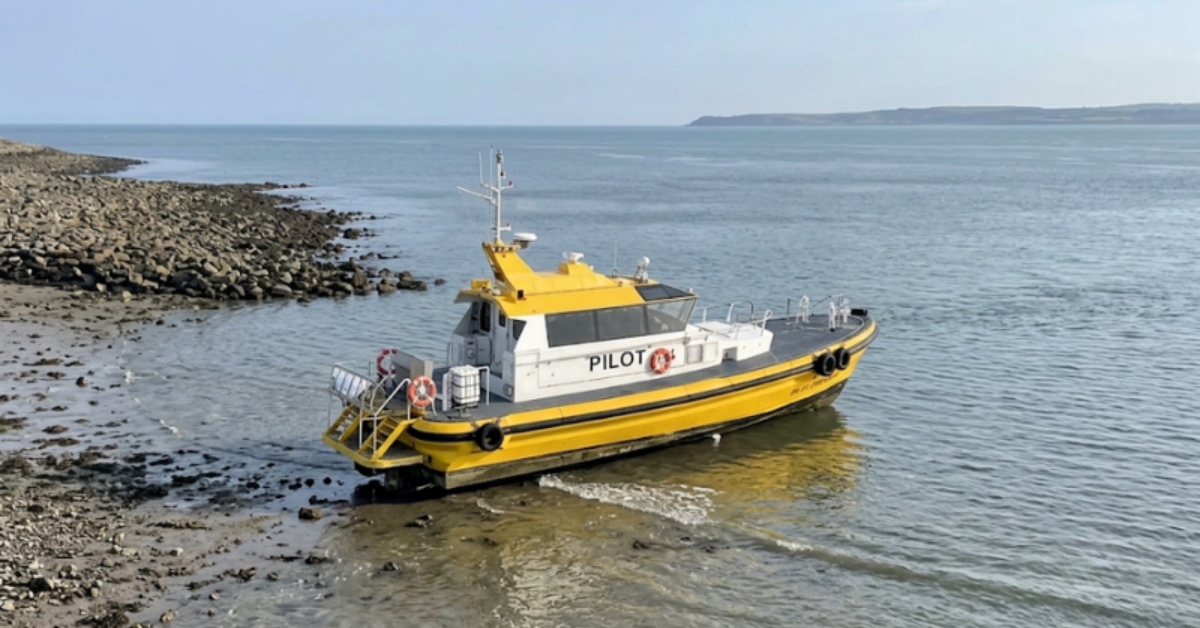
A pilot boat Master ran his vessel aground during port departure checks in poor visibility, a textbook case of situational awareness failing at the exact moment precision matters most. The report is thin on details, but the sequence is familiar: reduced visibility, a navigational error, a hard grounding. What stands out is not the mistake itself, but how preventable it was. This was not a rogue wave or a sudden mechanical failure. It was a human decision made under compromised conditions, and that is precisely why it deserves close attention from every professional who works a wheelhouse.
The incident sits alongside other recent maritime events that share a common thread: the margin between routine and emergency is thinner than we like to admit. Consider the LPG tanker struck by a drone near the Strait of Hormuz, or the cargo ship that ran aground and required a Somali Navy rescue. Each involved vessels operating in complex, high-stakes environments where external factors shifted quickly. And yet, this pilot boat case is different in one crucial way: there was no external threat, no geopolitical tension, no armed conflict. Just weather, water, and a Master who lost the plot. That makes it more unsettling, not less. If situational awareness collapses in a familiar harbor with a pilot aboard, what does that say about our readiness for the next major challenge at sea?
The practical takeaway here is not about blaming an individual. It is about systems. Visibility was poor, so why was the departure executed at all? Were there redundant checks in place? Was the passage plan validated against real-time conditions, or was it a matter of autopilot habit? These are the questions that matter, and they are the ones that rarely get asked in incident reports that focus on human error as a conclusion rather than a beginning. For our readers, the lesson is direct: your situational awareness is only as good as your willingness to challenge your own assumptions. If you cannot answer why a maneuver is safe under current conditions, you should not be making it. That applies to a pilot boat Master, but it applies just as much to a student learning the ropes or a policymaker drafting the next set of navigation rules.
What we would tell a reader who asked us about this incident is simple: treat it as a calibration check, not a cautionary tale. Ask yourself whether your own operational procedures would survive contact with a fog bank and a tight schedule. The Alaska pier investment and the Somali Navy response are about building capacity for the future, but this pilot boat grounding is about the fundamentals that should already be in place. Watch for how the investigation frames the incident. If it focuses on individual error without addressing the decision-making environment, we will know the industry has learned less than it should. The detail to track is whether any changes to departure protocols emerge from this grounding. If they do, the incident has value. If they do not, it was just another accident waiting for a better excuse.