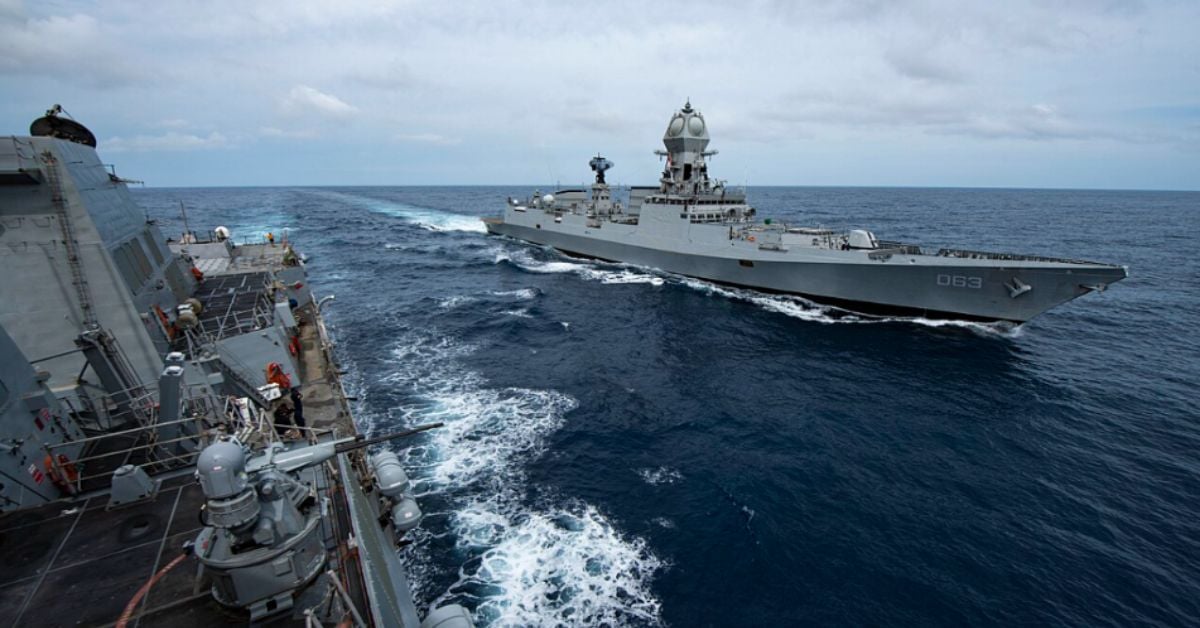
A collision between a Pakistan Navy vessel and an Indian warship during a routine patrol in the Arabian Sea is precisely the kind of incident that should concern anyone who tracks maritime security. On the surface, it reads as a tactical mishap, a moment of human error or mechanical failure on the water. But in a region where two nuclear-armed neighbours operate within sight of each other's shipping lanes, even a "routine" encounter carries an outsized risk of escalation. This is not a drill, and it is not a simulation. It is a real-world reminder that the ocean remains a crowded, contested space where the difference between a near-miss and a catastrophe is often measured in metres and seconds.
The incident also lands in a broader context of heightened naval activity and diplomatic friction. Our readers will recall that this collision follows a period of open military tension between the two nations, including a standoff near an exclusive economic zone that nearly spiralled into something worse. More recently, the successful negotiation to clear the Strait of Hormuz for an LNG delivery to Pakistan demonstrated that dialogue can work when there is a shared economic incentive. But the Naval Standoff: Tensions Rise as Pakistan Accuses India Near EEZ shows how quickly those incentives can erode under the weight of mutual suspicion. Meanwhile, exercises like the Integrated Maritime Data Collection Underway in Philippine Exercise highlight the push toward better situational awareness, yet data collection only helps if it is shared and acted upon. A collision like this one suggests that despite all the sensors and protocols, the human element remains the least predictable variable.
Our take is blunt: this incident is not just a military matter; it is a failure of risk management. For researchers, policymakers, and citizens who rely on ocean intelligence, the practical lesson is that maritime domain awareness is only as strong as the rules of engagement that govern it. We would tell a reader who asked us what this means that the immediate risk is not a full-scale conflict, but the slow erosion of trust that makes future accidents more likely. The absence of a clear, transparent investigation into how two vessels ended up in the same patch of water will do more damage than any single collision. The only meaningful takeaway is this: if two professional navies cannot manage routine proximity without incident, then the entire framework of crisis communication and deconfliction needs immediate scrutiny, before a routine patrol turns into a flashpoint that no one can walk back.
What should we watch for next? The official statements from both sides. If they agree on a joint fact-finding mission, that is a signal that cooler heads are prevailing. If they trade accusations and escalate patrol patterns, we will know that the lesson from this collision has already been lost. The ocean does not care about narratives, but it does have a way of punishing those who ignore its crowded realities. The next encounter is already out there, waiting for a crew that is one bad decision away from making this incident look like a warning shot.