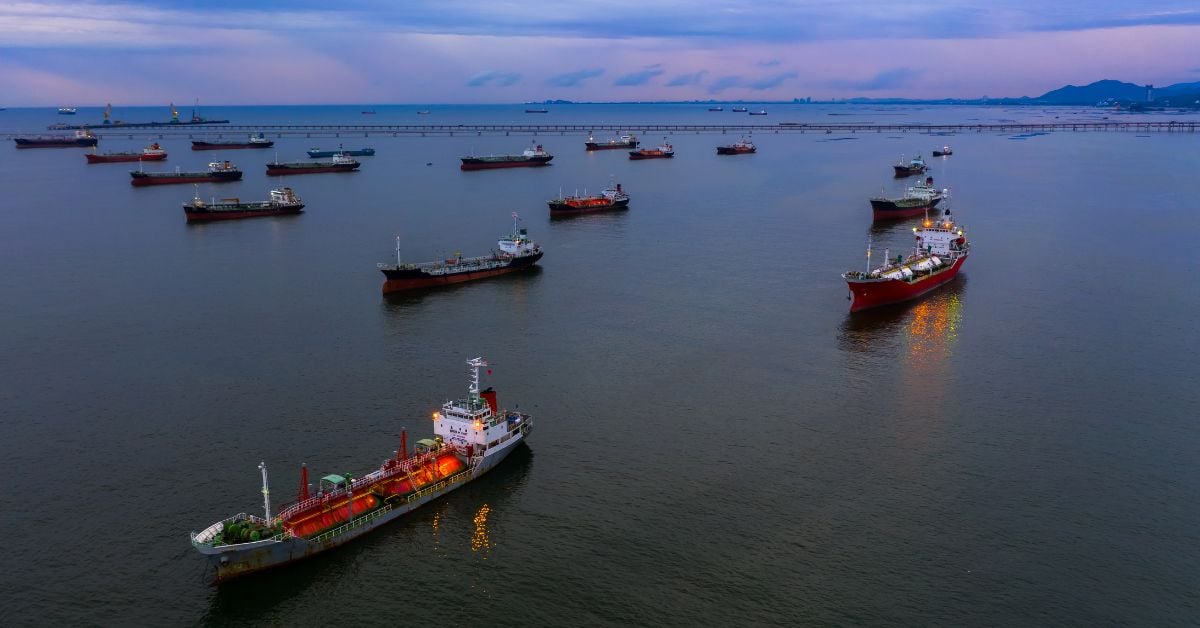
Forty tankers carrying roughly 18 million barrels of crude oil moved through the Strait of Hormuz on Tuesday under the escort of U.S. Navy ships. That is a number worth pausing on, not because it is unprecedented, but because it is now routine. The fact that a military escort is required to keep a commercial waterway open has become background noise in the broader conversation about energy security. Meanwhile, Gulf of Oman STS Transfers Max Out Amid Rising Saudi Oil Exports shows that the same regional chokepoint is bending under the weight of rerouted supply chains. Taken together, these are not separate stories. They are the same story about how fragile global energy logistics have become, and how quickly the market adapts when the rules change.
Our read on this is straightforward: the escort is a symptom, not a solution. It keeps the oil moving, which matters, but it does nothing to address the underlying volatility that made the escort necessary in the first place. For our readers, the practical takeaway is that the Strait of Hormuz is no longer just a geographic feature. It is an active operational zone, and any disruption there ripples outward into fuel prices, shipping insurance rates, and the strategic calculus of every navy with a presence in the region. The Integrated Subsea Infrastructure Shifts to Enhance Indian Ocean Connectivity story reminds us that other corridors are being built, but those are for data, not energy. The physical reality of moving oil remains stubbornly tied to a narrow passage that can be closed, mined, or contested in ways that fiber optic cables cannot.
What we would tell a reader who asked us what this means is simple: watch the escort patterns, not the headlines. A single convoy with 18 million barrels is a measurable data point, but it is the frequency, size, and predictability of these transits that will tell you whether this is a temporary spike or a new normal. The Phased Negotiations Aim to Ease Restrictions on Strait of Hormuz article suggests diplomatic off-ramps are being explored, but diplomacy is slow and tankers are fast. If talks stall, the escorts will continue, and the cost of that security will be priced into every barrel that crosses. That is not speculation; it is how risk is already being measured by the market.
The concrete point to watch is the insurance market. When underwriters adjust their war-risk premiums for transits through Hormuz, that is a more honest signal than any official statement about stability. If Tuesday's escort was a one-off, premiums will settle. If it becomes the standard, they will not. For anyone relying on predictable energy costs, that is the number to track. The escort kept the oil moving, but it also quietly raised the price of the next crossing. That is the real story.