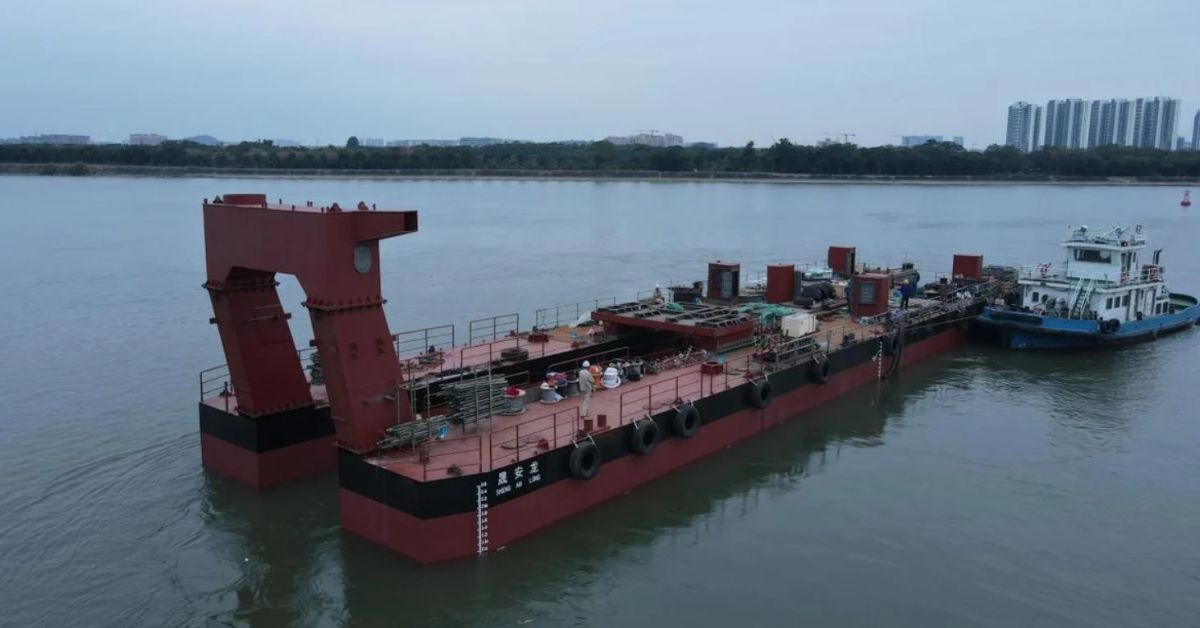
The Sheng'an Long proves that portability and power are not a trade-off in heavy marine engineering, and that matters for every country with a silted reservoir or a landlocked lake. By designing a 70-meter dredger that splits into seven road-transportable sections, CCCC Guangzhou Dredging has removed a physical barrier that has long kept high-capacity sediment removal out of reach for inland waters. For our readers, whether they manage hydropower assets, study sediment transport, or advise on water infrastructure policy, this is a practical answer to a chronic problem: how to clear mud from places a conventional ocean-going dredger can never reach.
The implications extend beyond the machine itself. This launch arrives alongside other measured innovations in maritime sustainability, such as the electric barge in Vietnam cuts inland shipping emissions by 778 tonnes yearly and the finding that a calibrated course correction of less than 1% fuel cost protects whale sharks. Together, these examples show that incremental, engineered solutions, not sweeping declarations, are what actually move the needle on emissions and ecosystem impact. The Sheng'an Long's dual-source electric system, capable of cutting 2,300 tonnes of CO₂ annually when shore power is available, fits that pattern. It does not claim to solve climate change; it simply burns less fuel while digging deeper than any modular dredger before it.
What makes this vessel different from earlier European modular designs from Damen or Royal IHC is the combination of raw cutting power and integrated green technology. Its 1,000-kilowatt cutter head and 6,738-kilowatt total installed power let it excavate to 27 meters, while its two-part hull keeps each section light enough for overland transport. That is not a marginal improvement, it fills a specific gap in the dredging market where inland reservoirs have been forced to rely on smaller, slower machines. For a hydropower operator in Brazil, where regulators now mandate sediment tracking for plants over 1,000 kilowatts, the ability to deploy a machine of this caliber without building a new port is a direct operational advantage.
Watch where the Sheng'an Long goes after its initial reservoir work in China. Its planned deployment along Belt and Road partner countries will test whether modular electric dredging can scale across different regulatory environments and grid qualities. If the dual-source system proves reliable when switching between onboard generators and local grids of varying stability, it will set a replicable standard for inland waterway maintenance worldwide. The open question is whether the 8-kilometer pipeline range, enough to bypass booster stations, holds up under real sediment loads in silty tropical reservoirs. That data point, once peer-reviewed and validated, will tell us whether this is a one-off engineering feat or a template for the next generation of inland dredging.