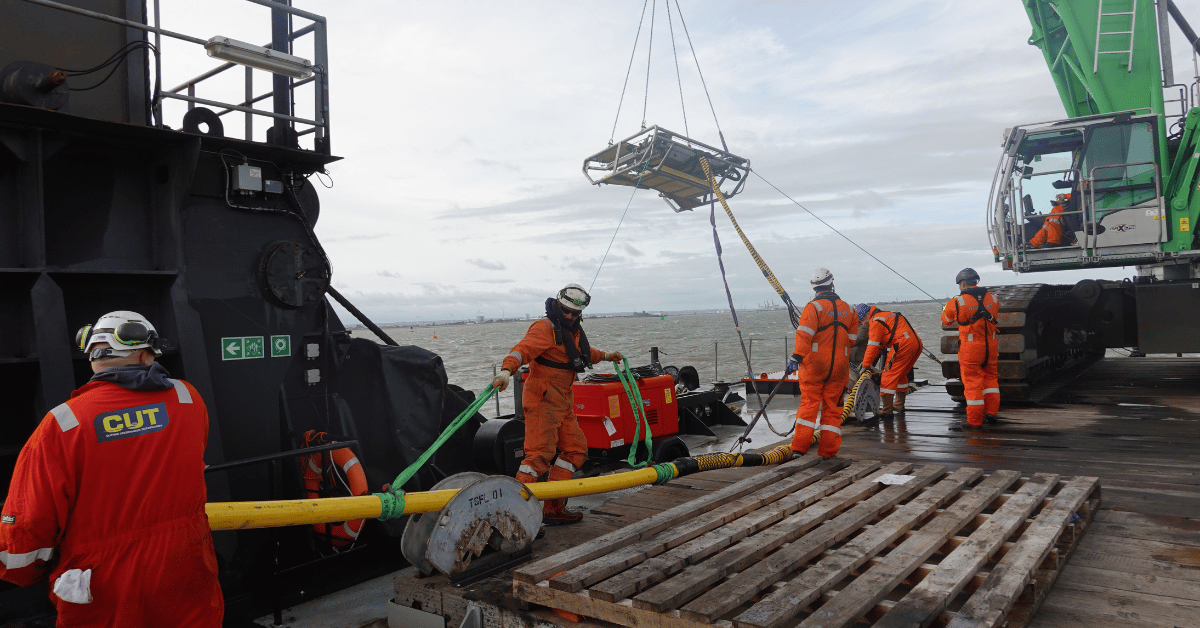
The removal of the masts from the SS Richard Montgomery is a long-overdue act of risk reduction, not a cause for celebration. For decades, the wreck, holding roughly 1,400 tonnes of WWII munitions in the Thames Estuary, has been a ticking hazard, studied and monitored but left largely untouched. Resolve Marine's operation to extract the three remaining masts is a practical, calibrated step toward mitigating that legacy. What matters now is whether the same empirical rigor applied to this salvage can be sustained for the more complex work that remains.
This operation is a reminder that ocean stewardship often begins with cleaning up past conflicts, not just observing present conditions. The SS Richard Montgomery is not an isolated case. As Search data confirms 71 lost as Virgo Transport 8 recovery continues shows, recovering from maritime disasters demands integrated data and real-time coordination. In Indonesia, divers used search data to locate five additional bodies weeks after the initial sinking. The difference is that the Virgo Transport 8 tragedy unfolded in days, while the SS Richard Montgomery has been a known hazard for eighty years. That gap, between rapid response and prolonged inaction, is a measurable failure of our collective ocean intelligence.
The environmental and safety implications are concrete. Removing the masts eliminates a structural risk: if a mast had collapsed in a storm, it could have disturbed the munitions below. But the wreck's cargo remains, and corrosion is a function of time, not of good intentions. The same integrated data ecosystem that tracks climate indicators should be applied to monitor the wreck's condition with longitudinal, peer-reviewed precision. Compare this to the River Floods Displace Cruise Ship Into Nepal's Narayani Bridge, where continuous rainfall displaced a vessel into a bridge, a sudden event with immediate consequences. The SS Richard Montgomery is the opposite: a slow-motion threat whose timeline we can calibrate but have not fully addressed.
The practical takeaway is that removing the masts is not the end of this story; it is the beginning of a validated process. The UK government and Resolve Marine have demonstrated that physical intervention on a hazardous wreck is feasible. The open question is whether the next phase, neutralizing or removing the munitions themselves, will receive the same level of funding, peer review, and public transparency. For researchers and policymakers, this operation sets a benchmark for how we handle wartime wrecks in busy shipping lanes. For the rest of us, it is a specific, measurable reminder that ocean intelligence is only as good as the actions it informs. The masts are gone. The real work is calibrated but not yet complete.