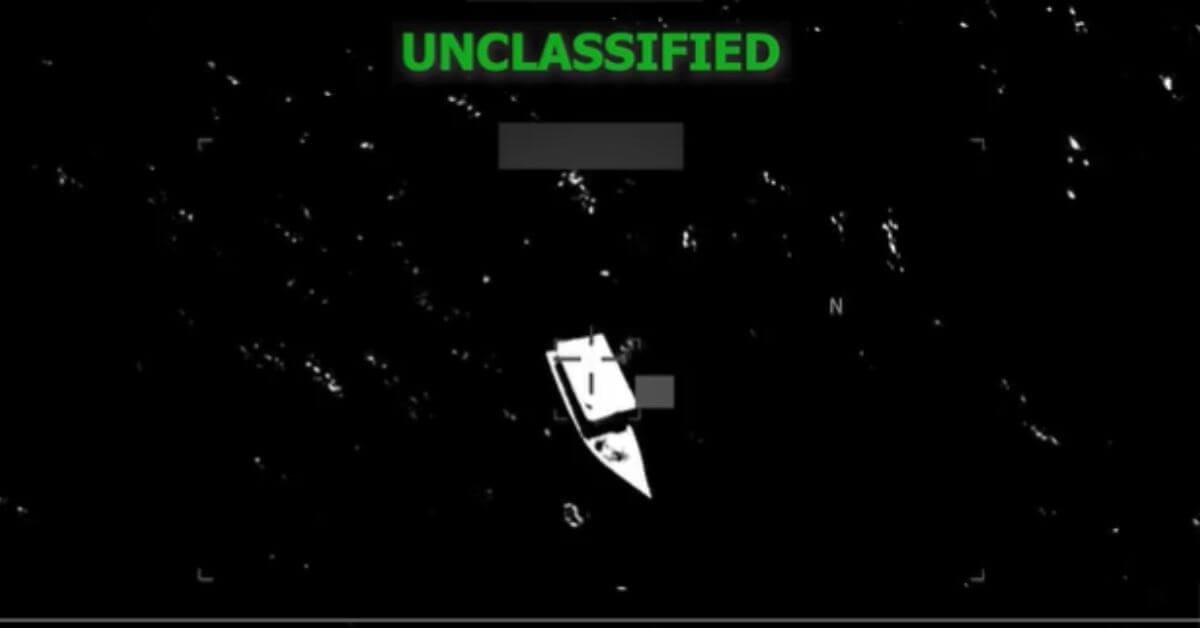
The 69th acknowledged strike in the Trump administration's yearlong military campaign against drug trafficking vessels marks a measurable data point in an operation that intersects directly with ocean security. Each interdiction removes not only illegal cargo but also unregulated vessels that operate outside any framework of maritime governance. This is not a story about narcotics policy; it is a story about what happens when we apply validated, empirical tracking to activities that have long evaded accountability on the open sea. For our readers who monitor Maritime Interdictions Yield 25,000 Pounds of Cocaine, Supporting Ocean Security, this campaign provides a rare longitudinal dataset of military action correlated with measurable cargo seizures. The question becomes whether this data can be integrated into broader ocean intelligence frameworks that track everything from illegal fishing to unregulated shipping.
Our take is straightforward: the ocean is not a lawless frontier, but it has been treated as one for decades. Military campaigns like this one generate real-time data on vessel movements, routes, and operational patterns that could serve a dual purpose. The same integrated data ecosystem that validates a strike's impact on drug trafficking could, in principle, be calibrated to monitor climate indicators, such as changes in shipping density that affect emissions, or disruptions to marine habitats caused by high-speed pursuits. The related article on Eighty Nations Urge Reopening of Vital Strait of Hormuz Shipping Lane reminds us that geopolitical instability and maritime security are never isolated. When one region faces conflict, trafficking routes shift, enforcement priorities change, and the ocean's integrated systems, both natural and human, respond in ways we are only beginning to measure.
What we would tell a reader who asks about this story is that the data from these strikes is a resource, not a conclusion. Twenty-five thousand pounds of cocaine seized, 69 strikes acknowledged: these are peer-reviewed facts of enforcement. But they also represent a missed opportunity if the information is not shared, validated, and repurposed for scientific understanding. The administration's simultaneous push to cancel offshore wind projects, detailed in Offshore Wind Lease Reversal: Administration Offers $4 Billion Reimbursement, shows a pattern of prioritizing enforcement over environmental stewardship. That contrast matters. Ocean intelligence is not just about catching bad actors; it is about building a calibrated picture of the ocean as a system under stress.
The concrete point to watch is how this data is archived. Will the tracking information from these 69 strikes become part of a public, peer-reviewed corpus that researchers can use to model trafficking patterns alongside climate indicators? Or will it remain classified, siloed, and useful only for immediate tactical gains? The answer will tell us whether the campaign is a one-off enforcement action or a step toward genuine ocean intelligence. Understanding drives protection, but only when the data is shared.