Master And Pilot Of Cargo Ship Charged After Fatal Collision Off Sweden That Killed 2
Our take
The recent charges against the master and pilot of the cargo ship involved in the tragic collision off Sweden, resulting in the deaths of a mother and daughter, underscore a critical intersection of maritime safety, navigational responsibility, and the complex interplay of human factors within a data-rich environment. This incident, occurring in Hakefjord southwest of Gothenburg, highlights vulnerabilities even in regions with established maritime infrastructure and regulatory frameworks. The fact that both the master and pilot are facing charges suggests a multifaceted failure in situational awareness and decision-making, raising questions about the efficacy of current procedures and the potential for improved data integration to prevent such occurrences. It’s a stark reminder that technological advancements, such as those highlighted in Introducing Global Fishing Watch Layers in ArcGIS Online and the Living Atlas - Esri, while valuable for monitoring and understanding ocean activity, are not substitutes for vigilant human oversight and adherence to established protocols. Similarly, incidents like the recent ferry collision off Malaysia’s Penang Port Passenger Ferry Collides With Tanker Off Malaysia’s Penang Port, Injuring 21 People serve as cautionary parallels, demonstrating the persistent risk of maritime collisions despite ongoing safety improvements.
The legal proceedings will undoubtedly scrutinize the sequence of events leading to the collision, focusing on factors such as visibility, speed, adherence to navigational rules, and the role of automated systems. The Swedish Navy's recent acquisition of modern French frigates Sweden Signs $5 Billion Deal To Acquire Four Modern French Frigates demonstrates a commitment to strengthening maritime security and response capabilities, but this incident illustrates that preventative measures, particularly those centered on human performance and decision-making, remain paramount. The integration of real-time data, including weather conditions, vessel traffic information, and AIS signals, is essential, but the ability to interpret and act upon this information effectively remains a challenge. The charges against the master and pilot imply a potential failure in this critical loop, suggesting a need for enhanced training and procedures that prioritize proactive risk mitigation.
Beyond the immediate legal ramifications, this case has broader implications for the maritime industry globally. It emphasizes the need for continuous evaluation of navigational practices and the potential for technology to enhance, but not replace, human judgment. The incident's location – a relatively well-trafficked area – suggests that even in established maritime zones, unexpected events can occur with devastating consequences. Furthermore, the involvement of a pilot, a professional experienced in navigating specific waterways, raises questions about the effectiveness of pilotage services and the need for ongoing assessment of their performance. The data generated from incident investigations, like this one, should be rigorously analyzed to identify systemic weaknesses and inform the development of more robust safety protocols.
Looking ahead, the maritime sector must prioritize a shift towards a more proactive and data-driven approach to safety. This includes investing in advanced sensor technologies, improving data analytics capabilities, and fostering a culture of safety that encourages open communication and continuous learning. The ability to predict potential collision risks through integrated data ecosystems, utilizing calibrated models and longitudinal datasets, will be crucial in preventing future tragedies. A key question remains: how can we leverage the increasing availability of ocean intelligence to create a truly resilient and safe maritime environment, ensuring that technological advancements translate into tangible improvements in human safety and environmental protection?
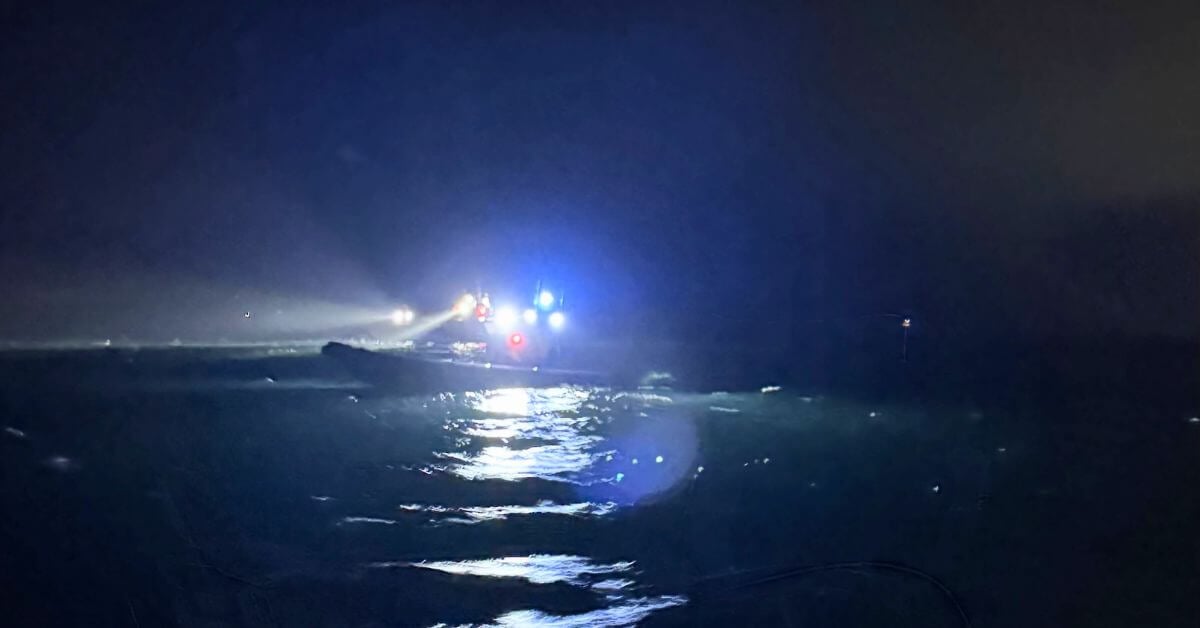
Swedish prosecutors have charged the master and pilot of the Norwegian cargo ship Misje Verde over a collision that killed two people near Tjörn on July 28.
The cargo ship hit a small pleasure boat while overtaking it in Hakefjord, southwest of Gothenburg. A mother and her daughter were killed. The father and son on the boat survived.
Prosecutors said the pleasure boat was clearly visible on Misje Verde’s radar before the collision, but both the master and pilot failed to notice it.
Both face charges of causing death and bodily injury through negligence, as well as negligence in maritime traffic. They deny the charges.
The trial is due to start on September 10.
Cargo Ship Hit Boat From Behind
The 5,310 dwt Misje Verde was sailing along Sweden’s west coast towards Norway on the night of July 28. A pilot was required to be on board.
The ship was travelling in the same general direction as a 7-8 metre cabin motorboat. Misje Verde came up behind the smaller boat and hit it while overtaking.
The cargo ship did not stop after the collision. It stopped only after the Coast Guard told it to do so.
The smaller boat was pulled under the cargo ship, flooded and sank in about 20 metres of water between Katten and Lövön.
Four people were on the pleasure boat.
The father and son were thrown into the water and picked up by another pleasure boat. They were then taken to hospital.
The mother and daughter died. Their bodies were later recovered along with the wrecked boat.
Rescue Teams Search for Missing People
A large rescue operation began after the collision.
Volunteer rescuers from the Swedish Sea Rescue Society stations in Stenungsund, Skärhamn and Rörö took part with five rescue boats.
The Swedish Maritime Administration, Coast Guard, rescue service, ambulance and police also joined the operation.
Two people were initially missing. The search was stopped overnight and started again on Wednesday morning.
Radar Data Used in Investigation
Investigators examined AIS and GPS tracks from the vessels involved. They also gained early access to Misje Verde’s Voyage Data Recorder, or VDR.
Prosecutors said the pleasure boat was clearly visible as a radar echo on the bridge displays.
Senior Prosecutor James von Reis said investigators now know what could be seen on the radar in real time and what was said by the people on the bridge.
He said the investigation also showed how the responsibilities were divided between the master and pilot.
According to the indictment, both men failed to keep a proper lookout, as required under Rule 5 of the International Regulations for Preventing Collisions at Sea, or COLREGs.
Prosecutors also said the cargo ship failed to keep clear of the pleasure boat while overtaking it. This is required under Rule 13.
Swedish Pilot Also Charged
Prosecutors named the Swedish pilot as a criminal suspect. They found that he took a very active role in navigating the cargo ship, while the master was dealing with other matters on the bridge that were not related to navigation.
The pilot was the only other person on the bridge with the master at the time.
The master is a Russian citizen. He was detained soon after the accident because of concerns that he could leave Sweden or interfere with the case.
Investigators initially looked at several possible violations of the COLREGs.
References: dataportuaria, Swedish Sea Rescue Society
Read on the original site
Open the publisher's page for the full experience