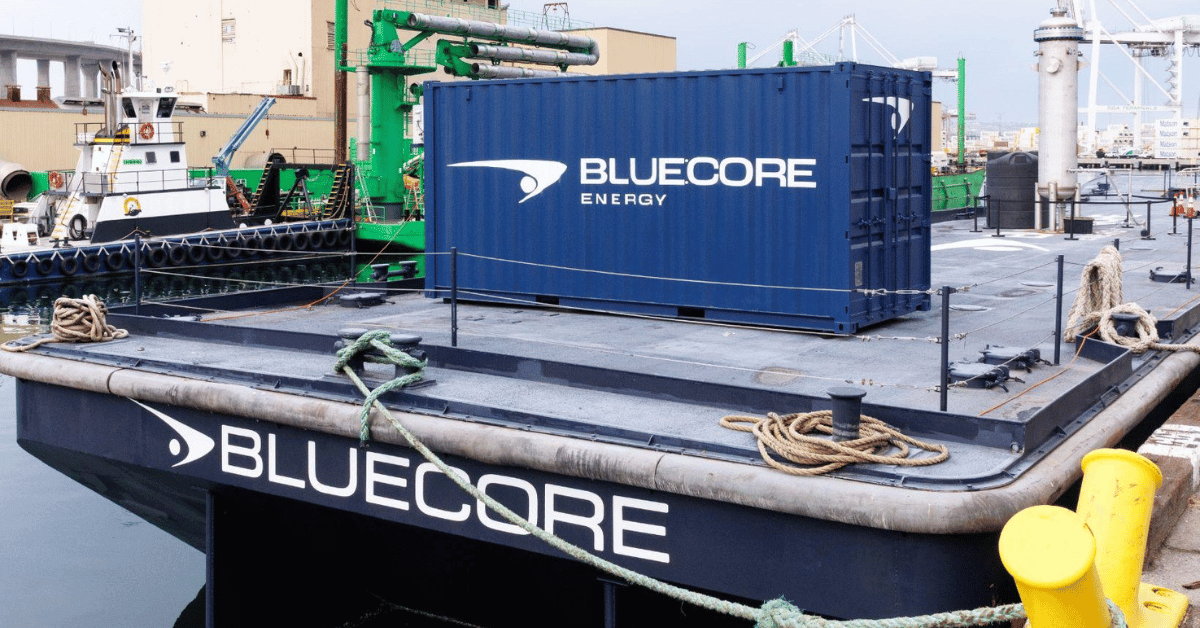
The purchase of enriched uranium by Bluecore Energy is a signal that floating nuclear power is no longer a theoretical exercise, but a supply chain event. Securing fuel from WMC, advancing pre-application talks with the NRC and Coast Guard, and holding an ABS Approval in Principle are the unglamorous, necessary steps that separate a concept from a commissioned asset. What matters here is that Bluecore is treating maritime nuclear as an integrated system, not a reactor that happens to float, which is the only credible path forward for an industry that cannot afford a single high-profile failure.
The timing is deliberate. The NRC and Coast Guard memorandum of understanding provides the regulatory scaffolding for civilian maritime nuclear, and Bluecore's engagement with both agencies, alongside its ABS classification work, suggests they understand that safety validation is a parallel process, not a sequential one. This is particularly relevant when we consider the broader maritime energy transition. Our coverage of Predicting maritime ammonia leaks through a validated digital twin system shows how the industry is leaning on simulation and classification to de-risk alternative fuels; nuclear demands an even higher standard of empirical proof. The company's stated goal of moving from non-fueled hardware to fueled testing is the moment where engineering meets reality, and their choice to hold the UF₆ at a U.S. facility outside California while they prepare fabrication plans is a practical, measured step.
We should also note the operational context. The Coast Guard's recent enforcement actions, such as the Enforcement action halts fuel shipment bound for Cuba in Gulf transit, demonstrate the agency's active role in maritime commerce and security. That same institutional muscle will be applied to nuclear oversight, and Bluecore's early engagement is an acknowledgment that regulatory clarity is a competitive advantage, not a bottleneck. The company's location at the Port of Long Beach, and its summit with municipal and port leadership, also aligns with the kind of interagency coordination we highlighted in Two Navies, One Port: U.S. and Bahamian Forces Deepen Maritime Alignment. Nuclear power at a commercial port will require that same level of trust and communication between civilian, military, and local stakeholders.
The specific detail to watch is fuel fabrication. Buying UF₆ is a commitment, but converting it to UO₂ and assembling fuel assemblies requires a licensed facility and a clear testing protocol. Bluecore has not announced that fabrication partner yet. The next twelve months will reveal whether they can maintain this pace without compromising the rigor their leadership explicitly cites. If they secure a fabrication pathway and begin fueled testing on schedule, floating nuclear moves from promising to proven. If that step slips, the entire timeline, and the credibility of maritime nuclear as a near-term solution, will be called into question.