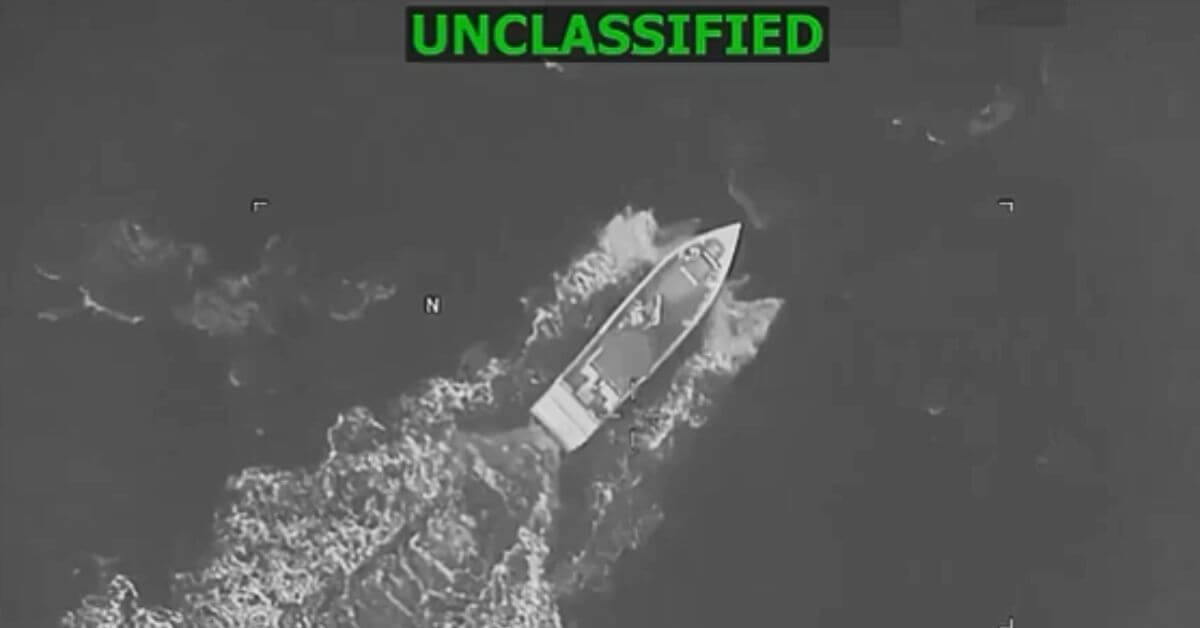
The Eastern Pacific is vast, and the line between law enforcement and armed conflict grows thinner with every engagement. The U.S. strike on a suspected drug-smuggling vessel, resulting in two fatalities, marks the first such interdiction in over two months, and it comes on the heels of a similar operation in the Caribbean that pushed the death toll to 227. These are not abstract statistics; they are the measurable outcomes of a policy that treats the ocean as a battleground for transnational crime. For those of us who track maritime activity, the question is no longer whether these strikes are effective, but whether the strategic calculus behind them is being recalibrated in real time.
This incident sits uneasily alongside other recent events that underscore the fragility of maritime operations. Consider the Cargo Ship Fire Prompts Evacuation Near Mykonos; Incident Under Investigation, where a routine voyage turned into an emergency evacuation, or the Bulk Carrier Freed After Prolonged Grounding Near Gladstone, Australia, a reminder that even the most advanced vessels are subject to the unforgiving nature of the sea. And then there is the Russian Maritime Activity Raises Concerns of Drone Operations in Mediterranean, which signals a different kind of threat entirely: state-sponsored asymmetry. What connects these events is a simple truth: the ocean is not a passive highway. It is an active, contested domain where a single miscalculation can turn a law enforcement action into a geopolitical flashpoint.
Our take is straightforward. The 227 fatalities in the Caribbean interdiction are not just a number; they represent a pattern of escalation that demands scrutiny. When a strike is the first in over two months, it suggests a deliberate decision, not a reflexive response. The practical implication for our readers, whether they are maritime security analysts, policymakers, or simply observers of ocean governance, is that the rules of engagement are shifting. We would tell them this: do not mistake frequency for strategy, nor silence for absence. The lull between strikes may be a period of recalibration, not de-escalation. The data we have is empirical, but it is incomplete. We are watching a policy in motion, and the absence of a public rationale for these strikes is itself a data point.
What we would want to see, and what we would advise our readers to demand, is a clearer articulation of the legal and operational thresholds that govern these interdictions. Is the goal to interdict narcotics, or is it to send a message? The two are not mutually exclusive, but they require different rules of engagement. The takeaway here is precise: the next strike will not be a surprise if we treat the current one as a signal, not an anomaly. Watch for the Navy's next quarterly report, or the next press release from the interagency task force. The detail to monitor is not just the number of strikes, but the language used to justify them. If the phrasing shifts from "defensive action" to "preemptive disruption," we will know the doctrine has changed. That is the metric that matters.