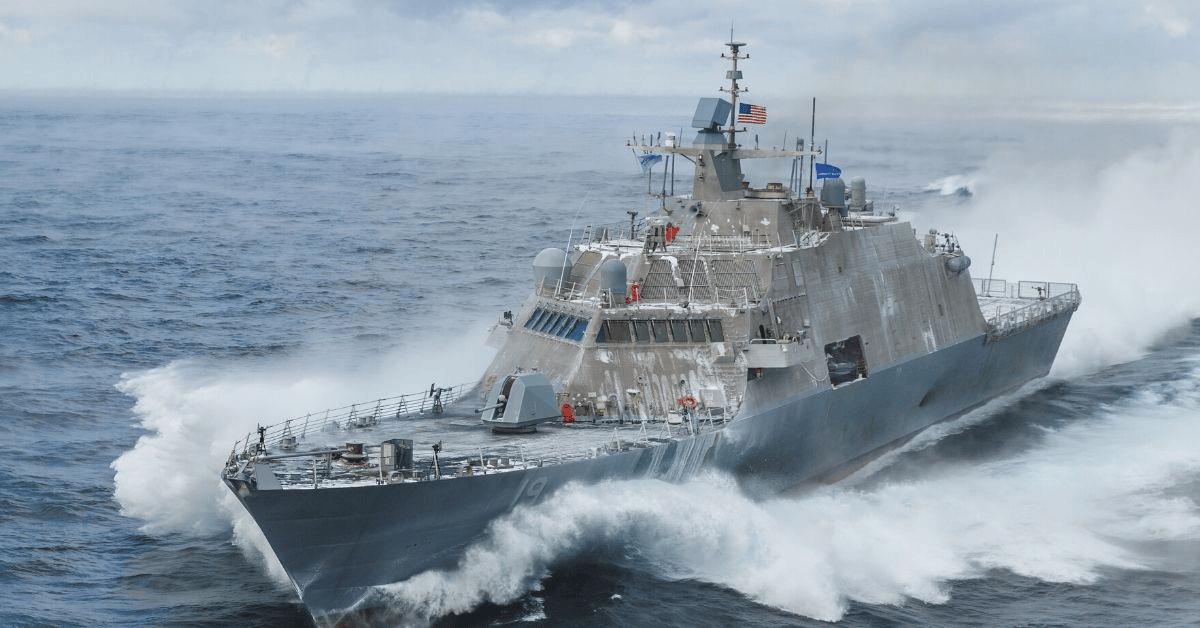
The deployment of the USS St. Louis to support U.S. Northern Command's southern border mission is a practical reminder that maritime security is not a distant abstraction. It is a live operation, with the ship's crew engaged in interdiction efforts against illicit drug trafficking. For our readers, this is less about a single vessel and more about how naval assets are being repurposed to address immediate, transnational threats. This move sits alongside other strategic shifts we have been tracking, such as China’s New Nuclear Carrier Signals Extended Naval Operations Capability, which underscores how different nations are investing in blue-water reach, and the U.S. Navy Accelerates Submarine Production with Integrated Strategy, a programmatic response to sustain that reach. These are not isolated events; they are data points in a global recalibration of naval power.
Our take is straightforward: this deployment is a validation of the integrated data ecosystem that modern naval operations depend on. Drug interdiction is not a simple chase; it is a function of intelligence, surveillance, and reconnaissance, where real-time data and calibrated responses determine success. The USS St. Louis, as a littoral combat ship, is designed for precisely this kind of agile, shallow-water engagement. But the larger point for our readers is that border security is becoming a maritime data problem as much as a physical one. The ship is a platform, but the value lies in the ocean intelligence it gathers and feeds back into a shared command structure. This is consistent with the broader trend we see in the Port Alpha Shipyard to Build Navy Landing Craft, Boosting Ocean Data Access, where shipbuilding is increasingly tied to expanding our observational and operational footprint.
We would tell a reader who asks about this story that the practical implication is one of integration. The U.S. Navy is not just deploying hardware; it is testing how well its platforms, personnel, and data systems can operate in a joint, interagency environment. The USS St. Louis deployment is a stress test for information sharing between naval and homeland security stakeholders. The measurable takeaway here is that the ship's success will not be judged solely by interdiction numbers, but by how effectively its data is used to inform decisions in real time. A quote worth holding onto: "Maritime security is a data chain, and the USS St. Louis is one of its most recent links."
Looking ahead, the specific detail to watch is how this mission informs future littoral combat ship deployments. If the data from this operation validates the platform's utility in a border security role, we may see a more permanent integration of these vessels into NORTHCOM's operational playbook. That would be a concrete shift from a carrier-centric mindset to a more distributed, intelligence-driven model. The open question is whether the Navy will treat this as a one-off tasking or as the foundation for a new, persistent presence. For now, the USS St. Louis is a single ship, but the pattern it represents is worth monitoring closely.