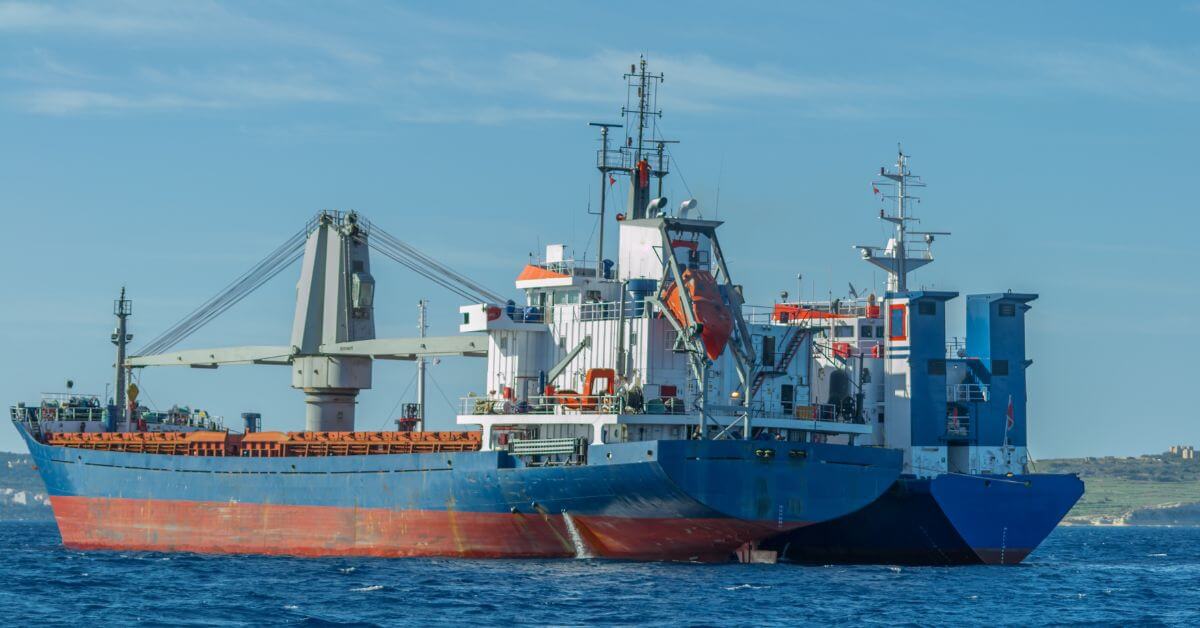
Malaysia's new marine protected area in the Straits of Malacca and Singapore is a calibrated, evidence-based move, not a symbolic gesture. By banning large cargo ships, oil tankers, and bunkering in this zone, the government has turned a policy tool into a measurable intervention for ocean health. This is exactly the kind of integrated action that moves us from discussion to data.
The regulations, issued on September 11, 2026, through Malaysia's Exclusive Economic Zone Regulations 2026, impose a 12-knot speed limit, prohibit anchoring except for emergencies, and require government authorization for activities like dredging, seismic surveys, and cable laying. Ships over 300 meters long and 40 meters wide are simply not allowed in. The penalties are concrete: fines up to one million Malaysian ringgit ($245,000), and vessels can be boarded, inspected, or detained. This is not about raising awareness, it is about enforcing boundaries. For comparison, consider how Unexplained epidermal growth on California moray prompts scientific curiosity reminds us that marine anomalies often require patient, empirical observation before we understand their cause. Malaysia's approach is similarly grounded: it acts on what is known, heavy traffic and bunkering degrade sensitive seabeds, and creates a controlled environment to monitor what happens next.
What this means for shipowners, operators, and marine insurers is immediate and operational. The zone overlaps with what the industry calls the Outer Port Limit (OPL), but Malaysia does not recognize that designation in waters it considers its own. All vessels must report anchoring and other activities to the Malaysian Marine Department. Compliance is no longer optional; it is a condition of passage. The practical takeaway is clear: any vessel transiting or operating near the eastern approaches to the Straits must verify its route, size, and planned activities against these new rules before departure. The risk of detention and a quarter-million-dollar fine is not abstract. Meanwhile, a project like A browser game turns seahorse species identification into a citizen science tool shows how distributed observation can build longitudinal datasets. Malaysia's protected zone could similarly generate real-time, peer-reviewed evidence on how shipping restrictions affect marine life, if the government commits to publishing the data.
One specific detail to watch is how Malaysia enforces the requirement that ships obtain written permission for cargo transfers and research operations. The regulations are comprehensive, but their impact depends on surveillance and inspection capacity. If the Malaysian Maritime Enforcement Agency integrates automatic identification system data with patrols, this zone could become a model for how littoral states assert empirical control over high-traffic corridors. If enforcement lags, the zone risks becoming a paper boundary. The ocean does not respond to intentions, it responds to measurable change.