data
World Data Ocean keeps data in one place: 46 stories so far. The section currently leads with “Untested AI Hypotheses on Ocean Acidification Demand Peer Review”, “Declining religious importance measured across English-speaking nations”, and “Interstellar surprises await as Voyager 1 crosses one light-day”. A user-generated hypothesis that ocean acidification cuts sea-to-air methylamine emissions is now live on Forks.world, and it is asking for peer review before any claims are validated. Measured across English-speaking nations, religious importance is declining. A Global Hub for Ocean Intelligence 4 World Data Ocean is a centralized digital platform where researchers, scientists, and ocean enthusiasts converge to… The list below is every data story on World Data Ocean, newest first.
Untested AI Hypotheses on Ocean Acidification Demand Peer Review
A user-generated hypothesis that ocean acidification cuts sea-to-air methylamine emissions is now live on Forks.world, and it is asking for peer review before any claims are validated. This is precisely the kind of empirical, testable proposition that drives ocean intelligence forward. The link between measurable chemical shifts and atmospheric impact deserves calibrated scrutiny.
Declining religious importance measured across English-speaking nations
Measured across English-speaking nations, religious importance is declining. The data is clear and calibrated: belief systems shift as societies evolve. This isn't alarmism, it's a validated, longitudinal trend worth understanding. We find this empirical shift as significant as the calibrated shift in global employment, where the service sector now dominates. Understanding drives protection, and tracking these human patterns helps us navigate our shared future.

Interstellar surprises await as Voyager 1 crosses one light-day
On November 18, Voyager 1 crosses one light-day from Earth, a distance that takes a signal nearly 24 hours to travel. It has been in interstellar space for years, yet it keeps finding surprises. That persistence matters. Each unexpected discovery refines our empirical understanding of the boundary between our solar system and the wider galaxy. This is measured, validated progress. For deeper context on how long-term data reveals planetary change, see our coverage of ancient ocean phosphorus cycles.
Global population trends reached a measurable turning point in 2023
Global population trends reached a measurable turning point in 2023, a true demographic crossroad. This is not an abstract projection; it is an empirical shift in human geography that demands calibrated attention. Understanding these longitudinal data clarifies the pressure on our climate indicators and ocean intelligence systems. For deeper context on measurable global transitions, see our coverage of Australia's accelerating energy transition with solar and wind gains.
China's electric vehicle acceleration offers measurable data for global climate indicators
China's electric vehicle adoption is accelerating faster than in the European Union or the United States, providing validated, real-world data for global climate indicators. This measurable shift demonstrates how policy and innovation can align to reduce emissions at scale. For deeper context on the nations that have shaped our carbon legacy, see our related analysis, "Tracking the nations with the largest share of historical CO₂ emissions." Understanding these trajectories is essential for informed ocean stewardship.
Global livestock data reveals 80 billion land animals harvested annually
Eighty billion land animals are slaughtered for meat every year, a figure so large it resists comprehension. This is not an abstraction; it is the measurable, annual output of a global food system operating at industrial scale. These numbers demand our attention, not for shock, but for the empirical clarity they provide. Understanding drives protection. For deeper context on how demographic shifts reshape demand, see our related coverage on the aging global population.
Meat consumption patterns reveal measurable link between national wealth and diet
A measurable link exists between national wealth and meat consumption: people in richer countries tend to eat more meat. This empirical pattern raises urgent questions about sustainability and equity. Understanding these dynamics is essential for informed policy. For deeper context on global challenges, our analysis of "Global literacy gaps among youth reveal urgent need for measurable education action" offers a parallel view of disparities that demand calibrated, integrated responses.
Measurable shift in homophobic attitudes across Western Europe and US
A measurable shift is underway: homophobic attitudes have fallen across Western Europe and the United States, according to Our World in Data. This is not a marginal trend but a calibrated, empirical change in social climate indicators. Understanding drives protection, and these longitudinal data validate that societal progress is real. For deeper context on how empirical research itself is being reshaped, see our related coverage on AI compute doubling every six months.
Mapping the global nuclear arsenal: validated data on sovereign stockpiles
Nine countries hold nearly all the world's nuclear weapons, and the validated data on sovereign stockpiles reveals a stark concentration of power. These arsenals are measurable, empirical facts of global security, not abstract threats. Understanding the precise numbers is a form of ocean intelligence for the geopolitical realm. For a parallel in how validated data reshapes our understanding of long-term human behavior, see our related piece on the "Centuries of empirical data reveal a measurable decline in global homicide rates."
Global literacy gaps among youth reveal urgent need for measurable education action
Nearly half of the world's teenagers cannot read with comprehension. That is not a statistic; it is a generational failure of measurable education action. When a young person cannot parse a sentence, their capacity to engage with global challenges, ocean health, climate indicators, or any science, is fundamentally compromised. Understanding drives protection. Without foundational literacy, we lose the next generation of ocean stewards before they even see the shore.
Global mortality patterns reveal distinct regional health priorities
Heart disease remains the world's leading cause of death, but global mortality patterns reveal distinct regional health priorities, from infectious diseases in Sub-Saharan Africa to non-communicable conditions in Europe and Asia. These data are validated, measurable indicators of where public health systems must focus next. Understanding these regional differences drives smarter, more targeted action. For deeper perspective on interconnected global systems, our piece "A Shared Data Ecosystem to Deepen Global Ocean Understanding" explores how integrated data frameworks can inform planetary health.

A Shared Data Ecosystem to Deepen Global Ocean Understanding
Understanding drives protection. On World Oceans Day, a new e-book makes the case for a shared data ecosystem, one that unites researchers, government agencies, students, and technology around a single goal: deeper ocean intelligence. This is not about isolated studies; it is about an integrated data ecosystem where calibrated, real-time observations become climate indicators we can act on. For those tracking the human and environmental pressures reshaping marine science, this collaborative framework is a practical step forward.
A thousand rivers drive eighty percent of ocean plastic emissions
A thousand rivers drive eighty percent of ocean plastic emissions, a finding that demands a calibrated, not alarmist, response. This is not about panic; it is about measurable action. Understanding the source of the problem allows us to target interventions where they matter most. For deeper context on how disclosure transforms data into accountability, see our related coverage, "Closing the data gap: disclosure as a calibrated step toward ocean action." Precision, not hype, guides real protection.
Empirical ocean data powers the measurable path to energy transition
The ocean's role in the energy transition is not theoretical, it is empirical. Measurable ocean data powers the path forward, validating climate indicators and calibrating our decisions. The World Economic Forum makes this clear: data is the foundation. For those tracking the science beneath the surface, our coverage of the Ocean Carbon and Acidification Data System offers a peer-reviewed look at how validated, integrated data ecosystems turn ocean intelligence into actionable climate insight. Understanding drives protection.
From orbit to ocean floor, data refines ocean stewardship
A small ocean drone returned validated data from inside a Category 5 hurricane, proving that even the most extreme conditions can yield empirical ocean intelligence. From orbit to ocean floor, integrated data systems refine our understanding of marine ecosystems. This is how we transform stewardship from reactive concern into measurable action. For deeper coverage on peer-reviewed findings from extreme environments, see "Small ocean drone returns validated data from inside Category 5 hurricane."
Calibrating a new global standard for dissolved organic phosphorus
Measuring dissolved organic phosphorus across the global ocean has long been a fragmented effort. The DOPv2021 database changes that. By integrating decades of peer-reviewed data into a single, calibrated standard, this work gives researchers a validated baseline for tracking nutrient cycles and their influence on climate indicators. Understanding drives protection. For a related view of ocean intelligence in action, see how Saildrone captured first-ever video from inside a hurricane, another example of real-time observation expanding what we know.
A validated global atlas of ocean thermohaline structure from WOA18
A validated global atlas of ocean thermohaline structure from WOA18 now offers the scientific community an empirical, peer-reviewed baseline for understanding ocean circulation and climate indicators. This integrated data ecosystem transforms decades of measurements into a measurable, calibrated resource. Understanding drives protection. For deeper context on how real-time ocean intelligence is gathered, see our coverage of Royal Caribbean Group's expanded role as a calibrated platform for ocean data.
A validated data system for tracking ocean carbon and acidification
A validated, peer-reviewed system now tracks ocean carbon and acidification with measurable precision. The Ocean Carbon and Acidification Data System, published in *Scientific Data* *Nature*, delivers calibrated, real-time ocean intelligence for researchers and policymakers alike. This is the integrated data ecosystem we need. Understanding drives protection. For deeper exploration of how the atmosphere forces ocean dynamics, see our related work on data-driven global ocean modeling in *Science*.
JWST data reveals an unexpected ice world within the habitable zone
An ice world where we least expected it. JWST data has revealed a frozen planet orbiting within the habitable zone, a finding that recalibrates our understanding of where life-sustaining conditions can exist. This is empirical observation challenging assumption. It reminds us that ocean intelligence extends beyond our own blue planet. For complementary insights into Earth's own dynamic systems, explore our coverage of the validated global atlas of ocean thermohaline structure. Understanding drives protection, whether in orbit or at depth.

Empirical ocean data now calibrated for classroom discovery
Empirical ocean data, validated, calibrated, and peer-reviewed, is now ready for classroom discovery. NOAA's new classroom-ready resources bring real-time climate indicators and integrated data ecosystems directly to students, transforming raw ocean intelligence into measurable learning. This is not simplified science; it is authentic data made accessible. Understanding drives protection, and these tools equip the next generation to act. For deeper context on how data refines ocean stewardship, explore "From orbit to ocean floor, data refines ocean stewardship" on our site.
Calibrating our ocean intelligence for a sustainable data ecosystem
Every ocean dataset carries a hidden cost: the energy, materials, and infrastructure required to collect, store, and process it. Unchecked data growth risks undermining the very sustainability we seek to measure. Calibrating our ocean intelligence means building an integrated data ecosystem where every byte is validated, measurable, and purpose-driven. We must treat data stewardship as seriously as ocean stewardship. For deeper context, our coverage of "From orbit to ocean floor" examines how integrated observations strengthen Earth system predictions without expanding our footprint.
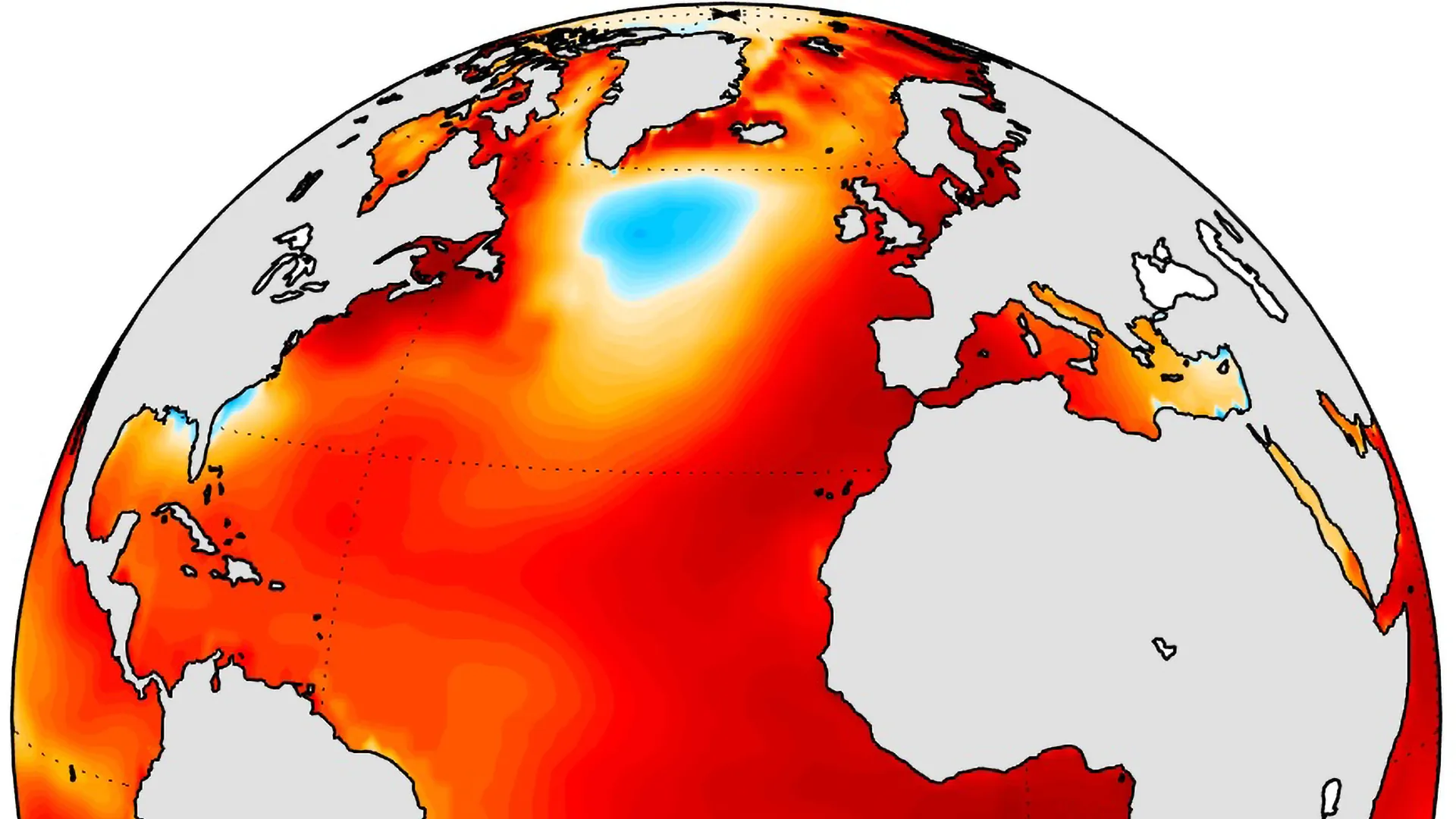
A Century of Ocean Intelligence Reveals a Measurable Current Slowdown
A century of ocean intelligence now delivers a measurable finding: the Atlantic Meridional Overturning Circulation is slowing. This is not a model projection. It is an empirical, validated signal drawn from decades of peer‑reviewed data. The current's weakening carries real implications for climate indicators and global heat distribution. Understanding drives protection. For a deeper look at how integrated data ecosystems track these changes, see our coverage of the ECCO‑Darwin model's first multi‑decadal global ocean CO₂ flux estimates.

AI models and integrated data track shoreline debris at scale
Every piece of plastic on a beach tells a story, and now AI is reading that story at scale. By integrating real-time data streams with machine learning, we can track shoreline debris across vast coastlines, transforming scattered observations into validated, actionable ocean intelligence. This isn't just cleanup; it's empirical calibration of a global problem. For deeper context on how integrated data ecosystems make this possible, explore our coverage of Apeiron Labs' recent Series A to scale their ocean data platform.
Calibrating Your Inquiry with Validated Ocean Intelligence
A single uncalibrated sensor can skew an entire investigation. That is why the Global Investigative Journalism Network's new tipsheet focuses on the foundation of credible ocean reporting: validated, peer-reviewed data. It walks reporters through the practical steps of grounding their work in empirical ocean intelligence rather than raw, unverified streams. For deeper context on how these measurements are collected and shared globally, see our related guide to the World Ocean Database from ncei.noaa.gov. Understanding drives protection, and protection begins with precision.