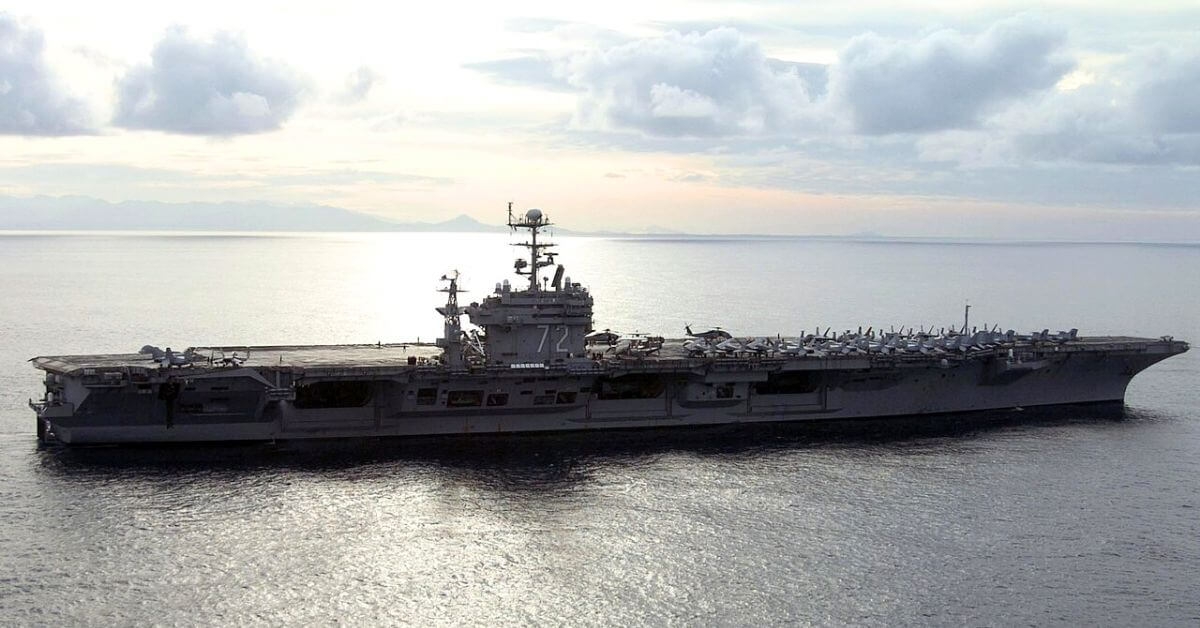
Two hundred and fifty days. That is not a deployment measured in weeks or even seasons; it is the length of a sustained maritime campaign, a longitudinal data point in itself. The USS Abraham Lincoln's return after more than seven months in the U.S. Central Command area, with no port visit to break the monotony, is not just a log entry. It is a stress test passed by crew and machine alike, and it reframes how we should think about naval endurance in an era where the ocean is both a strategic arena and a climate indicator. The Lincoln did not simply remain present; it remained ready, a floating asset that demanded a support ecosystem stretching from the pier to the seabed.
The practical takeaway here is not about the carrier's propulsion or the morale of its crew, though both matter. It is about what such a deployment tells us about the integrated data ecosystem that makes 250 days at sea possible without a breakdown in logistics, communication, or combat readiness. This is where the story connects to our ongoing coverage. The Navy's push to accelerate autonomous systems integration is not a separate ambition; it is the logical next step for a force that must sustain these extended operations. Similarly, the diplomatic pressure on the Strait of Hormuz, where eighty nations have urged a reopening of the vital shipping lane, underscores that the Lincoln's mission was never just about deterrence. It was about keeping the maritime commons open, a task that requires the kind of persistent presence that does not switch off when the news cycle moves on.
What we would tell a reader who asks about this is simple: do not mistake endurance for invincibility. The Lincoln's 250 days are a measurable achievement, but they also expose the thin line between a sustainable rotation and a brittle one. The human cost of such a deployment, the wear on equipment, and the logistical acrobatics required to keep a carrier group supplied are not abstract metrics. They are the difference between a credible deterrent and a floating liability. For researchers and policymakers, this is a reminder that naval power is ultimately a function of integrated systems, not just hulls. The phased negotiations over the Strait of Hormuz, for instance, only make sense if the fleet can hold the line while diplomats talk. That requires a predictive maintenance schedule, real-time supply chain visibility, and a crew that can sustain a high operational tempo without a break.
The open question we are left with is not whether the Lincoln can do it again, but whether the system around it can absorb more of these long-duration deployments without breaking. Watch for how the Navy adjusts its maintenance cycles and crew rotation policies in response. The next carrier to pass through the Singapore Strait may not be the one that sets the record; it will be the one that proves the model is repeatable. That is the real test, and it is one we should all be watching with the same precision we apply to a climate model or a diplomatic communiqué. Endurance is a feature, but only if it can be sustained without becoming the exception that wears out the rule.