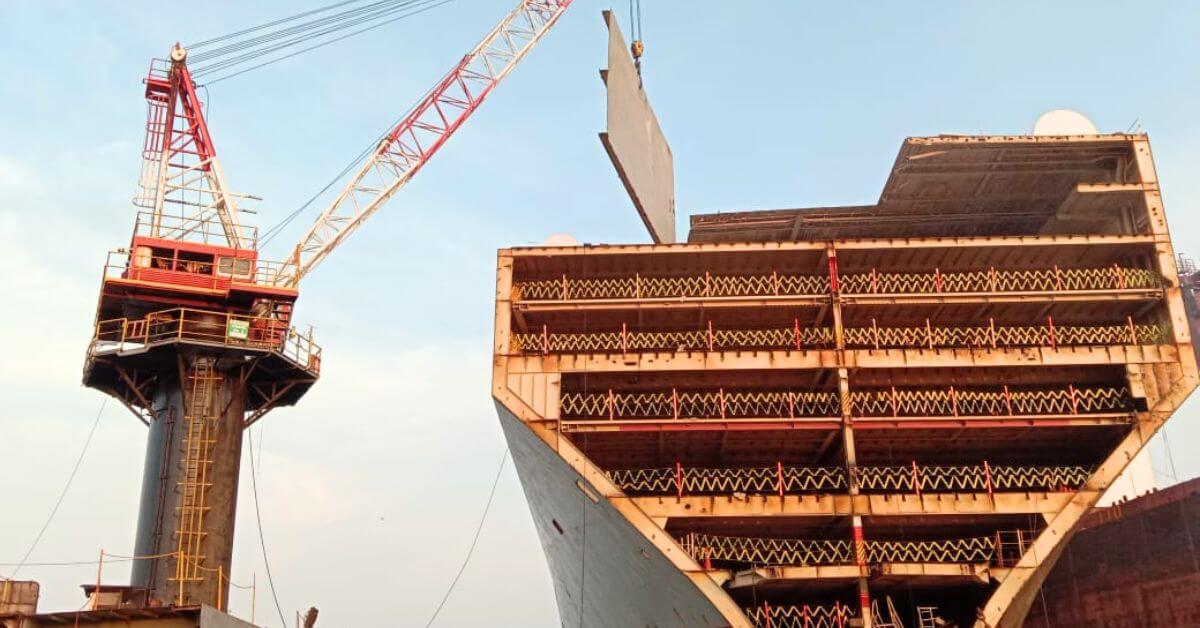
India's move to channel ship-recycled steel back into domestic production is not just an industrial policy decision; it is an acknowledgment that circularity has become a strategic asset. For decades, shipbreaking has been viewed through the narrow lens of labor and environmental concerns, but the conversation is shifting toward material recovery and supply chain resilience. By treating end-of-life vessels as urban mines, New Delhi is signaling that the ocean economy and the steel sector are now part of the same integrated ecosystem. This is a pragmatic read of global trade dynamics, where scrap prices and shipping routes are as influential as any tariff wall.
The logic is sound. Ships contain high-grade steel that retains significant metallurgical value, and India already recycles roughly a third of the world's tonnage. Expanding the use of that output into construction, automotive, and infrastructure reduces reliance on imported iron ore and coking coal. That is a measurable advantage in a volatile commodity market. What makes this particularly interesting is the timing. As Paradip Port Designated a Mega Port, Anchors Eastern India's Maritime Growth comes online, the logistics of moving recycled steel from coastal yards to inland manufacturers become more efficient. The port's expansion is not a separate story; it is the enabling infrastructure for exactly this kind of material flow.
There is also a broader geopolitical layer worth noting. The shift in Integrated Subsea Infrastructure Shifts to Enhance Indian Ocean Connectivity reflects how deeply India is embedding itself in global data and trade networks. Ship recycling fits the same pattern. It is a way to anchor supply chains closer to home, reduce exposure to external shocks, and build self-reliance without retreating from international commerce. The steel from a decommissioned tanker is not just scrap; it is a hedge against import dependencies that have repeatedly proven fragile. This is not protectionism dressed in green. It is a calibrated industrial strategy.
What we would tell a reader asking whether this matters is straightforward: watch the certification standards. The real test for India's ship-recycled steel is not volume; it is whether it can meet the same peer-reviewed quality benchmarks as virgin steel. If the Bureau of Indian Standards and the Ministry of Steel can enforce consistent traceability from shipbreaking yard to construction site, then this policy moves from experimental to essential. The lifecycle emissions savings are real, and the material is already there. The question is whether India will treat this as a stopgap or as a permanent pillar of its steel policy. Given the global push for lower-carbon production methods, the country has a chance to define what responsible recycling looks like. The next few quarters will show whether that opportunity is seized or shelved.