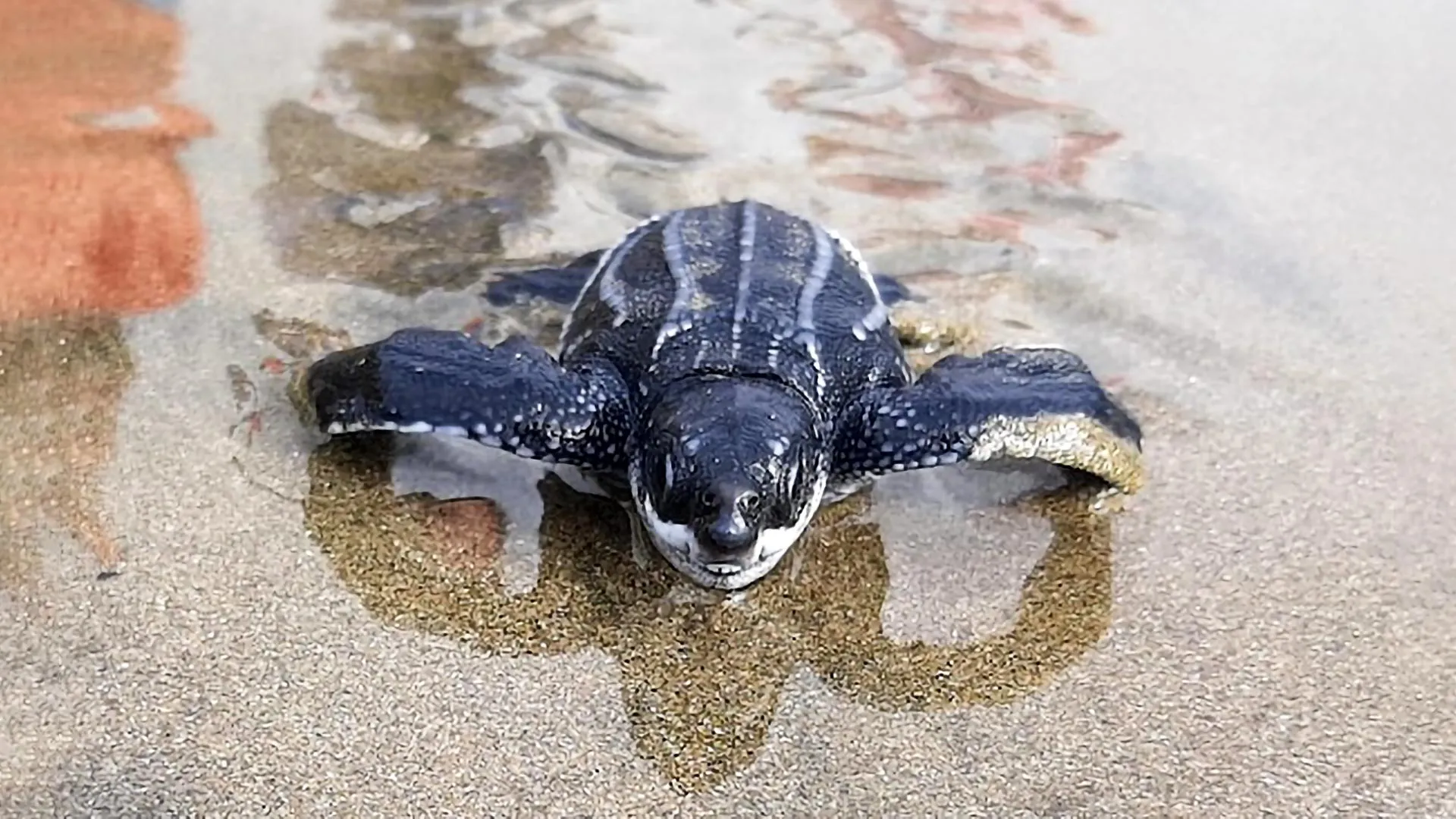
A leatherback sea turtle choosing a cooler beach is not an accident. It is a signal, and one we should read with both hope and caution. The discovery that the world's largest sea turtle is pioneering new nesting grounds along Ecuador's cooler coast, where researchers have recorded unprecedented nesting activity and promising hatching rates, offers a rare glimmer of hope for a population that has declined by more than 90% since the 1980s. But adaptation is not recovery, and this single data point does not erase the broader trends we track across our Genomic mapping reveals hidden connectivity in Arctic snailfish populations work, which shows how species are being pushed into unfamiliar territories by shifting environmental conditions.
For our readers, whether you are a researcher calibrating models, a policymaker weighing climate indicators, or a student tracking ocean intelligence, this finding changes how we think about resilience. The turtles are not merely surviving; they are actively relocating to areas with temperatures that support embryo development. That is a measurable, empirical shift in behavior. It suggests that at least some species possess a plasticity we had not fully validated. But it also raises a difficult question that our related research on Genetic data reveals extinction risk rising in the deep ocean's hidden refuge forces us to confront: what happens when the safe ground runs out? The deep ocean was once considered a refuge too, and genetic data now shows extinction risk rising even there.
This is not a story of triumph. It is a story of movement under pressure, and that distinction matters for how we allocate resources. The Ecuadorian coastline is cooler relative to traditional nesting sites, but it is not immune to the warming trends that drive our climate indicators. The promising hatching rates we see today may not hold if those waters warm by another degree. What we are witnessing is a real-time experiment in biological adaptation, and the outcome is far from settled. The turtles are buying time, but time is not a strategy.
The practical takeaway is this: conservation planning must now account for geographic mobility. Fixed protected areas designed decades ago may no longer align with where species actually need to be. We should treat this leatherback discovery as a call to integrate dynamic habitat modeling into marine policy, not as a reason to relax our vigilance. The question to watch is whether these new nesting sites can sustain themselves across multiple generations, or whether they represent a temporary corridor to an even narrower future.