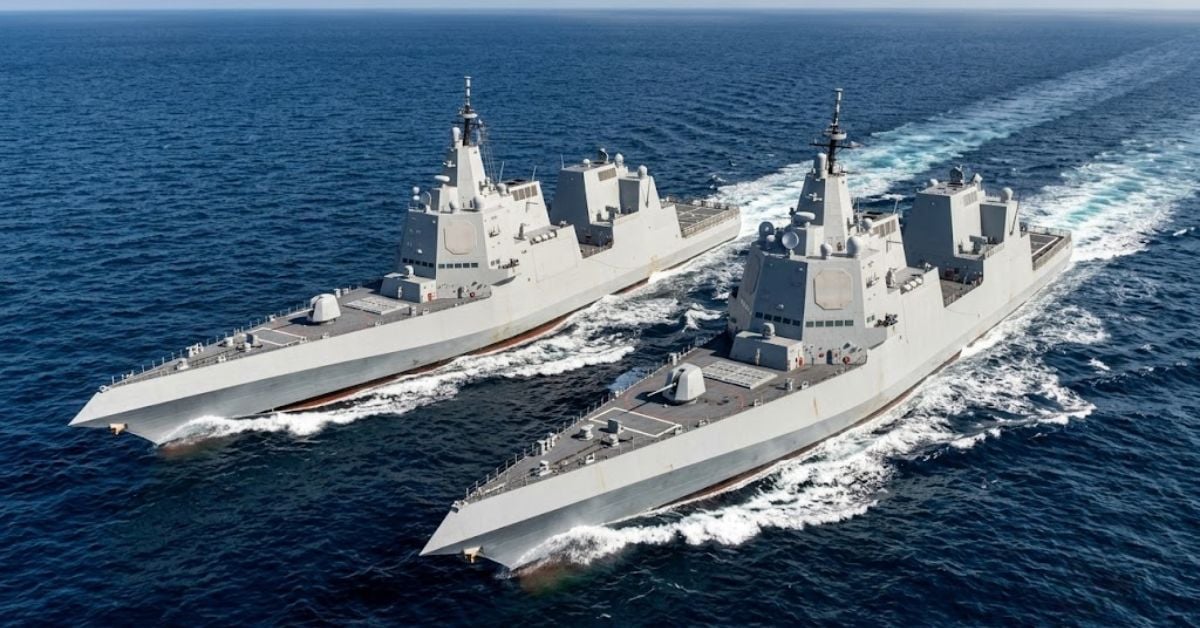
Italy's decision to move forward with a $4.2 billion contract for two next-generation DDX destroyers, awarded through OCCAR to Orizzonte Sistemi Navali, is a statement of intent. It is not a small modernization step, but a deliberate investment in a specific kind of naval power: one that prioritizes persistence, sensor integration, and the capacity to operate across domains that are increasingly contested. For a nation whose geography places it at the center of the Mediterranean's busiest shipping lanes and its most fragile security dynamics, this is not about posturing. It is about calibrating a response to a world where the distance between naval presence and naval leverage has narrowed considerably.
This move sits alongside other European efforts to update maritime forces, such as Sweden Bolsters Naval Capabilities with Acquisition of Four Advanced Frigates, where the first of four new ships is expected by 2030. What connects these programs is not just their timing, but their shared recognition that surface fleets must be built around data, not just firepower. At the same time, the Mediterranean is not only a theater for state competition. As recent disruptions in the Strait of Hormuz show, where reported attacks have hit merchant vessels on both sides of the Gulf, commercial traffic remains a vulnerable and consequential target. The DDX program, with its focus on integrated sensors and command systems, is designed to give Italy the ability to operate in that crowded, ambiguous space without ceding the initiative. That is the practical value of this contract: it buys capacity to observe, to track, and to respond with precision, rather than merely to project force.
There is also an industrial logic here that deserves attention. By consolidating the program under OSN, a joint venture of Italy's major naval shipbuilders, the contract does more than deliver hulls. It sustains a domestic industrial base that is essential for long-term maintenance, upgrades, and interoperability with allied forces. This is not a flashy point, but it matters. For readers tracking naval trends, the lesson is that Italy is not just buying ships; it is preserving the expertise to evolve them over decades. That is a different kind of investment than procuring off-the-shelf capability, and it reflects a mature understanding of how naval power is sustained. Compare this to the emerging interest in hydrogen propulsion for commercial vessels, such as the approach outlined in Viking Astrea: Pioneering Hydrogen Propulsion for Sustainable Ocean Cruising, and you see a broader pattern: whether the goal is decarbonization or deterrence, the future belongs to platforms that can adapt through software and modular design, not just steel.
Our take is straightforward. This contract is a signal that Italy intends to remain a credible naval actor in a region where stability cannot be assumed. It is not an act of aggression, but it is a clear statement of readiness. The question worth watching is not whether the DDX will be built on time or on budget, though those are valid concerns. The more interesting detail is how these ships will be networked with allied forces and whether their sensor and communication architecture will be open enough to integrate new tools as they emerge. For a reader asking what this means, we would say this: watch how quickly the first ship is delivered, and then watch how it is used in the Mediterranean's daily operations. The contract is the easy part. The real test is whether the platform becomes a node in a larger, more resilient ocean intelligence ecosystem, or just another hull in the water. That will be the metric that matters.