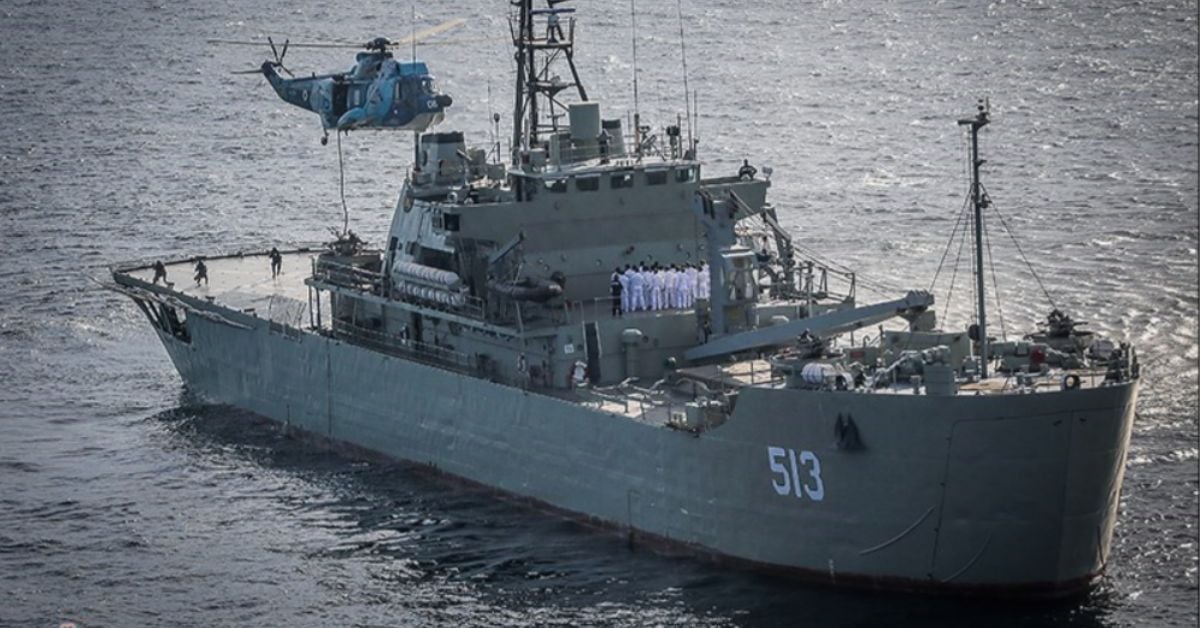
Six months is a long time for a warship to remain in a foreign port under the guise of an emergency. The IRIS Lavan's extended stay at India's Port of Kochi is not merely a logistical footnote; it is a data point in a far larger maritime calculus. While the official narrative around emergency docking has gone quiet, the physical reality of a naval vessel parked in Indian waters for half a year demands a more analytical lens. For our readers who track the intersection of geopolitics and ocean policy, this is not a question of alarm but of calibration: what does a prolonged presence signal, and what precedent does it set for the rules-based order that governs the Indian Ocean? We do not deal in speculation about intentions, but we do deal in the measurable fact of time and its implications.
This incident does not exist in a vacuum. As we reported, India is projecting an expanded naval fleet to navigate a more contested maritime environment, while simultaneously laying new subsea cables across the Indian Ocean to carry the world's data traffic. The strategic logic is clear: the ocean is both a highway and a battlefield, and the infrastructure that connects us is becoming as contested as the sea lanes themselves. The India Projects Expanded Naval Fleet to Navigate Evolving Maritime Landscape story underscores that New Delhi is not waiting for the future; it is engineering for it. Meanwhile, the Integrated Subsea Cables Enhance Data Transmission Across the Indian Ocean highlights how 99% of the world's data flows under the sea, making the physical security of that seabed a matter of economic survival. Against that backdrop, the IRIS Lavan's extended stay becomes less about a single ship and more about the friction between cooperative norms and hard-power realities.
Our take is straightforward: this is a test of India's maritime doctrine. If the port call was truly for repairs, the timeline strains credulity. If it is something else, then we are watching a quiet recalibration of India's non-alignment posture in real time. For researchers and policymakers, the practical takeaway is to watch the maintenance records and movement logs rather than the press releases. For ocean enthusiasts, the lesson is that the sea is not a passive resource; it is a stage for strategic choreography. We would tell a reader who asks, "What does this mean?" that the answer lies in the gap between what is said and what is measured. The IRIS Lavan is not a ghost ship, but its presence is a shadow over the assumption that port calls are always innocent.
The specific detail to watch is the next scheduled departure notice, or the absence of one. If the vessel remains past the monsoon season, it will be fair to conclude that the emergency was a pretext, and that India is comfortable with a new form of naval diplomacy that tolerates ambiguity. That would be a concrete shift, not a rhetorical one. The ocean does not lie; it simply holds the ships that carry our intentions. We intend to keep measuring.