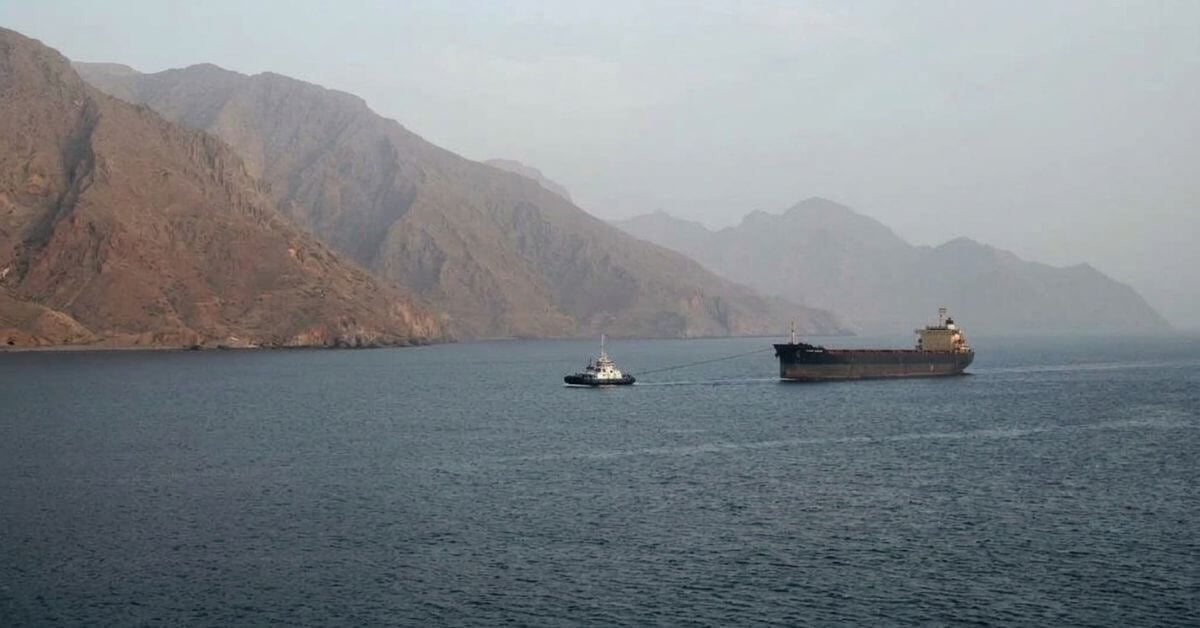
Iran's decision to blacklist 26 tugboats for bypassing Strait of Hormuz protocols marks a deliberate escalation in its campaign to control maritime traffic through one of the world's most critical chokepoints. This is not a bureaucratic footnote; it is a strategic move to sever the logistical lifeline that keeps damaged tankers moving. For anyone monitoring global energy security or regional stability, the practical consequence is immediate: the already fragile flow of crude oil through the strait is now under direct threat from a new angle.
The Persian Gulf Strait Authority has named tugs flagged in Panama, Singapore, the UAE, Liberia, Mali, and Tuvalu, warning that any vessel or company cooperating with non-compliant ships will also be added to the blacklist. With 266 vessels now on the list, Iran is systematically narrowing the operational space for commercial shipping. This crackdown comes as daily transits through the strait have plummeted from 138 to roughly 38 vessels, following a wave of attacks that struck 10 tankers in the last week alone. The pattern is consistent with what we have seen in other conflict zones. Our reporting on the Black Sea grain corridor loses 63% of shipments amid 300 vessel attacks showed how sustained attacks on shipping can collapse transit volumes and disrupt global supply chains. Here, Iran is applying a similar logic but targeting the support vessels that enable recovery, not just the cargo ships themselves.
Analysts note that Tehran is now trying to block the towing of damaged ships as well as firefighting and salvage work. This is a significant tactical shift. Tugs have been essential to keeping crude shipments moving after Iranian strikes, towing damaged tankers to safe locations. By blacklisting these vessels, Iran aims to make it prohibitively risky for any operator to assist a stricken ship. The human cost is already visible: a Panama-flagged tug was damaged in the area earlier this month, and in March, a UAE-flagged tug incident off Oman killed four seafarers and injured three others. These are not abstract policy moves; they are decisions with direct consequences for crews at sea. The broader context of conflict, Iran has been at war with the US and Israel since February 28, means that commercial shipping is now a battlefield, not just a corridor. Our coverage of the Egyptian Crew Maneuver and Armed Guard Fire Repel Three Speedboat Attacks illustrates how crews are already adapting to survive, but the tugboat blacklist adds a layer of legal and operational risk that no amount of evasive maneuvering can solve.
The stalled memorandum of understanding between Iran and the US, signed on June 18, hangs over this escalation. Disagreements over guarantees for free navigation through the strait have left the agreement in limbo, and this blacklist is a signal that Iran is not waiting for diplomatic resolution. The specific detail to watch is whether flag states like Panama and Singapore, which have substantial commercial interests at stake, will push back diplomatically or quietly advise their operators to comply. If they do not, the blacklist could become a de facto ban on tug operations in the strait, further strangling the 38 vessels still transiting daily and raising the stakes for every barrel of oil that moves through Hormuz.