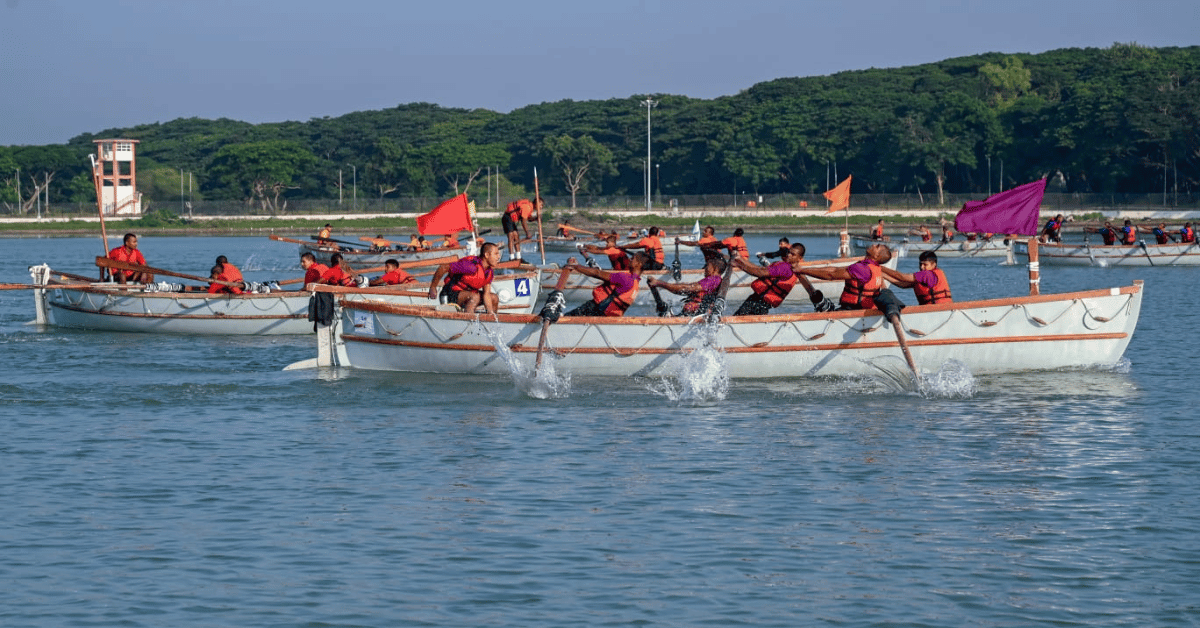
Understanding drives protection. The graduation of over 3,300 Agniveers and Indian Coast Guard Naviks at INS Chilka is not merely a record-breaking parade; it is a calibrated investment in the very infrastructure of ocean intelligence. When India's largest single cohort of naval personnel enters service, the implications extend far beyond ceremonial grounds. This is a tangible expansion of the human capacity required to operate, maintain, and interpret the integrated data ecosystems that modern maritime security demands.
The scale of this achievement, the ninth Agniveer batch, now enlarged by a revised recruitment scheme that offers two additional service years and a path to permanent retention, directly addresses a critical gap in operational readiness. As we have previously explored in our coverage of India's $5.6B corvette order modernises naval fleet to strengthen ocean intelligence, platforms are only as effective as the crews who deploy them. Similarly, the delivery of indigenous warships like INS Amini, detailed in INS Amini Delivers Fifth Indigenous Shallow-Water Warship to Indian Navy, underscores a parallel track of hardware modernization. A fleet of next-generation corvettes and shallow-water combatants cannot be leveraged without a steady pipeline of trained, disciplined sailors who understand sensor fusion, real-time data relay, and the empirical demands of sustained patrol.
What this graduation means in practical terms is a measurable increase in the Indian Navy's ability to execute longitudinal maritime monitoring. Every Agniveer and Navik passing out of INS Chilka represents a validated node in a larger network, one that must track climate indicators, enforce shipping lanes, and respond to emerging threats from the Indian Ocean to the South China Sea. The live-streaming of the parade signals a deliberate effort to communicate this readiness to a domestic audience, building public literacy around the steady, unglamorous work of naval stewardship. It is a counterpoint to alarmist narratives: progress here is calibrated, incremental, and peer-reviewed in the field.
The most concrete takeaway from this event is the shift in retention strategy. By extending Agniveer service to six years and formalizing a permanent recruitment pathway, the Indian government has effectively acknowledged that four years was insufficient to recoup the training investment. The question now is whether the revised scheme will produce the career specialists needed to operate the eight next-generation corvettes and the growing fleet of shallow-water warships. Watch how many of these 3,300 graduates transition into the regular cadre in 2028, that retention rate will be the real empirical measure of this cohort's impact on ocean intelligence.