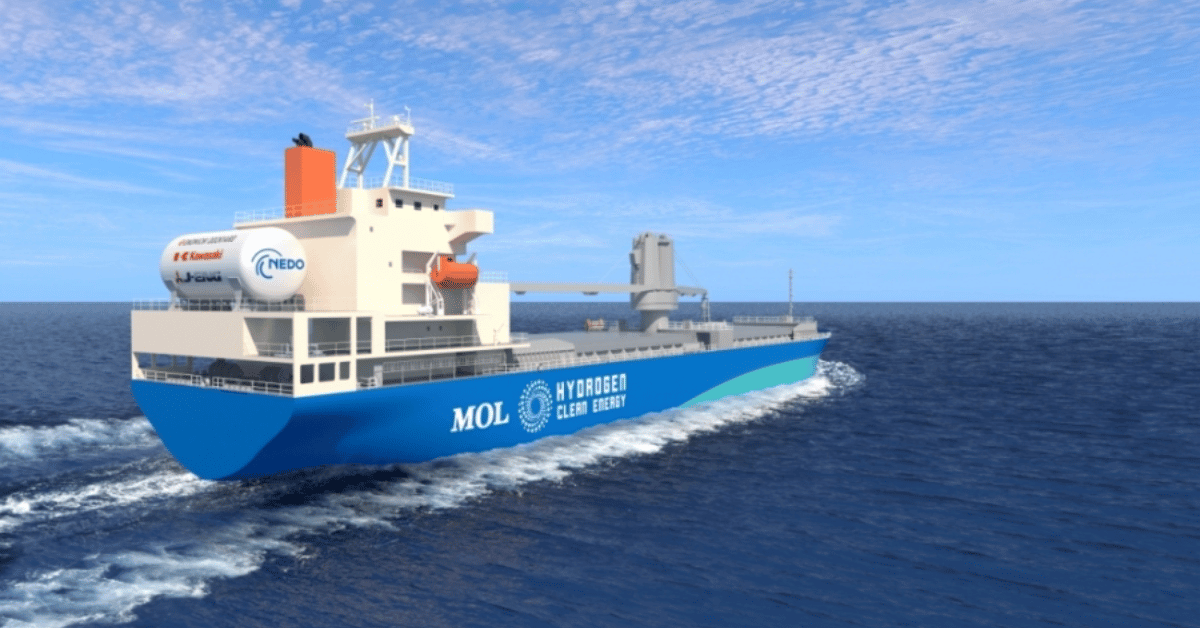
The first commercially rated hydrogen-fuelled engine for large ocean-going vessels has completed factory testing, and the numbers demand attention. Japan Engine reports over 95% greenhouse gas reductions during trials, a figure that moves hydrogen from theoretical promise to measured performance. This is not a concept model or a lab demonstration. It is a propulsion system built for the commercial fleet, tested under controlled conditions, and validated against the metric that matters most: actual emissions abatement.
For our readers who track the maritime energy transition, the significance is direct. The global fleet is not short of ambitious decarbonisation roadmaps. What it has lacked is a prime mover that can burn hydrogen and deliver the reliability and power density that ship operators require. Japan Engine has now provided that evidence. The 95% reduction is not an incremental improvement. It is a step change that resets expectations for what is achievable with current technology. This is the kind of empirical result that moves conversations from feasibility studies to procurement discussions.
The timing is also instructive. The sector has been distracted by high-profile incidents and geopolitical disruptions, from drone strikes on LPG tankers near the Strait of Hormuz to groundings off the Somali coast. Those events, covered in our reporting on the Drone Strike Impacts LPG Tanker Near Strait of Hormuz and the Somali Navy Rescues Crew After Cargo Ship Runs Aground, remind us that the operating environment for shipping remains volatile and hazardous. Yet the energy transition does not pause for disruptions. If anything, these events underscore the need for a more resilient, diversified fuel mix. Hydrogen, if it can be produced and bunkered at scale, offers a pathway that reduces both emissions and, potentially, supply chain vulnerability.
Our take is measured but clear: this is the first credible signal that hydrogen can carry the baseload for deep-sea shipping, not just short-sea routes or auxiliary power. The next question is not whether the engine works, but whether the fuel infrastructure will arrive before the commercial advantage fades. Japan Engine has done its part. The burden now shifts to ports, fuel suppliers, and regulators to create the conditions where a 95% reduction in the engine room is not an outlier but the standard.
What we would tell a reader who asks about this story is simple: watch the pilot installations, not the press releases. The factory test is a necessary milestone, but the real data will come from onboard performance, fuel cell degradation rates, and the logistics of hydrogen supply chains. We would also flag the comparison with other emerging solutions. If hydrogen engines can match the reliability of conventional diesels while delivering these reductions, the economic case for LNG as a bridge fuel weakens considerably. That is a consequence worth tracking.
The specific takeaway to quote: "Hydrogen has moved from fuel of the future to engine of the present." The open question is whether the marine supply chain can catch up to the machine that now awaits it.