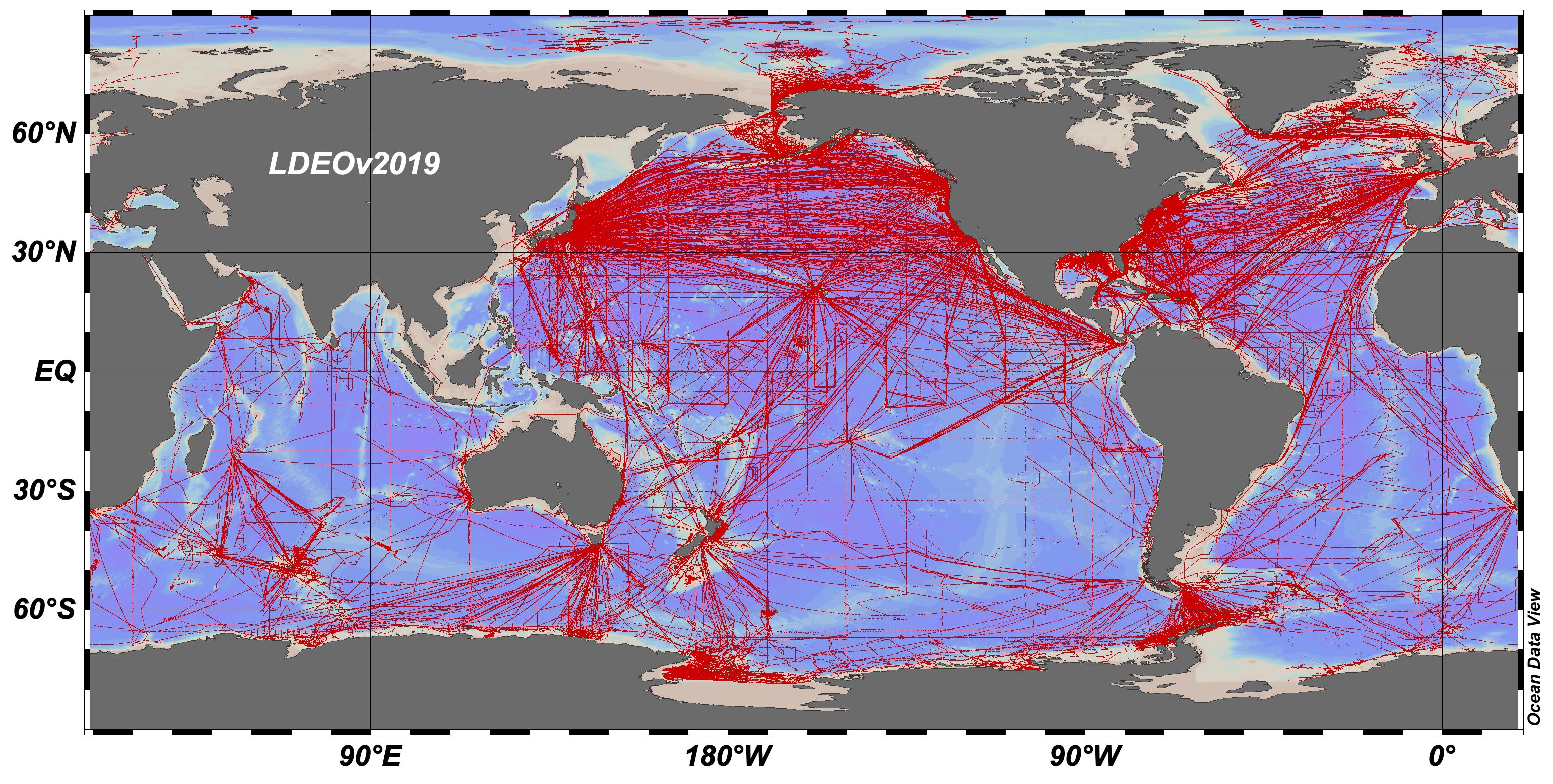
The ocean's role in regulating Earth's climate hinges on one measurable variable: how much carbon dioxide it absorbs. The new Global Surface pCO2 (LDEO) Database, delivered through NOAA's OCADS program, provides the most comprehensive, validated record of that exchange ever assembled. This is not merely a data release, it is a calibrated instrument for climate accountability. For researchers, policymakers, and anyone tracking the planet's carbon budget, this database transforms scattered observations into a single, quality-controlled source of ocean intelligence. It closes a critical gap between what we suspect the ocean is doing and what we can prove it is doing.
The database aggregates millions of surface pCO2 measurements from research cruises, moorings, and autonomous floats, each record subjected to rigorous quality control and peer-reviewed validation. What emerges is a longitudinal dataset that can be compared directly with atmospheric CO2 trends and satellite-derived sea-surface temperatures. This matters because the ocean absorbs roughly 30 percent of human-caused CO2 emissions, but that uptake varies by region, season, and depth. Without a validated baseline, climate models rely on assumptions. Now, they can rely on empirical evidence. As we noted in our coverage of Validated Observations Illuminate the Ocean's Measurable Carbon Role, the value of quality-controlled observations lies in their repeatability. This database extends that principle to a global scale, allowing scientists to ask sharper questions about where and when carbon enters the marine system, and what happens to it once it does.
This release also connects directly to the broader picture of ocean change. The same ocean that absorbs CO2 also stores record amounts of heat. Our reporting on Ocean Heat Content Reaches Record High in Measured History documented that warming trend. The pCO2 database now adds a carbon dimension to that thermal record, enabling integrated analyses of how heat and CO2 jointly affect ocean chemistry, stratification, and biological productivity. For example, warmer waters hold less CO2, which means a heating ocean may become a less effective carbon sink. The database provides the empirical data to test that feedback loop in real time. It also complements efforts to track other pollutants, such as the satellite-based plastic pathways we examined in Satellite data reveals measurable pathways of ocean plastic pollution. Together, these datasets form an integrated data ecosystem, one that can track both chemical and physical stressors on marine systems.
The practical consequence for our readers is straightforward: climate indicators are only as reliable as the observations that underpin them. This database sets a new standard for transparency and reproducibility in ocean carbon science. The specific detail to watch is the database's inclusion of uncertainty estimates for each measurement. That allows users to assign confidence intervals to regional carbon fluxes, which in turn strengthens the scientific basis for international climate negotiations and marine carbon-dioxide removal projects. The ocean does not speak in averages. It speaks in gradients, cycles, and anomalies. With this resource, we now have a shared language to listen.