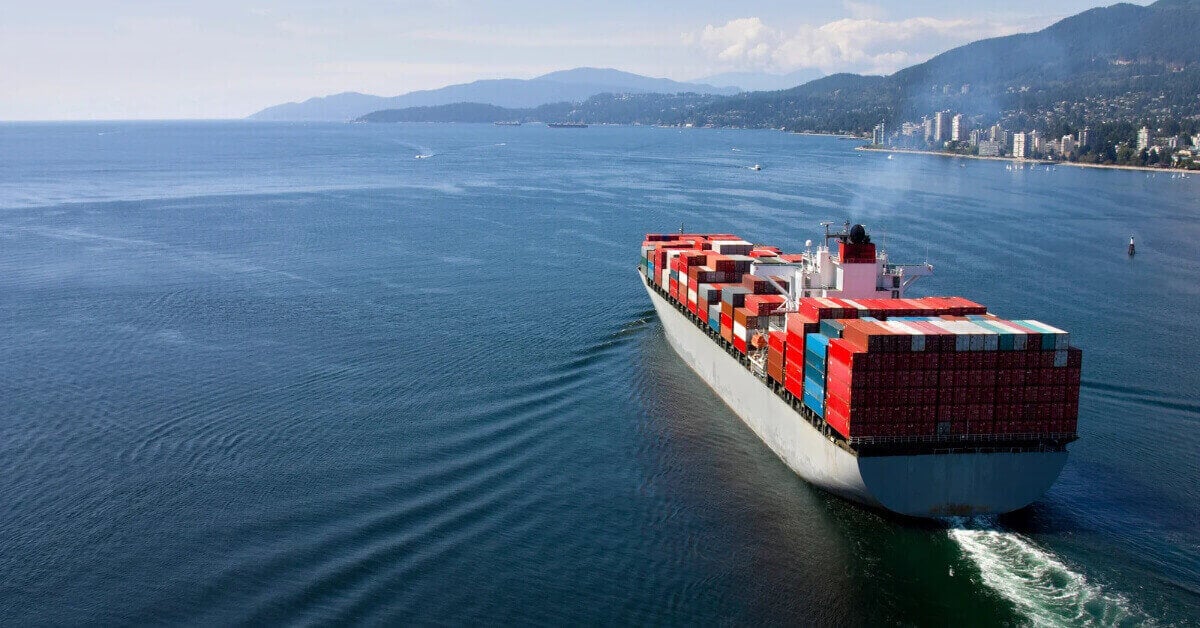
Methane from international shipping is not merely a technical gap in emissions accounting; it is a measurable failure of human rights protection. The appeal filed by Equal Routes and seven civil society organizations from Canada, Latin America, and Southeast Asia makes this distinction explicit, asking UN human rights experts to intervene before the International Maritime Organization's climate negotiations resume on 23 November. For researchers and policymakers who track Global fishing fleets show measurable carbon efficiency gaps across three distinct fishery structures, this action underscores a parallel truth: the same ocean that absorbs our carbon also bears the uncounted burden of methane slip from vessels burning liquefied natural gas. When a fuel is labelled "low emission" while its methane goes unmeasured, the data ecosystem is not just incomplete, it is misleading.
The practical consequence for our readers is clear. Current IMO rules do not require ships to measure and report the methane they actually emit. Methane traps roughly 80 times more heat than carbon dioxide over a 20-year period, and it also contributes to ground-level ozone that damages respiratory and cardiovascular health. The appeal draws on the International Court of Justice's 2025 Advisory Opinion on climate change, which the UN General Assembly adopted in May 2026, to argue that states cannot transfer their responsibility to private companies. This is not an abstract legal point. It means that without mandatory, transparent, and verifiable methane measurement, the IMO's Net-Zero Framework, postponed for a year in October 2025 and now set for adoption in December, will be built on an empirical foundation that omits one of the most potent climate indicators in the shipping sector. As Quantifying China's coastal wetlands as measurable climate indicators demonstrates, rigorous measurement transforms a natural system into a policy tool. The same logic applies here: what cannot be counted cannot be managed, and what cannot be managed cannot be regulated in the interest of public health.
The harm is not distributed evenly. Small Island Developing States, coastal communities, Indigenous Peoples, women, and children face the greatest exposure to climate impacts while contributing the least to emissions. The co-signing organizations bring frontline voices from places where LNG is extracted, shipped, and burned, Patagonia's San Matías Gulf, Mexico's Pacific coast, Indonesia, and the Philippines. They are telling the UN experts that methane from shipping is a lived human rights concern, not a technical footnote. For an audience that values longitudinal data and peer-reviewed evidence, this framing transforms an emissions debate into a question of justice: whose exposure is being validated by inaction?
The timing is tight. The IMO's working group on greenhouse gases meets from 23 to 27 November, followed by MEPC 85 from 30 November to 3 December, and a session on adopting the Net-Zero Framework resumes on 4 December. Decisions taken in those three weeks will determine whether shipping's methane is counted or left out. The specific detail to watch is whether the UN human rights mandates issue a joint statement before the negotiations begin. If they do, it will create a direct line between the ICJ advisory opinion and the IMO's rulebook, a measurable link between international law and the air that coastal communities breathe.