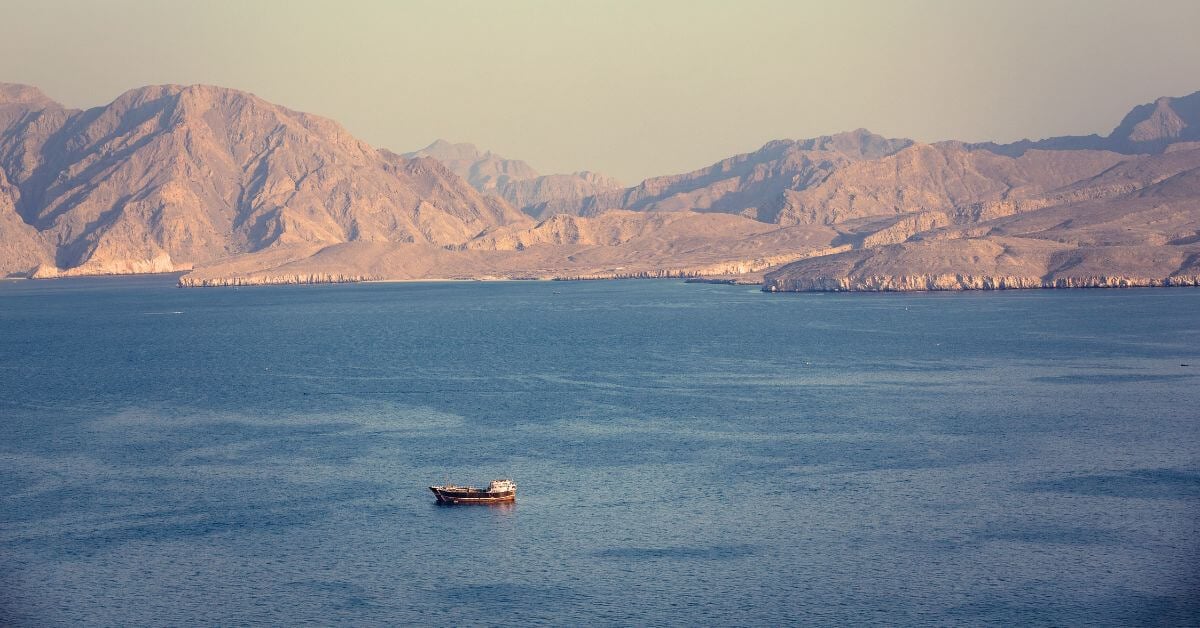
The proposal to rename the Strait of Hormuz, floated by former President Trump on Truth Social, is not a diplomatic overture. It is a test of how much political theater the global shipping industry can absorb before it starts pricing in the risk. The strait is not a name on a map to be debated in a social media post; it is a calibrated choke point where roughly 20% of global oil consumption transits daily. When a figure with executive authority asks whether geography should be rebranded, the question is not about cartography. It is about signaling control, and that signal carries measurable consequences for every tanker operator, insurer, and commodity trader watching from the Gulf of Oman.
The timing is telling. This proposal lands alongside reports that Gulf of Oman STS Transfers Max Out Amid Rising Saudi Oil Exports, which means the logistics chain around the strait is already operating at its limits. Ship-to-ship transfers at maximum capacity are not a sign of a stable system; they are a pressure valve. When the infrastructure around a strait is saturated, any rhetoric about renaming it injects a premium into an already strained market. Meanwhile, Phased Negotiations Aim to Ease Restrictions on Strait of Hormuz suggests a more pragmatic path exists. The contrast is stark: one side pursues phased de-escalation, the other seeks a rhetorical land grab over a waterway that cannot be owned by any single nation.
Our take is straightforward. This is not about whether a new name has merit. It is about the instability that comes from treating strategic geography as a branding opportunity. The strait is already a flashpoint, and the United States has stated it controls the waterway. That assertion, combined with the renaming proposal, creates a volatile mix for the integrated data ecosystem that underpins modern shipping decisions. Every analyst, from bunker traders to insurance underwriters, will now factor in the possibility of retaliatory measures that have nothing to do with names and everything to do with navigation rights. The related coverage on Russia's Northern Sea Route icebreaker funding shows how states are already recalibrating export strategies around chokepoints, and this proposal only accelerates that fragmentation.
What would we tell a reader who asks about this? Watch the insurance rates, not the headlines. The practical consequence is not whether the strait gets a new name, but whether the perception of political volatility alters the risk calculus for vessels transiting the waterway. If the renaming talk pushes even a fraction of shippers toward alternative routes or delays, the effect will ripple through oil prices and supply chains within weeks. The open question is whether Washington understands that control over a strait is not declared; it is measured in the unbroken flow of hulls through narrow waters. A name is a symbol. The traffic that passes through is the reality. We will be tracking which one the market decides to trust.