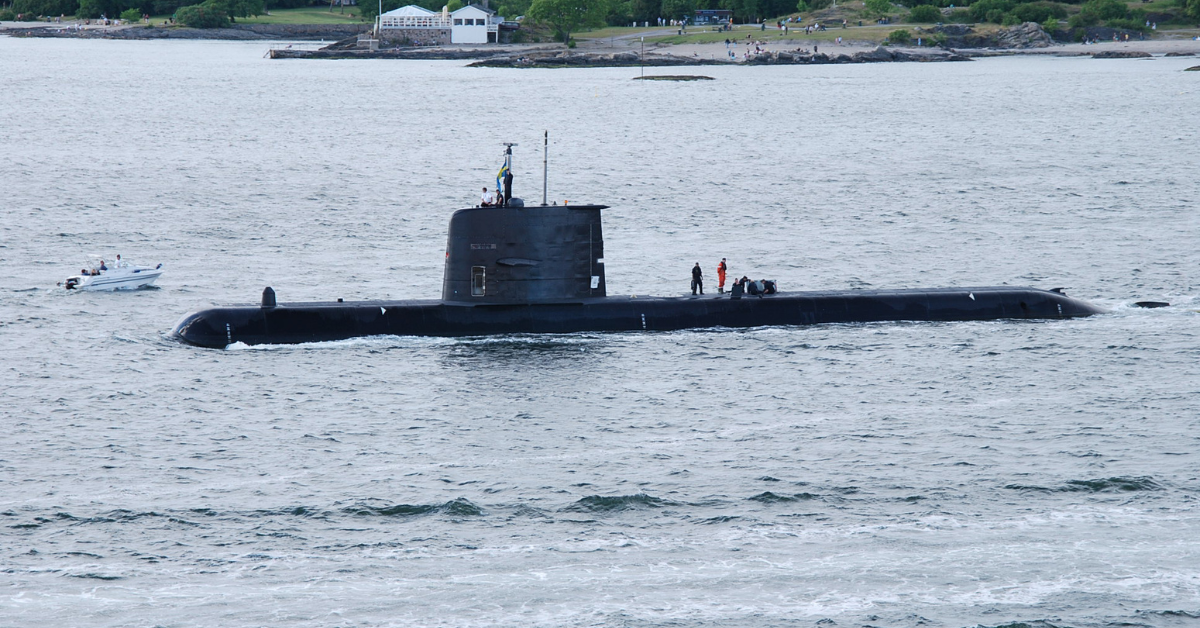
France's successful test launch of the M51.3 ballistic missile from the submarine *Le Vigilant* is a calibrated statement of strategic intent, and it deserves a clear-eyed reading. This is not merely a technical milestone for ArianeGroup; it is a deliberate signal about the value of independent, verifiable deterrence in a period when the rules-based order is under sustained pressure from hybrid threats. For those of us who track ocean-based security and infrastructure, the launch carries implications that reach well beyond the Finistère coastline.
The timing is precise. Weeks after President Macron warned that Russia's hybrid attacks against European interests would not go unanswered, the French Navy fired a missile that can travel farther and defeat modern anti-ballistic systems with greater accuracy than its predecessors. The connection between this test and the recent disruption of civilian maritime routes is direct. Compare this event with the Black Sea incident raises urgent questions on maritime safety and climate risk, where a Liberian-flagged tanker caught fire off Russia's coast, or the Attack on civilian cargo ship at Odesa port claims one crew member, in which a motorman sailor was killed. In the Black Sea and the Gulf of Finland, commercial vessels have become targets or instruments of geopolitical friction. France's missile test is a reminder that the same ocean domain used to project hybrid pressure is also the domain where sovereign deterrent forces operate, silently, persistently, and with measurable effect.
Our take is straightforward: this test validates a principle that ocean intelligence professionals and policymakers alike should internalize. Credible deterrence depends on empirical, repeatable performance data, not on rhetoric. The M51.3 flight was the 13th in the program and the seventh from a submarine; each launch builds a longitudinal dataset that confirms the system's reliability. That discipline matters because, as Macron put it bluntly, "To be free, one must be feared, and to be feared you have to be powerful." Power, in this context, is not abstract. It is the result of integrated engineering, calibrated testing, and a fleet that can remain on station for months at a time. The *Le Vigilant* has now been cleared to return to active duty, rejoining France's sea-based nuclear force, the only independent nuclear arsenal within the European Union, estimated at around 290 warheads.
What does this mean for our readers? First, it underscores that ocean-based strategic systems remain the most survivable leg of any nuclear deterrent. Submarines are moving, silent platforms that can operate in real-time response to shifting threat environments. Second, it raises an open question that deserves attention: Macron's earlier invitation for other European countries to join France's "advanced" deterrence framework is no longer a diplomatic abstraction. With this test, France has demonstrated that its capability is operational and improving. Whether other European nations will seek to integrate their security planning with that framework, and what that would mean for the shared ocean space, is a concrete question for defense analysts and maritime policymakers to watch. The missile has landed in the North Atlantic. The political ripples have only begun to spread.