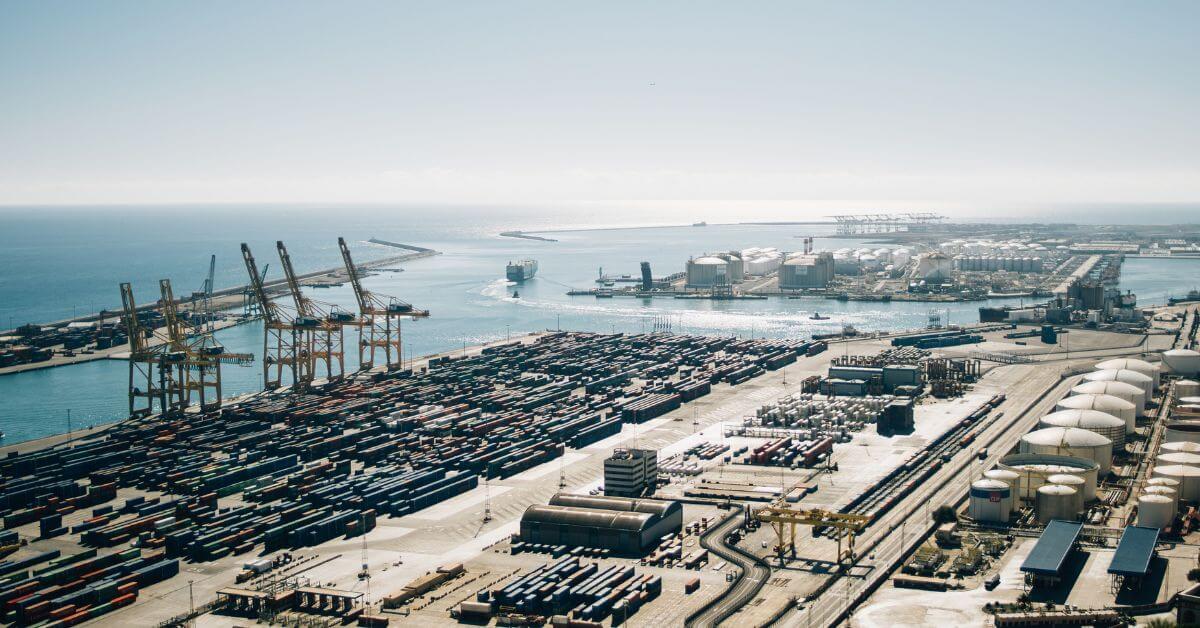
The sight of French fishermen blockading the ports of Nice and Sete, alongside the oil depot in Frontignan, is not merely a labor dispute over diesel prices. It is a direct, measurable rupture in the maritime supply chain, triggered by the geopolitical friction of a US-Iran conflict. When the people who operate the vessels that sustain coastal economies choose to physically seal off their own harbors, they are signaling that the cost of doing business has become less predictable than the risk of protest. This is the raw interface where global politics meets the hull of a fishing trawler.
We should read this action in the context of a broader system under strain. The same week that fishermen halted traffic in the Mediterranean, we saw reports of Gulf of Oman STS Transfers Max Out Amid Rising Saudi Oil Exports and a Puntland Forces Intercept Hijacked, US-Sanctioned Oil Tanker After 48 Hours. These are not isolated incidents; they are data points in an integrated data ecosystem where fuel costs, security threats, and diplomatic pressure converge. The tanker hijacking off the Horn of Africa and the saturated STS transfer zones in the Gulf of Oman are symptoms of the same volatility that pushed fuel prices past the threshold of sustainability for French fishermen. The link is not coincidental; it is causal.
Our take is straightforward: the maritime industry must stop treating these events as anomalies and start modeling them as the new baseline. For our readers, whether they are fleet operators, logistics managers, or policy analysts, the practical takeaway is that fuel price sensitivity is now a function of geopolitical risk, not just market supply. The blockades are a warning that when the cost curve intersects with political instability, the physical movement of goods halts. We would tell a reader who asks, "What does this mean for me?" that if a port in Southern France can be shut down by its own fishing fleet over fuel costs linked to a conflict in the Middle East, then no shipping lane is truly secure, and no fuel budget is truly fixed.
The specific detail to watch is the duration of the blockade. If the French government concedes on fuel taxes or subsidies, it sets a precedent for other labor actions across the Mediterranean, which could further disrupt the Eighty Nations Urge Reopening of Vital Strait of Hormuz Shipping Lane narrative. The call to reopen Hormuz is a diplomatic aspiration; the reality is that regional actors are already acting on the assumption that it stays closed. The question is not whether the fishermen will return to work, but whether the underlying cost structure will allow them to stay there. That is the calibrated, empirical measure of whether we are witnessing a protest or a pivot in how maritime labor responds to global conflict.