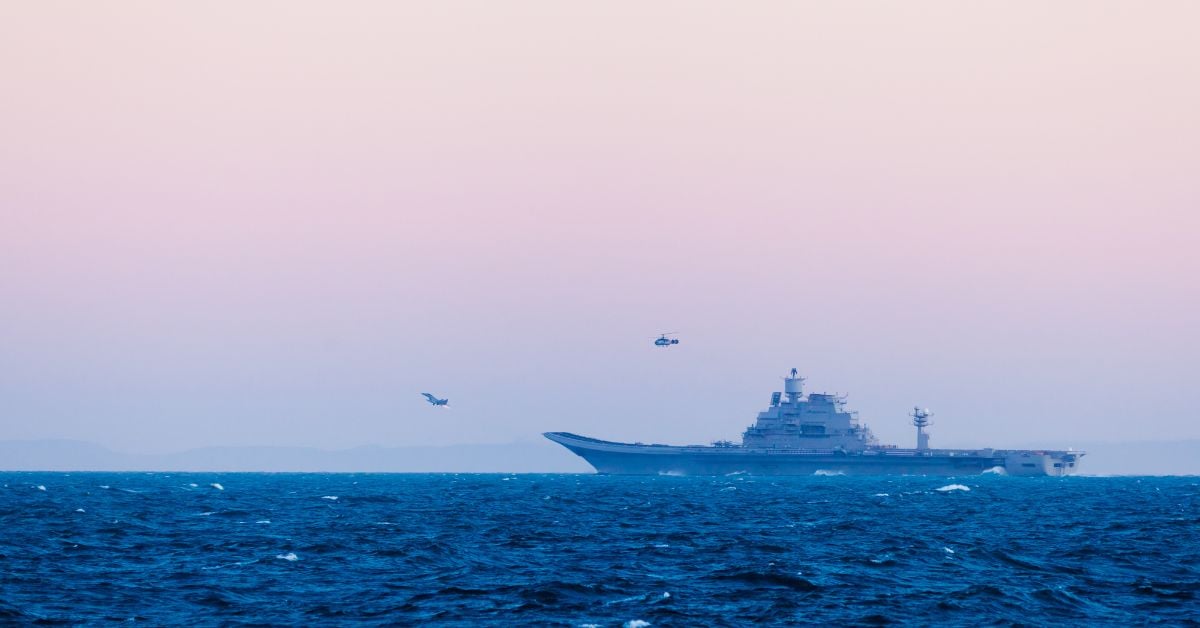
China's reported progress toward a nuclear-powered aircraft carrier by 2027 is a measured, empirical signal of how naval power is being redefined by sustained industrial capacity and integrated technology. This is not about alarm or rivalry; it is about understanding the measurable shift in global maritime capability. The CSIS report, based on satellite imagery of the Dalian Shipyard, shows a hull 322 meters long and 46 meters wide, assembled from prefabricated components in under two years. That pace alone is a data point worth calibrating. For researchers, policymakers, and ocean intelligence analysts, this development means that the operational range and endurance of naval forces are being extended in ways that directly affect maritime domain awareness, climate monitoring infrastructure, and the security of undersea cables and research platforms.
The propulsion system is the defining feature. A nuclear-powered carrier does not require refueling and can sustain high speeds over long deployments, returning to port only for crew supplies. This changes the calculus for sustained naval aviation operations over great distances. It is a validated advancement in naval engineering, but its implications ripple beyond military strategy. Consider how this integrates with other developments we have covered. China has already tested the launch of unmanned strike and reconnaissance aircraft from an amphibious assault ship, as reported in Unmanned aircraft launch from amphibious assault ship expands ocean intelligence. A nuclear-powered carrier equipped with four aircraft launch catapults could serve as a platform for such uncrewed systems, expanding the reach of real-time ocean data collection. Similarly, the integration of autonomous operations with missile payloads, detailed in New uncrewed semi-submersible warship integrates missile payload with autonomous operations, points to a broader trend: naval platforms are becoming nodes in an integrated data ecosystem, not just tools for force projection.
For our audience, whether you track climate indicators, monitor maritime traffic, or study geopolitical shifts, the practical takeaway is this: the rapid construction of a nuclear-powered carrier accelerates the timeline for blue-water operations that can support or disrupt oceanographic research, undersea infrastructure, and global shipping lanes. The Type 004, if it enters service next year, will place China's naval capabilities on par with U.S. blue-water capacity. This is not a judgment of intent; it is a measurable fact of industrial output. The same shipyard that built the 80,000-ton Fujian carrier with electromagnetic catapults is now building a larger, nuclear-powered vessel. The pace is empirical, and the consequences for ocean intelligence are direct. The question to watch is not whether China will launch this carrier, but how the integrated deployment of nuclear propulsion, uncrewed aircraft, and autonomous warships will change the data available to the global scientific and policy community. That is the concrete point: the ocean is becoming a more instrumented, more contested, and more measurable domain, and our tools for understanding it must keep pace with the vessels that navigate it.