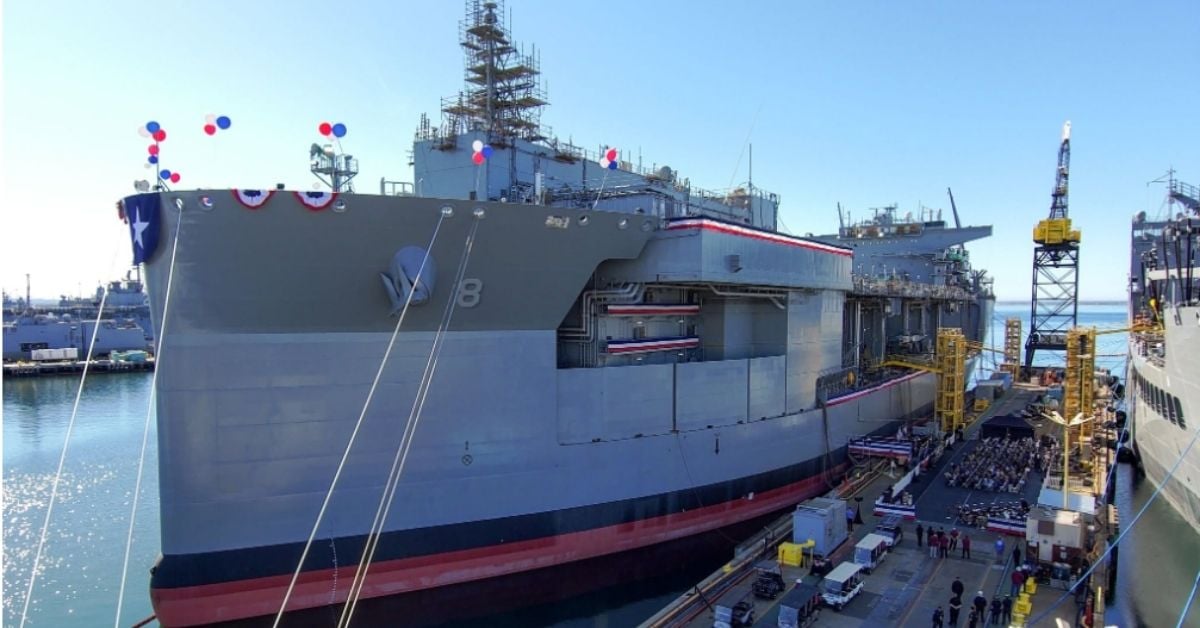
The delivery of the USNS Hector A. Cafferata Jr. (ESB-8) in San Diego is not merely a shipbuilding milestone; it is a statement about where naval power is headed. This final expeditionary sea base represents a shift in how the Navy projects force, moving away from large, vulnerable platforms toward distributed, flexible assets that operate closer to the action. As the Navy Accelerates Autonomous Systems Integration for Enhanced Maritime Operations, the Cafferata class offers a viable surface hub for unmanned vehicles, data relay, and aviation support without the overhead of a full carrier strike group.
Our take is straightforward: this is a practical acknowledgment that the maritime environment has changed. The Cafferata is not a warship in the traditional sense; it is a mobile base that reduces reliance on foreign ports and increases operational tempo. For our readers, particularly those in defense logistics and strategic planning, the practical impact is measurable. The ship provides a secondary role as a command and control node, and its ability to support mine countermeasures and special operations forces makes it a multi-mission asset. The timing is telling, as India Projects Expanded Naval Fleet to Navigate Evolving Maritime Landscape with a similar focus on endurance and reach. This is not a coincidence; it reflects a global consensus that blue-water agility is a requirement, not an option.
What we would tell a reader asking about this delivery is to focus on the integration, not the hull. The value of the ESB-8 is in how it connects with the broader fleet. The Navy's new centre for autonomous systems, as reported, is a direct complement to this ship's mission profile. The Cafferata can host multiple unmanned surface vessels and aerial drones, turning raw data into actionable ocean intelligence. This aligns with the service's goal of creating an integrated data ecosystem, but the real test will be in the operational doctrine. Will the Navy allocate the necessary resources to train crews and maintain these ships at a high readiness level? The platform is proven; the concept of operations is still evolving.
We would caution against viewing this as a static achievement. The ship is a tool, and its effectiveness depends on the network it supports. The Integrated Maritime Data Collection Underway in Philippine Exercise demonstrates how forward-deployed assets are already testing similar concepts in the Indo-Pacific. The Cafferata must be exercised in realistic scenarios, not just certification trials. The specific detail to watch is how quickly the Navy integrates ESB-8 into live exercises with allied forces. If it becomes a permanent fixture in the Pacific theater, the return on investment will be validated. If it remains a strategic reserve asset, the capability will be underutilized. The operational tempo of the next 18 months will tell us if this investment is a force multiplier or a costly lesson in naval procurement.