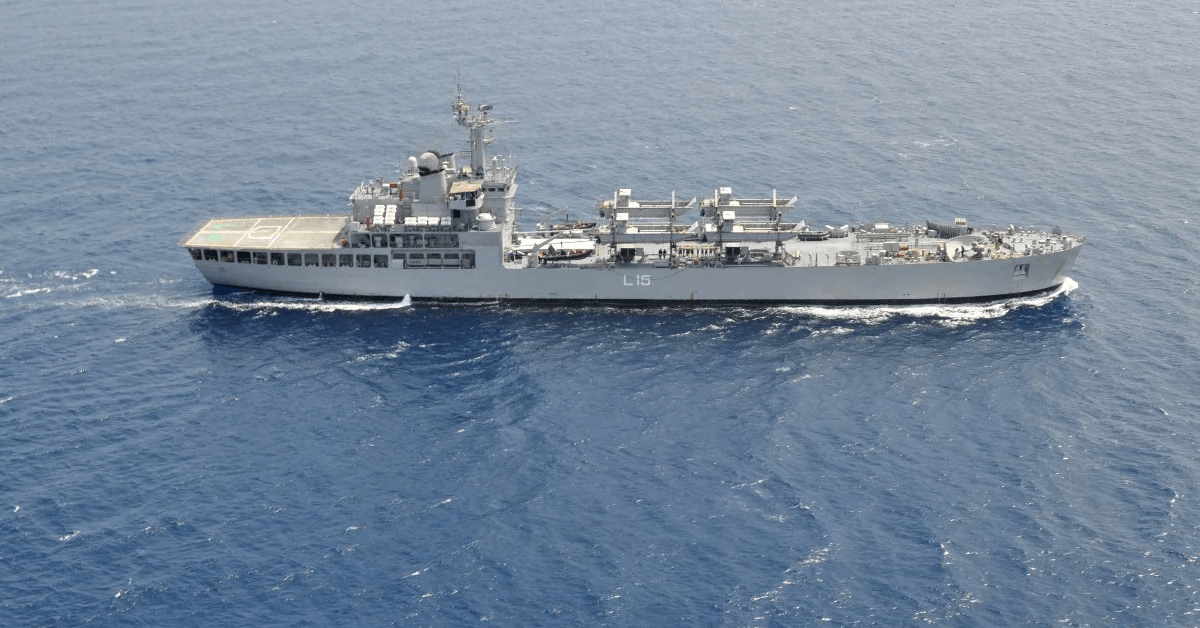
The INS Kesari incident is a clear signal that even the most capable navies face vulnerabilities during routine berthing, and it underscores a gap that real-time vessel monitoring can fill. While the Indian Navy's swift response and the absence of casualties are commendable, the lack of immediate data on water ingress volume, affected compartments, and root cause points to a systemic challenge: without integrated, real-time sensor feedback, damage assessment remains reactive. This matters to our readers because the same data ecosystems that power ocean intelligence for climate indicators and maritime security can be calibrated for operational safety, turning a ship like the Shardul-class Landing Ship Tank into a node of empirical, measurable awareness rather than a post-incident puzzle for a Board of Inquiry.
The contrast between this event and India's broader naval ambitions is instructive. Just months ago, the India greenlights ₹40,000 crore naval warship project to strengthen maritime defence signaled a massive investment in future platforms, while the launch of new patrol vessel INS Srishti strengthens India's maritime observation capacity demonstrated a commitment to persistent surveillance. Yet the Kesari incident reminds us that hardware alone is insufficient; the operational intelligence layer, validated, real-time data streaming from every compartment and system, is what transforms a vessel from a static asset into a responsive one. A longitudinal view of shipboard incidents across global navies would likely show that many ingress events are preceded by subtle, measurable shifts in pressure or trim that peer-reviewed sensor networks could catch before they escalate.
The practical takeaway for policymakers and fleet operators is this: invest in retrofitting existing hulls with integrated sensor suites that feed a common data ecosystem, not just in building new ones. INS Kesari, commissioned in 2008 and with a distinguished humanitarian record during Mission Sagar in 2020, still has years of service ahead. Adding calibrated, real-time monitoring to its systems, and to every vessel in the Eastern Naval Command, would turn a single point of failure into a source of empirical data for the entire fleet. The question is not whether the Board of Inquiry will find a cause; it is whether the Navy will use this incident to mandate a measurable, integrated approach to vessel health that matches the scale of its shipbuilding ambitions.