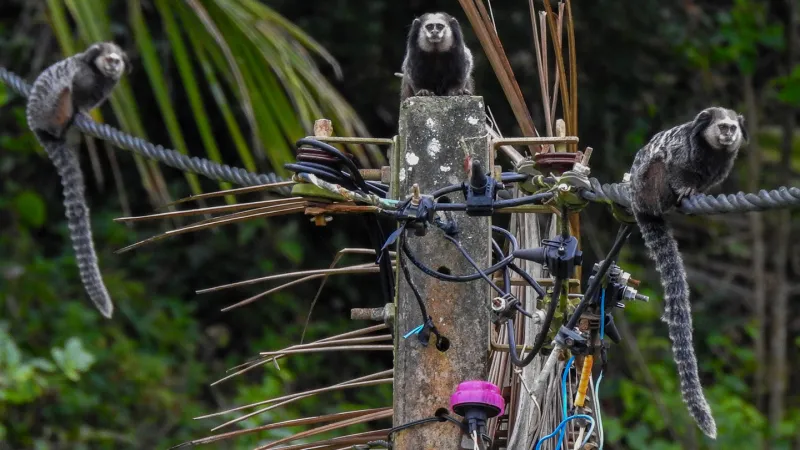
The link between drought and disease is rarely a straight line. It is a chain of events, each link forged by environmental stress and biological necessity. The report that wildlife migration, driven by a search for water, may have triggered Brazil's first yellow fever outbreak in decades is a stark reminder that we are not managing separate crises. We are managing one interconnected system. When the forest is pushed to move, it brings its pathogens with it. This is not a story about a single failing or a single species; it is about the cascading consequences of a changing climate, where the movement of an animal is a data point we can no longer afford to ignore.
This narrative of displacement and consequence mirrors other patterns we are tracking. The mechanisms differ, but the underlying principle is consistent: environmental stress redistributes resources, and that redistribution has measurable, often costly, outcomes. Consider the Storm Surge Costs in Coastal China Reveal Complex Economic Impacts, where a single weather event creates a ripple effect of financial and infrastructural strain. Or look at the Atlantic Circulation Weakens: Global Climate Reshaping Predicted, which shows that the systems we rely on for stability are shifting in ways that are difficult to reverse. These are not isolated phenomena. They are all indicators of a planet in flux, where the movement of water, air, and now wildlife, is rewriting the rules of ecological and public health.
Our take is straightforward: we need to treat animal movement as a critical climate indicator, not just a biological curiosity. For researchers and policymakers, this means integrating wildlife tracking data with existing climate models. The practical implication is that disease surveillance must expand beyond human and vector populations to include the movement patterns of wildlife under duress. If animals are the early warning system, we are currently ignoring the alarm. For the reader, the takeaway is not fear, but preparation. The question is no longer if these events will happen, but where the next displacement will occur and whether our response systems are calibrated for the speed of the shift.
The specific detail to watch is the geographic spread of the outbreak. If the migration pattern is confirmed as the vector, then the next step is to map the aridity thresholds that trigger these movements. This is a call for integrated data ecosystems that combine meteorological data, hydrological data, and wildlife health surveillance. The forest came to the city in this case, but the reverse is also true: our actions in the city are determining the fate of the forest. We would tell you to watch for the data on animal stress indicators, not just the case counts. That is where the next signal will come from.