Brazil
Brazil at World Data Ocean is a file of 7 stories. The newest of them: “Three nations concentrate nearly 60% of Latin America's poverty burden”, “Massive marine pile-driver heads to Brazil for critical bridge foundations”, and “Itajaí's $43M Waste Spend: Data Reveals Persistent Ocean Pollution”. Three nations, Brazil, Venezuela, and Mexico, concentrate nearly 60% of Latin America's poverty burden. The world's largest pile-driving vessel has departed China for Brazil, where it will anchor the foundations of the Salvador-Itaparica Bridge. A Global Hub for Ocean Intelligence 4 World Data Ocean is a centralized digital platform where researchers, scientists, and ocean enthusiasts converge to… The list below is every Brazil story on World Data Ocean, newest first.
Three nations concentrate nearly 60% of Latin America's poverty burden
Three nations, Brazil, Venezuela, and Mexico, concentrate nearly 60% of Latin America's poverty burden. This is a measurable concentration of hardship that demands a calibrated response. Understanding these geographic patterns is the first step toward effective intervention. For a parallel look at how resource supply chains and demographic shifts intersect with economic vulnerability, see our related piece on tracing cobalt from Congo's mines to China's refineries.
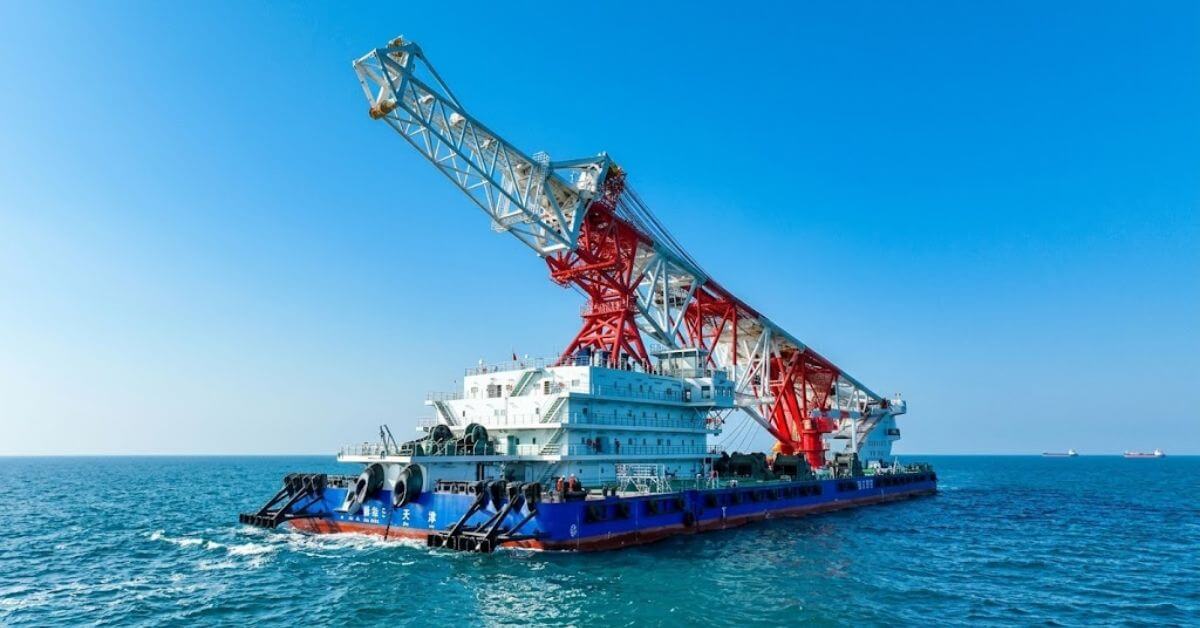
Massive marine pile-driver heads to Brazil for critical bridge foundations
The world's largest pile-driving vessel has departed China for Brazil, where it will anchor the foundations of the Salvador-Itaparica Bridge. This is engineering at a measurable scale, calibrated to build, not just to move. Such infrastructure demands integrated data ecosystems to validate safety and environmental impact. For deeper context on marine risks, see our analysis of wave-forecast gaps in "Data Gaps Threaten Vessels as Wave Conditions Go Unforecast." Understanding drives protection, from ocean floor to bridge deck.
Itajaí's $43M Waste Spend: Data Reveals Persistent Ocean Pollution
Itajaí has spent $43 million on waste management, yet the data shows persistent ocean pollution. That is a structural failure, not a funding gap. Dr. Laura Pioli Kremer and Arthur Rancatti laid it out plainly on local TV: urban runoff and coastal mismanagement are global issues, regardless of geography. The numbers demand we treat ocean literacy as infrastructure, not an afterthought. For deeper context on how monitoring gaps hide these problems, see our piece on integrating citizen science for ocean intelligence.

Brazil’s Climate Policy Gap: Fisheries and the Missing Low-Carbon Shift
Brazil's climate governance has a blind spot, and it sits on the water. Of 110 federal legal instruments reviewed, only 14 showed direct or indirect relevance to the fishing fleet, and none addressed core mitigation needs like emission inventories or decarbonization targets. Meanwhile, nearly 5.25 billion liters of diesel flowed to the sector between 1997 and 2025. That is not a neutral gap; it is a structural choice. For a nation central to climate diplomacy, fisheries remain a missing link in its low-carbon transition.
Beyond Dolphins: The Realities of a Career in Marine Biology
The public's image of marine biology often skips straight past the lab work, the data analysis, and the permit applications. It is a field defined by rigorous methodology, not casual swims. The misconception that professionals take time off to play with dolphins dismisses the scientific discipline at the core of this work. As this conversation notes, regional challenges, like those in Brazil, add further layers of complexity.
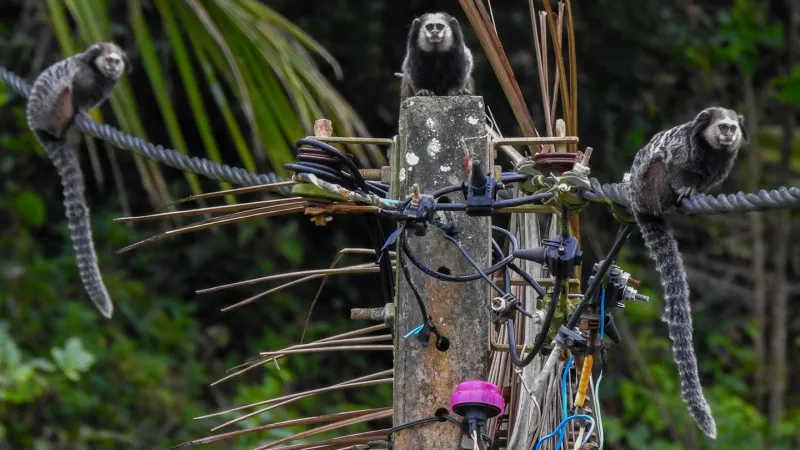
Drought's Reach: Wildlife Migration May Trigger Yellow Fever in Brazil
Drought can move more than dust. In Brazil, animals driven to find water carried the forest into the city, and may have triggered the country's first yellow fever outbreak in decades. That chain, from thirsty wildlife to urban transmission, is a stark measure of how climate stress reshapes disease risk. It is a reminder that ecological disruption rarely stays in the wild. For broader context on climate-driven change, see our piece on Atlantic Circulation Weakens: Global Climate Reshaping Predicted.

Unidentified Marine Specimen Washes Ashore in Maceió, Brazil
A single unidentified specimen has appeared on Cruz das Almas Beach in Maceió, Brazil, prompting curiosity from a local resident who found it and noted a faint fishy smell, likely from its time in the sand. While such strandings often involve known species, this one resists easy classification from the description alone. It is a reminder that our ocean intelligence still has gaps. For context on how we track marine life across vast distances, see our related coverage on integrated subsea cables enhancing data transmission.