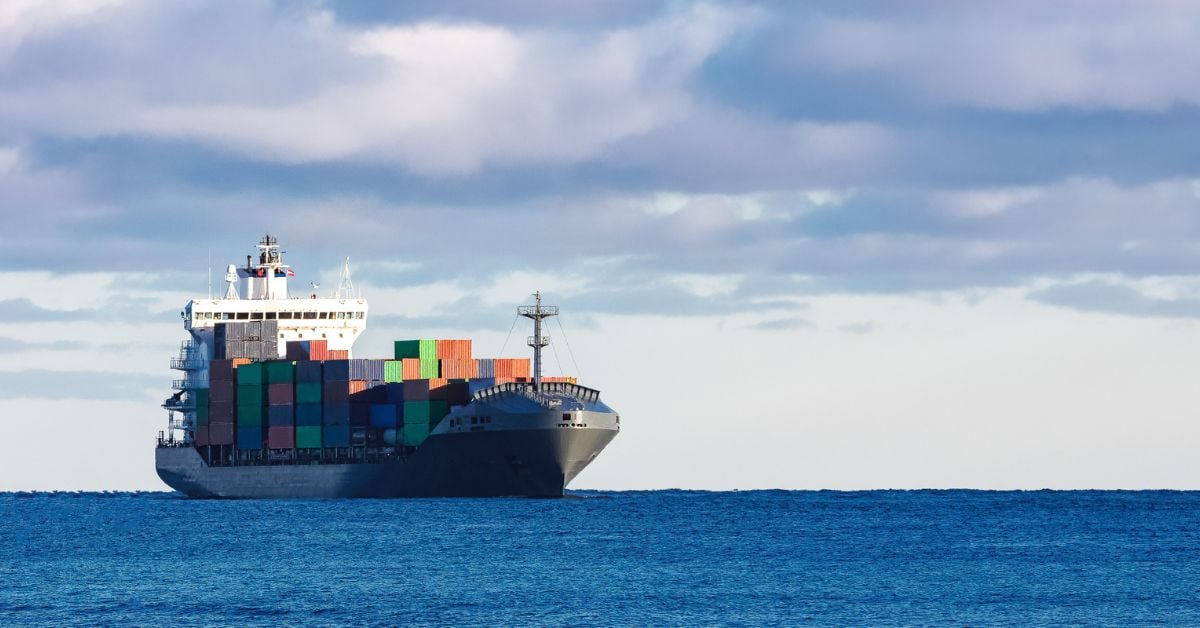
The targeting of a civilian container ship in the Black Sea is not an accident of war, it is a deliberate escalation that demands a calibrated, measurable international response. When a high-speed unmanned surface vessel rammed the CONTSHIP JET off Bulgaria's coast, sinking 421 containers of lithium-ion batteries, corrosive chemicals, and industrial parts, it crossed a line that should concern every nation with a stake in maritime commerce. For our readers, whether researchers tracking climate indicators via ocean intelligence, policymakers assessing geopolitical risk, or students studying the integrated data ecosystem of global trade, this incident signals that the Russia-Ukraine war has fundamentally altered the safety parameters of the Black Sea.
The attack, verified by international media and analyzed by risk assessment firm Ambrey as a variant of a Russian Murena-300S drone, left 18 crew members rescued but at least 12 seafarers feared dead from other October attacks. Bulgarian Prime Minister Rumen Radev pointed to Russia as the beneficiary, though Moscow denies involvement. Greece's Prime Minister Kyriakos Mitsotakis has called for a maritime truce, arguing that merchant vessels should sail freely even during conflict. This is a reasonable diplomatic first step, but it is not enough. The empirical evidence of drone warfare targeting commercial shipping, combined with the fact that Romania and Bulgaria are now urging the international community to provide additional security off their coasts, demonstrates that the spillover effects are no longer theoretical. Compare this to the ongoing India greenlights ₹40,000 crore naval warship project to strengthen maritime defence, a clear signal that navies are already recalibrating for a world where drone swarms threaten unarmed vessels. Meanwhile, the Black Sea drone strike sinks cargo ship, Bulgarian Navy rescues 18 crew underscores the immediate human cost, with the Bulgarian Navy performing a rescue that could have been a recovery mission.
The practical consequence for our audience is this: every container ship transiting the Black Sea now carries an uninsurable risk premium. Shipping and insurance costs are rising, as Mitsotakis noted, and these costs propagate through global supply chains. The fact that no pollution has been found in Bulgaria's Exclusive Economic Zone is a temporary relief, not a permanent guarantee, lithium-ion batteries and corrosive chemicals do not remain inert indefinitely. The question that remains open is whether the international community will treat this as a discrete incident or as a structural shift requiring new maritime security protocols. The grain shipping resumes from Russian Black Sea ports for first time since July shows that commercial traffic is attempting to normalize even as attacks continue. That contradiction, ships moving grain while drone boats sink container vessels, is the most dangerous detail to watch. It suggests that the current security framework is failing to distinguish between legitimate commerce and military targets, and until that distinction is enforced by empirical, peer-reviewed threat assessments, the Black Sea will remain a calibrated risk for every crew and cargo that crosses it.