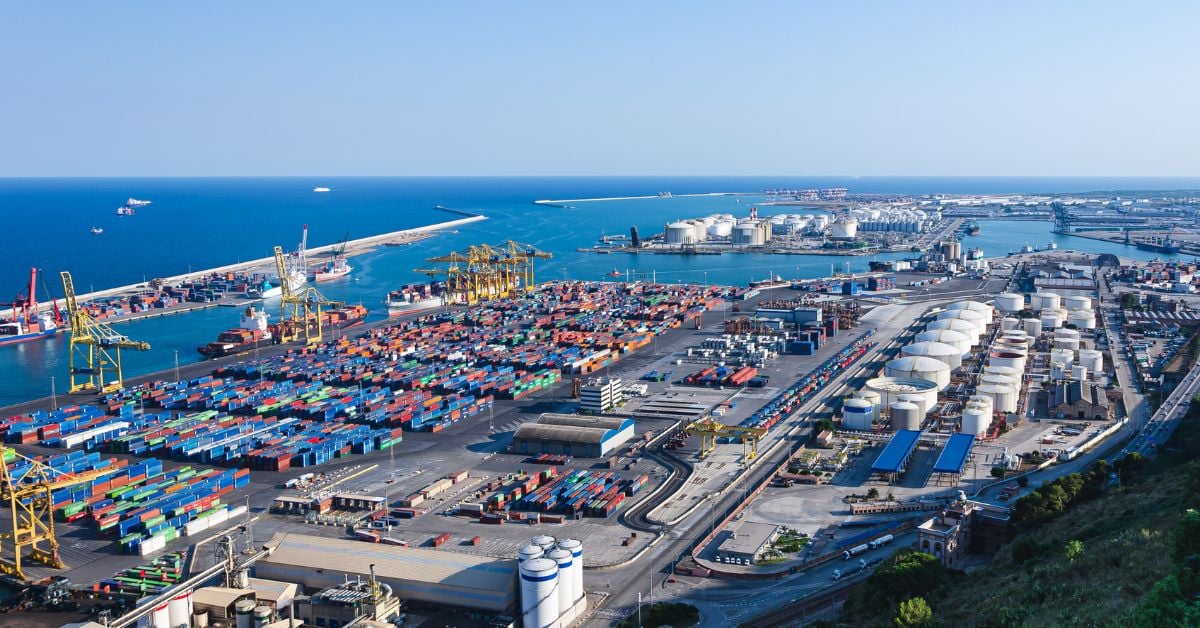
Trade policy and ocean governance rarely travel in the same vessel, but the U.S. Federal Maritime Commission's proposed $200,000 fee on Spanish cargo ships forces them into the same lane. This is not a routine tariff dispute, it is a signal that maritime shipping is becoming a frontline instrument of geopolitical leverage, and the ripples will reach far beyond olive oil and ceramics.
The measure targets Spain's denial of port access to three U.S.-flagged vessels carrying dual-use goods related to the Israeli campaign in Gaza. Spain acted on its reading of national and EU law regarding defense commodities; the U.S. responded by creating what the Commission calls an "unfavourable shipping environment." Whatever your view of the underlying dispute, the practical takeaway for anyone tracking global trade flows is this: the integrated data ecosystem we rely on for maritime intelligence must now account for political risk at the dock level. A ship's flag, cargo manifest, and last port of call are no longer just logistics variables, they are geopolitical instruments. This echoes recent enforcement actions we have documented, such as the Panama Registry Enforces Sanctions by Removing Three Tankers Tied to Iranian Oil, where registry control itself becomes a policy lever. Meanwhile, the Forward-deployed destroyer marks first Spanish dry dock for maintenance reminds us that maritime cooperation, like the U.S. Navy using Spanish facilities, can coexist with sharp commercial friction, underscoring just how fragmented the shipping landscape has become.
For climate observers, the subtext is worth watching. Spain is a major exporter of extra virgin olive oil, a commodity whose production is increasingly sensitive to temperature shifts and drought patterns, both validated climate indicators. A fee that selectively raises the cost of Spanish imports does not touch carbon directly, but it reshapes trade routes, alters market incentives, and could affect how agricultural goods travel across the Atlantic. The irony is thick: at a moment when integrated ocean intelligence and peer-reviewed data are pushing for harmonized shipping standards, national actions like this introduce friction that works against calibrated, measurable progress. The Spanish government has indicated it will defend its interests through EU channels, and the 60-day public comment period before the fee is imposed is a window for stakeholders, from shippers to policymakers to researchers, to assess the data behind these decisions.
The question that remains open is whether this is a one-off retaliation or the beginning of a pattern where maritime fees become a standard tool in trade diplomacy. Watch the Federal Maritime Commission's final rule, due after the comment period. The answer will tell us whether the seas are becoming more integrated, or more fragmented.