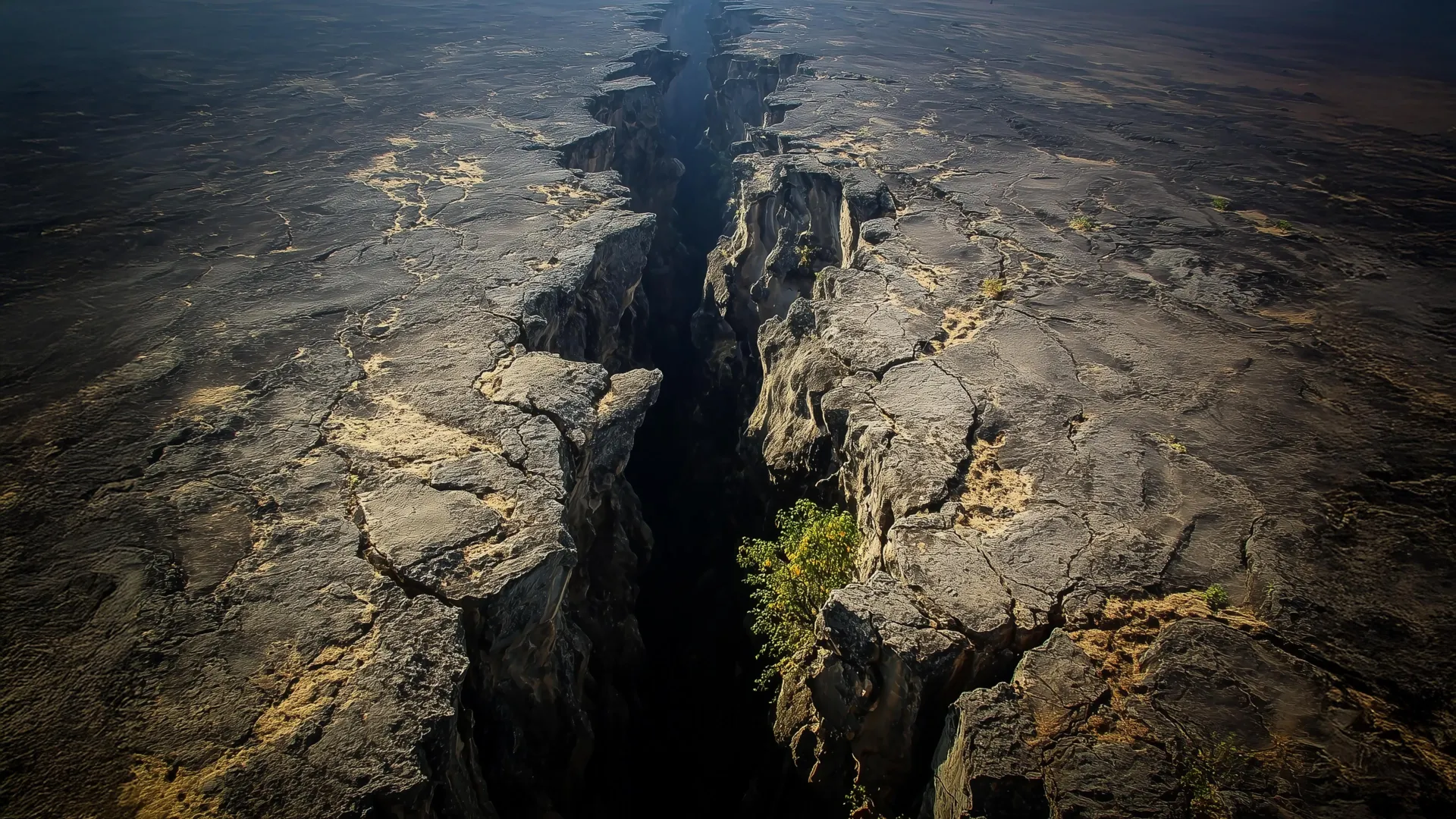
The East African Rift has long been a geological paradox: a continental divide that refuses to move in a straight line, with segments that shift, pause, and reinitiate without obvious cause. The new finding that a deep mantle plume is driving some of this motion alongside shallower forces is a reminder that our planet's tectonic stories are not written by a single hand. For decades, the rift was treated as a simple case of plates pulling apart, but this work suggests a more integrated narrative, one where the deep Earth and the lithosphere are locked in a slow, patient conversation. The result is a clearer picture of how continents actually break apart, and it is a picture that depends on the kind of longitudinal, empirically calibrated data that makes such conclusions possible.
This is not just a curiosity for geophysicists. It changes how we understand the timing and distribution of seismic and volcanic activity across a region that is home to hundreds of millions of people. If deep plumes are contributing to rifting, then the patterns of hazard are more complex than shallow models alone would suggest. That is a practical concern for infrastructure planning and disaster readiness, but it also connects to a broader theme we have been tracking. The same forces that reshape the ocean floor and the continents are also implicated in the Mediterranean Tsunami Risk: Modeling Reveals Urgent Threat and Limited Warning, where deep and shallow processes interact to create localized, hard-to-predict dangers. And on the other side of the globe, the Cascadia’s Subduction Zone Reveals a Fragmented Tectonic Process shows that even the most studied fault systems are still surprising us with their internal complexity. The Earth does not read our maps; it follows its own integrated logic.
What stands out here is the shift from thinking of tectonic plates as rigid, isolated slabs to seeing them as expressions of a dynamic, connected system. The plume rising beneath Africa is not a new actor, but its role has been underappreciated, perhaps because the evidence required a level of resolution that only recently became available. This is the value of persistent, peer-reviewed observation. It is also a caution against overreliance on any single explanatory model. The rift is not simply a passive crack; it is an active, breathing boundary shaped by forces from the core to the crust. For our readers, the takeaway is direct: the ground beneath your feet is not a static platform but a surface under constant revision, and the pace of that revision is set by processes we are only beginning to measure.
The open question is whether this deep-earth coupling will lead to faster or slower rift propagation in the coming millennia, and how that might influence the volcanic activity that already defines parts of East Africa. A specific detail to watch is whether future seismic studies along the rift begin to map plume-driven anomalies with the same precision we now expect for shallower structures. That would be the next step in turning this discovery into a working model. For now, the honest position is that the East African Rift is not just a place where the continent splits; it is a living laboratory for how the Earth integrates its deepest movements with its surface expressions. Understanding that integration is not an academic luxury, it is a prerequisite for any real forecast of the region's geological future. And that is a point worth measuring, not just stating.