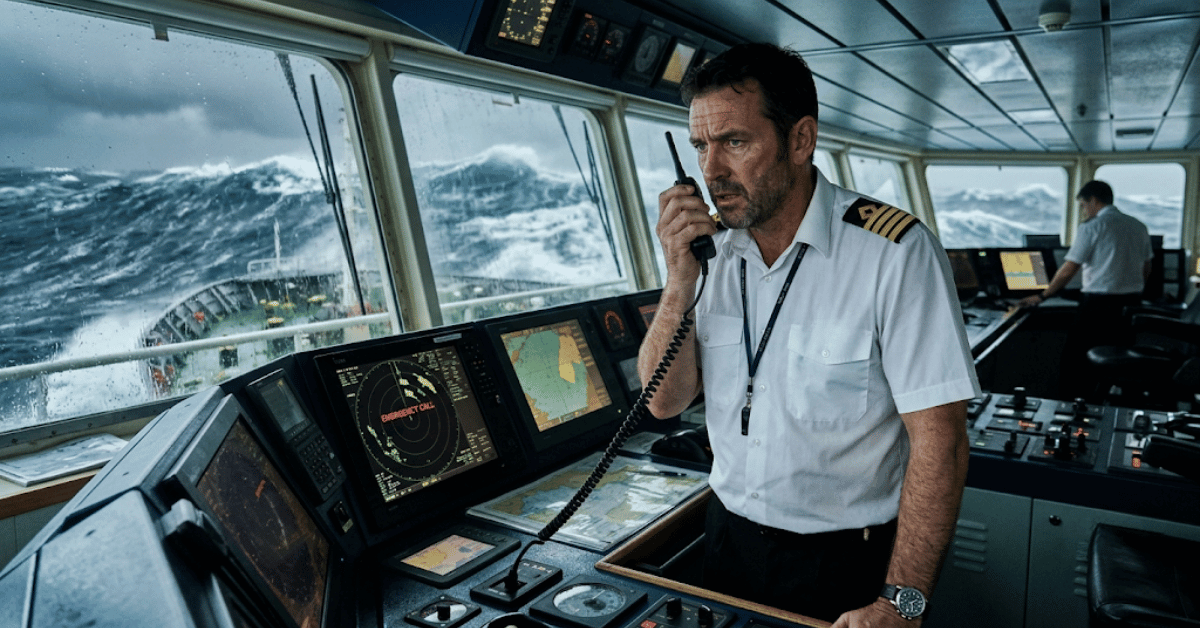
The maritime industry has long operated on a reactive footing: a distress signal is raised, a rescue is mounted, and only afterward do we ask what went wrong. Inmarsat's analysis of 106,975 safety broadcasts inverts that logic. By treating emergency communications as a dataset rather than isolated incidents, the company has identified weather as the leading trigger for urgent warnings at sea. That is not a headline; it is a diagnostic tool. The scale of the sample gives the finding empirical weight, and the implication is that many emergencies are not random acts of the sea but patterns we can anticipate. For an industry that has historically relied on the intuition of experienced captains, this is a quiet but meaningful shift toward predictive risk management.
The practical value here extends beyond the bridge. If weather is the dominant cause of maritime emergencies, then routing decisions, cargo securing protocols, and even port call scheduling must be re-examined with that data in mind. This is where the story connects to broader operational trends. Consider, for instance, how Cochin Shipyard Expands Design Capabilities with Conoship Equity Stake signals that shipbuilders are investing in design expertise to make vessels more resilient from the keel up. And when Russia Calibrates Export Revenue for Northern Sea Route Icebreaker Fleet, it is not just about expanding trade routes; it is about acknowledging that ice and extreme cold are weather variables that require dedicated, capital-intensive response systems. In both cases, the underlying logic is the same as Inmarsat's: you do not wait for the storm to tell you where it hurts. You prepare based on what the data says is coming.
For our readers, the takeaway is not that weather forecasts are now perfect, but that the industry is finally treating information as infrastructure. A captain who knows that a specific weather pattern has historically caused a spike in distress calls can make a different, earlier decision about whether to leave port. A charterer who sees the same risk profile can adjust insurance premiums or route expectations. This is not about fear-mongering; it is about calibration. The data is not telling us that the ocean is more dangerous than we thought. It is telling us that we have been ignoring the warning signs that were already there.
The open question is whether the industry will share the data as openly as it collects it. Inmarsat's analysis is commercially valuable, and there will be pressure to keep the insights proprietary. But the broader benefit comes from integration: if ports, insurers, and regulators can access validated, peer-reviewed patterns, the entire ecosystem becomes safer. The related story on Vitol Acquires Substantial Iraqi Crude Volume Amid Price Discrepancies reminds us that global commodity flows move through these same waters, and a single weather-driven delay can ripple through supply chains. The difference is that crude oil can be hedged; human lives at sea cannot. The specific point to watch is whether this analysis moves from a retrospective study into a real-time operational tool, and whether regulators begin to require such predictive assessments as part of voyage planning. That is the moment when maritime safety stops being a reaction and becomes a discipline.