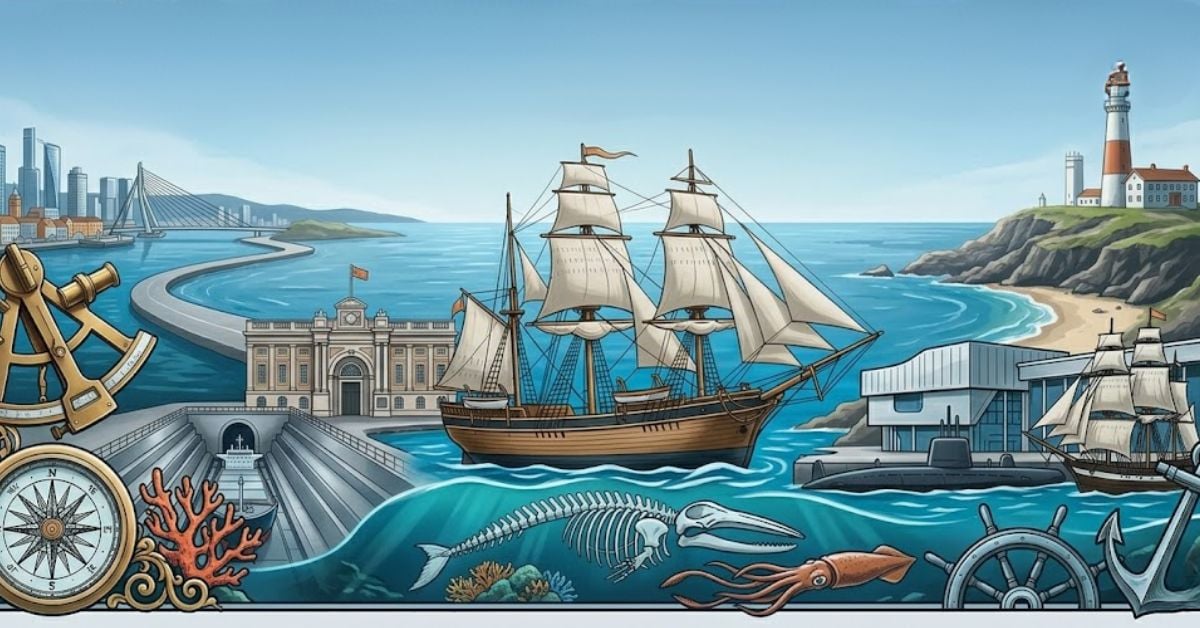
The article "Top 10 Oldest Maritime Museums You Must Visit" offers an intriguing glimpse into the rich tapestry of maritime heritage that spans centuries and continents. These institutions, from Rotterdam’s Living Port to San Diego’s Star of India, serve not just as repositories of artifacts, but as vibrant centers for education and collaboration. They embody the essence of ocean stewardship by fostering an appreciation of our seafaring past, which is critical in understanding our present and future relationship with the oceans. As we explore these maritime museums, it is essential to recognize their role in promoting scientific literacy and environmental awareness, akin to the insights shared in our own pieces like Islands of biodiversity created by remote Arctic kelp forests of the central Kitikmeot Sea and Giant squid discovery uncovers a hidden deep-sea world off Australia.
Visiting these maritime museums offers more than just a historical perspective; it allows individuals to engage with the stories of exploration, innovation, and the diverse cultures that have thrived along coastlines throughout history. Each museum presents a unique narrative that reflects the evolution of seafaring, highlighting the scientific advancements that have propelled human understanding of the oceans. Through curated exhibits, visitors are invited to consider the implications of maritime activities on marine ecosystems and coastal communities. This is particularly relevant in today’s context, where climate change and ocean health are pressing global challenges. By contextualizing these issues within the framework of our maritime legacy, museums encourage a sense of shared responsibility for the stewardship of our oceans.
The importance of these institutions extends beyond their historical artifacts; they are also platforms for fostering innovation and collaboration among researchers, policymakers, and the public. The integration of technology in exhibit design and educational programs can enhance the visitor experience, making complex scientific concepts more accessible. As institutions dedicated to the preservation of maritime culture, they also play a pivotal role in supporting ongoing research and exploration. For instance, the findings in our article on Female rats like a different kind of tickling than males highlight the necessity of interdisciplinary approaches to understanding complex biological and ecological interactions, a perspective that can be mirrored in maritime research.
As we look toward the future, the potential of maritime museums to contribute to ocean literacy and awareness cannot be overstated. These institutions are not just about preserving the past; they are catalysts for change, inspiring future generations to engage with and protect our oceans. The stories they tell and the knowledge they share can galvanize action and foster a deeper connection to the marine environment. In a time when ocean health is increasingly under threat, the question remains: How can maritime museums further leverage their unique position to inspire action and promote scientific inquiry among a broader audience? The answer may hold the key to advancing our collective efforts in ocean stewardship and sustainability.