marine biodiversity
68 stories filed under marine biodiversity on World Data Ocean. The newest of them: “Call for Field Researchers to Join Mumbai Coastal Biodiversity Survey”, “Underwater acoustics paired with artificial reefs offer a validated restoration pathway”, and “Rebuilding reefs with engineered structures to restore lost marine habitat complexity”. The Mumbai coast is a living laboratory, and the invitation to survey its biodiversity is exactly the kind of hands-on science that builds real understanding. A coral larva can't read a map, but it can hear a healthy reef. A Global Hub for Ocean Intelligence 4 World Data Ocean is a centralized digital platform where researchers, scientists, and ocean enthusiasts converge to… The list below is every marine biodiversity story on World Data Ocean, newest first.
Call for Field Researchers to Join Mumbai Coastal Biodiversity Survey
The Mumbai coast is a living laboratory, and the invitation to survey its biodiversity is exactly the kind of hands-on science that builds real understanding. Documenting species, sharing observations, and learning together across habitats, this is how field knowledge grows. For PhD students and researchers in marine biology, zoology, or fisheries, it's a chance to turn curiosity into calibrated data. The work is collaborative, empirical, and grounded in the kind of peer-to-peer exchange that strengthens any research community.

Underwater acoustics paired with artificial reefs offer a validated restoration pathway
A coral larva can't read a map, but it can hear a healthy reef. In Kāneʻohe Bay, researchers placed artificial structures with bacterial coatings near underwater speakers playing recordings of snapping shrimp and fish. The result: more coral settlement within 20 meters of the sound source. The evidence for acoustic attraction remains preliminary, yet the integration of engineered habitats, living materials, and ocean intelligence points toward a validated restoration pathway worth scaling. For deeper context on data-driven ocean careers, see *From analytics to ocean intelligence*.

Rebuilding reefs with engineered structures to restore lost marine habitat complexity
Rebuilding reefs with engineered structures is a response to a measurable crisis: coral habitats across the Western Atlantic are flattening, losing the structural complexity that drives biodiversity and ecosystem function. This is not about simple restoration, it is about deploying habitat support structures designed to instantaneously increase relief and promote species persistence across life stages. The approach is empirical and integrated. For deeper context on how such structures connect to broader infrastructure, see our coverage of Belgium's First Artificial Energy Island.
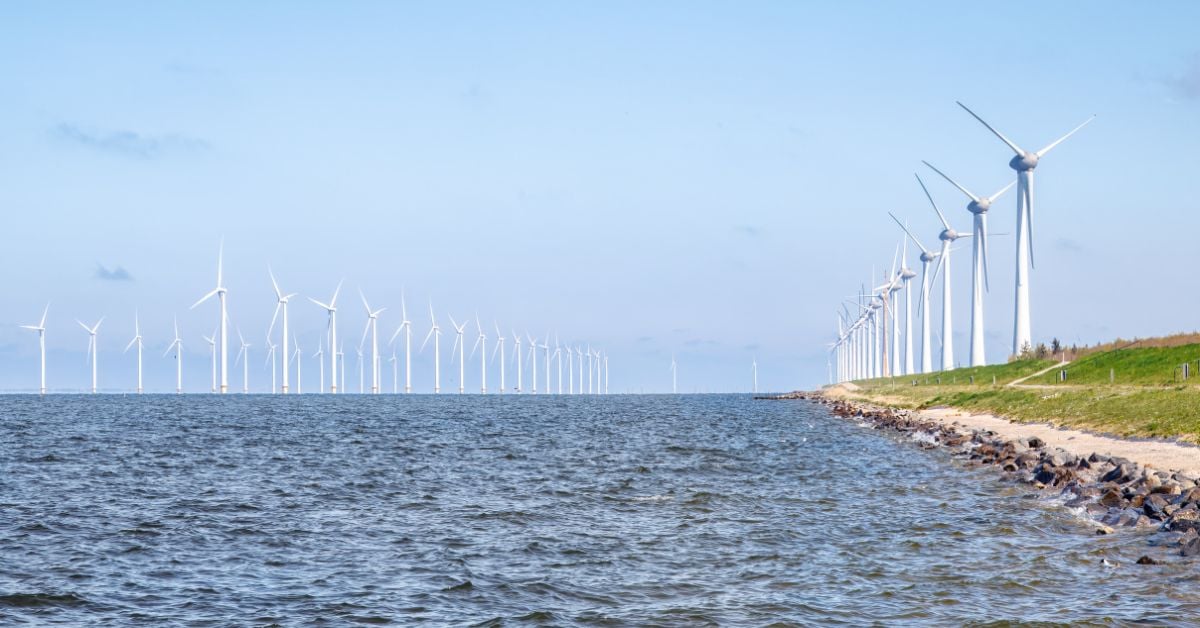
Belgium's First Artificial Energy Island Begins Calibrating Offshore Wind Integration
Belgium's first artificial energy island has begun calibrating its offshore wind integration, a measurable step toward meeting rising electricity demand with validated, real-time ocean intelligence. This integrated data ecosystem will turn climate indicators into actionable power. For deeper context on global offshore momentum, see our coverage of Ørsted consolidating ownership of the 172 MW Gunfleet Sands in UK waters. Understanding drives protection, and here, it also drives energy.
Coastal benthic ecosystems reveal the cumulative toll of climate and human pressures
Coastal benthic ecosystems are telling us something urgent. Rising temperatures, acidification, and deoxygenation now converge with eutrophication, pollution, and bottom trawling, reshaping biodiversity from shallow coasts to continental margins. These compounded stressors simplify assemblages, alter trophic pathways, and push ecosystems toward critical thresholds. Yet recent advances, environmental DNA metabarcoding, automated imaging, multi-stressor experiments, are sharpening our ability to detect and understand these changes at scale.
Biodiversity and human pressure reshape marine ecosystem science
Marine ecosystem ecology now stands at a crossroads where biodiversity data and human pressures converge. Understanding how marine life supports ecosystem functioning remains central, but the urgency of climate-driven transformations demands we anticipate change, not just document it. Resilience, the capacity to persist through disturbance, has become a scientific priority under intensifying cumulative pressures. Major challenges include ecological non-stationarity and expanding data volumes. Our related piece, "Validated data and selective gear drive sustainable crab harvesting," demonstrates how empirical approaches already guide sustainable practice.
Validated data gaps in Europe's marine policy demand integrated solutions
Europe's marine policies set ambitious goals but fell short, the 2020 target for Good Environmental Status was missed, revealing critical gaps in monitoring, data comparability, and climate integration. This review confirms that isolated measures cannot reverse the triple crisis of biodiversity loss, climate change, and pollution. Integrated, adaptive frameworks, supported by long-term data and stakeholder engagement, offer the only viable path forward. For deeper insights into related challenges, readers can explore our study on validating DNA metabarcoding for fragile Arctic gelatinous zooplankton.
Validating DNA metabarcoding for fragile Arctic gelatinous zooplankton
Two universal primer pairs, one targeting 18S rRNA, one mitochondrial COI, reveal complementary strengths and clear limitations for detecting fragile Arctic gelatinous zooplankton. The COI primers delivered high species-level resolution but missed key hydrozoans and ctenophores; 18S captured broader diversity but lacked taxonomic precision. These findings underscore the urgent need to expand public reference databases and explore new genetic markers. Understanding drives protection, and for these elusive organisms facing climate-driven shifts, validated tools are non-negotiable.
A validated open-access observatory for Africa's multi-ecosystem ocean intelligence
The Bazaruto Center for Scientific Studies (BCSS) Ocean Observatory is not another data portal; it is a managed, DOI-linked platform turning eight years of sustained effort into 22 million-plus measurements across six ecosystems. What stands out is the integration: weather, acoustics, biodiversity, and pollution under one interoperable framework, with QA/QC and FAIR compliance built in. This is the baseline Africa's marine science has needed.
Africa's first permanent ocean observatory closes a critical data gap for science and policy
Twenty-two million measurements. That is the scale of what the Bazaruto Center for Scientific Studies and Kisawa Sanctuary have built off Mozambique's coast. Africa's first permanent ocean observatory is not a small pilot project; it is a multi-ecosystem platform covering 6,850 square kilometers, generating high-frequency data across coral, seagrass, and open-ocean habitats. The numbers are impressive, but the real achievement is showing how a Resort-to-Research model can sustain serious science.
New genetic tools clarify Arctic ice rotifer taxonomy and ecological roles
Four novel genetic lineages of the rotifer genus *Synchaeta* have been identified from Arctic sea ice, clarifying a long-standing taxonomic blind spot. These microscopic grazers, collected from the Barents Sea and Central Arctic, were previously identifiable only to phylum level. Morphological clues tentatively link the new lineages to known ice-associated species. Integrative molecular and morphological work is essential here, reference databases remain incomplete. This precision matters for understanding sympagic food webs.
Calibrated rhythms of the deep: Tracking vertical migration in Monterey Canyon
The boundary zone of Monterey Canyon is not a passive shelf; it is an active intersection where the deep sea meets the continental slope. Our team's deployment of a benthic time-lapse system across seven missions between 2020 and 2022 captured 503 videos, revealing pre-sunrise abundance peaks that signal topographic blocking of downward migrators. This physical-biological coupling is measurable, yet currents explained only 10.9% of community variation. The findings underscore a need for calibrated, longitudinal observation.
Ocean Ecosystems Face Extreme Stress: A Call for Global Action.
The ocean's living systems are under measurable, intensifying stress. This is not a distant forecast, it is an empirical reality demanding coordinated global response. Our new analysis documents the accelerating pressures on marine ecosystems, from warming waters to acidification. We believe the evidence is clear: integrated, real-time ocean intelligence is essential for informed action. For deeper context on how these forces reshape coastlines, see our related study on storm surge costs in coastal China. Understanding drives protection.
Quantum-Enhanced AI Improves Marine Debris Detection for Ocean Health
A precision of 93.7% in detecting marine debris under real-world conditions is a measurable step forward. This hybrid quantum-inspired framework doesn't just improve recall, it proves that integrating angle encoding with YOLOv8 can cut through low visibility and underwater haze. We see this as empirical validation that quantum-enhanced feature transformations strengthen environmental monitoring. For deeper context on cross-boundary ocean governance, readers may consult our related piece, "Harmonizing Marine Governance: A Framework for the Greater Bay Area."
Ammonia Fuel's Nitrogen Impact: A New Challenge for Ocean Health
Ammonia fuel's reactive nitrogen footprint remains poorly characterized, even as maritime shipping races toward net-zero emissions by 2050. This review makes clear that emissions across the ammonia fuel value chain, from production leaks to combustion byproducts, could alter marine productivity, drive eutrophication, and harm biodiversity, with impacts varying sharply by region. It is a measured, empirical call for integrated lifecycle accounting. For deeper context on operational innovations, see our coverage of the world's first ship-to-ship ammonia bunkering milestone.
Crozet Basin: Protecting a Sub-Antarctic Ocean Sanctuary Through Scientific Discovery
The Crozet Basin's protected status marks a significant step for ocean stewardship, yet this study reveals how much remains unknown beneath the surface. With 755 faunal taxa and 75 macroalgal taxa cataloged, the region's biological wealth is clear, but the logistical hurdles of surveying such a vast MPA leave critical gaps. These aren't academic oversights; they're vulnerabilities. As climate pressures mount, incomplete baselines weaken our ability to respond.
Advancing Underwater Imaging: A New Filter for Clearer Ocean Insights
Clear water is a luxury underwater images rarely enjoy. Haze, wavelength-dependent absorption, and scattering routinely strip clarity from marine observation, yet most enhancement methods treat these as uniform noise rather than physical realities. The proposed RSADAF framework changes that calculus. By embedding Rayleigh scattering directly into a second-order diffusion model, the authors give the filter true wavelength awareness, allowing it to suppress degradation while preserving structural edges. The benchmark results, including a PSNR of 42.85 dB, speak for themselves. This is practical, interpretable ocean intelligence.

Data-Driven Ocean Biodiversity: A Path to Sustainable Stewardship.
Biodiversity data is the backbone of any meaningful effort to sustain ocean nature, yet it remains unevenly collected across the globe. Prioritizing that data is not a technical footnote; it is the foundation for measurable stewardship. We cannot manage what we cannot see. This piece examines how targeted collection efforts build the integrated data ecosystem needed for lasting impact. For broader context on how ocean data flows connect regions, our related coverage on integrated subsea cables offers a useful perspective.
Facilitating Ocean Data Sharing for the New BBNJ Agreement
The BBNJ Agreement's Clearing-House Mechanism cannot succeed if its data systems remain fragmented. Effective implementation depends on how MGR-related information moves across jurisdictions, yet interoperability and provenance tracking remain unresolved. The paper rightly pushes for standardized strategies aligned with the Nagoya Protocol, avoiding duplication while ensuring responsible reuse. This is practical, necessary groundwork. For broader context on how data gaps are being addressed elsewhere, our related piece, "Bridging Data Gaps: Integrating Citizen Science for Ocean Intelligence," offers a useful parallel.
DNA Analysis Revolutionizes Cephalopod Identification from Beaks
A single cephalopod beak recovered from a predator's stomach can now yield a species-level identification through DNA analysis, a method that moves beyond the limits of worn or digested morphology. This study provides the first detailed protocol for extracting and sequencing the COI gene from beaks, achieving a 50.5% assignment success across samples. It is a practical step toward recovering ecological data from previously unusable specimens, and it strengthens our capacity to monitor shifting food webs in a changing ocean.
Mapping Marine Connections: Understanding Biodiversity’s Role in Ocean Health
Marine species do not drift idly in the current; they are the ocean's connective tissue, moving energy and nutrients across entire basins. Marine Functional Connectivity science is making that invisible web visible, yet our knowledge remains fragmented. We can now track migrations through genetics and telemetry, but major gaps persist across depths and regions. This is not an abstract research problem. It is a governance failure.
Red Sea Macroalgae: Essential Ecosystem Builders and Food Web Support
Red Sea macroalgae are far more than background structure; they are the benthic engines driving primary production and food web stability across this extreme basin. Their role as ecosystem engineers, providing shelter and nursery grounds, is as critical as their trophic contributions through herbivory and detrital pathways. What stands out is how these organisms thrive where high temperatures and salinity would challenge most marine life. This review rightly identifies a significant knowledge gap, particularly in long-term monitoring and physiological data.
Fisher Pathways: Understanding Circle Hook Adoption for Sea Turtle Protection
Circle hooks are proven to reduce sea turtle bycatch, yet their adoption across Eastern Pacific longline fleets remains uneven. This study of Ecuadorian and Costa Rican fisheries reveals a critical distinction: acceptance of a conservation technology does not equal support for it. Early experiences shaped outcomes, with market access and gear quality driving divergence. The findings carry weight for ocean security efforts, much like the work highlighted in our coverage of maritime interdictions. Understanding these social contingencies is essential for scaling conservation gains.
Balancing Tourism and Fisheries: Sustaining Coastal Ecosystems and Livelihoods
For decades, the assumption has been that tourism naturally relieves fishing pressure. Our scoping review of 317 articles, narrowed to 124 for deep analysis, reveals a more complex reality. The effect is not predetermined; it hinges on who enters the tourism sector, how livelihoods shift, and whether governance aligns these interests. When tourism drives external demand for high-value seafood, pressure on fisheries can intensify. Conversely, when fishers transition to tourism or conservation areas emerge, pressure can ease.