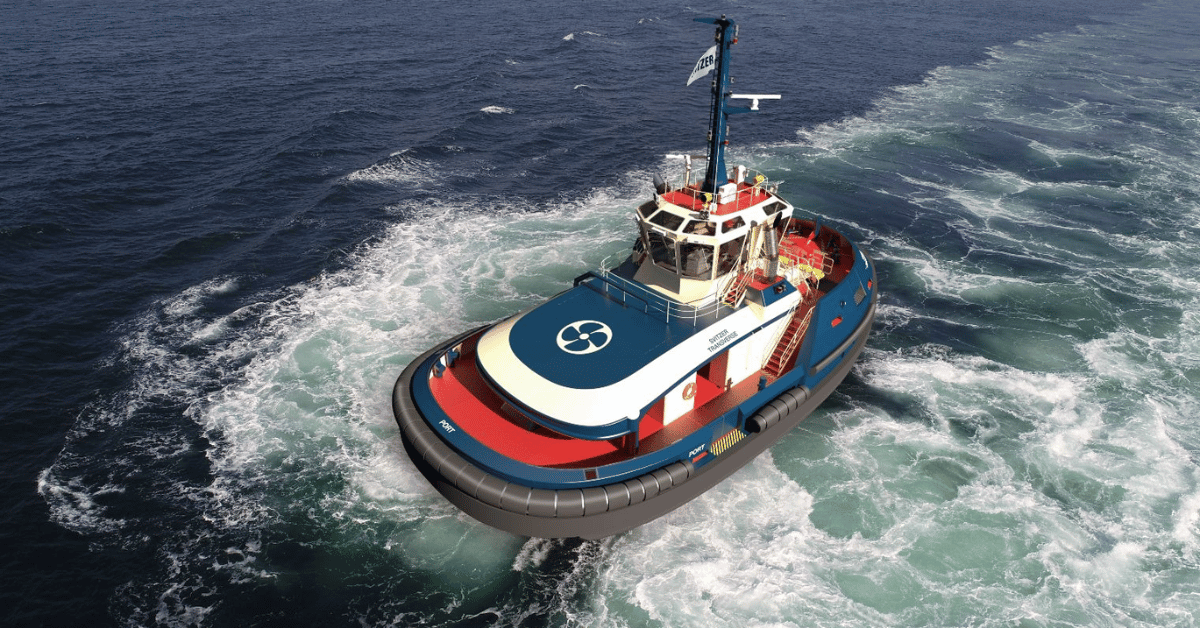
The electrification of harbor operations is moving from pilot projects to repeat orders, and AYK Energy's latest contract to power four fully electric Svitzer TRAnsverse tugs with 4,838kWh battery systems is the clearest signal yet that zero-emission workboats are commercially viable, not experimental. This is not a demonstration vessel or a single flagship; it is a series of tugs being built at Cochin Shipyard in India, with an option for four more, integrating into Kongsberg Maritime's full electrical and automation architecture. For operators watching the sector, the practical meaning is straightforward: the technology has crossed the threshold where major owners are willing to commit capital based on return on investment, not just environmental targets.
The deal builds on a documented track record, five previous Svitzer hybrid electric projects and the recent delivery of the world's most powerful electric escort tug, Svitzer Balder, which uses AYK's ABS-certified AriesA 6MWh system. What matters here is the chemistry choice. AYK founder Chris Kruger notes the company was first to secure class approval for lithium-iron-phosphate (LFP) batteries, replacing the more combustible nickel manganese cobalt chemistry in marine applications. That is a safety-driven decision with operational consequences: in the rugged conditions of the sea, a battery failure is not a roadside pullover. The fact that Svitzer and Kongsberg have standardized around LFP for this new series suggests the industry is converging on a chemistry that prioritizes thermal stability over marginal energy density gains. For fleet operators, this reduces a key technical risk in electrification planning.
There is also a geographic dimension worth noting. The tugs are being built at Cochin Shipyard, which recently expanded its design capabilities through a 23% equity stake in Conoship International, signaling India's intent to become a serious player in specialized vessel construction. This project places Indian shipbuilding at the center of a global green-marine supply chain, not at its periphery. The integration of AYK batteries with Kongsberg's K-Chief control systems and shore charging equipment means the entire propulsion ecosystem, not just the battery pack, is being validated at scale. Cochin Shipyard Expands Design Capabilities with Conoship Equity Stake and Next-Generation Missile Vessels Advance Indian Navy Capabilities both point to a broader trend: Indian yards are moving up the value chain across commercial and defense segments. This tug order reinforces that trajectory with a concrete, exportable product.
The open question is whether the option for four additional vessels will be exercised, and how quickly shore charging infrastructure at Indian ports can keep pace with vessel delivery. Battery systems are only as useful as the grid they plug into. AYK's guiding principle, listening to operators and keeping design simple, has produced a repeatable formula, but the next bottleneck will be port-side energy supply. Watch how Cochin and other Indian harbors build out their charging capacity; that will determine whether this becomes a template for the region or a standalone success. The technology has proven itself. Now the infrastructure has to catch up.