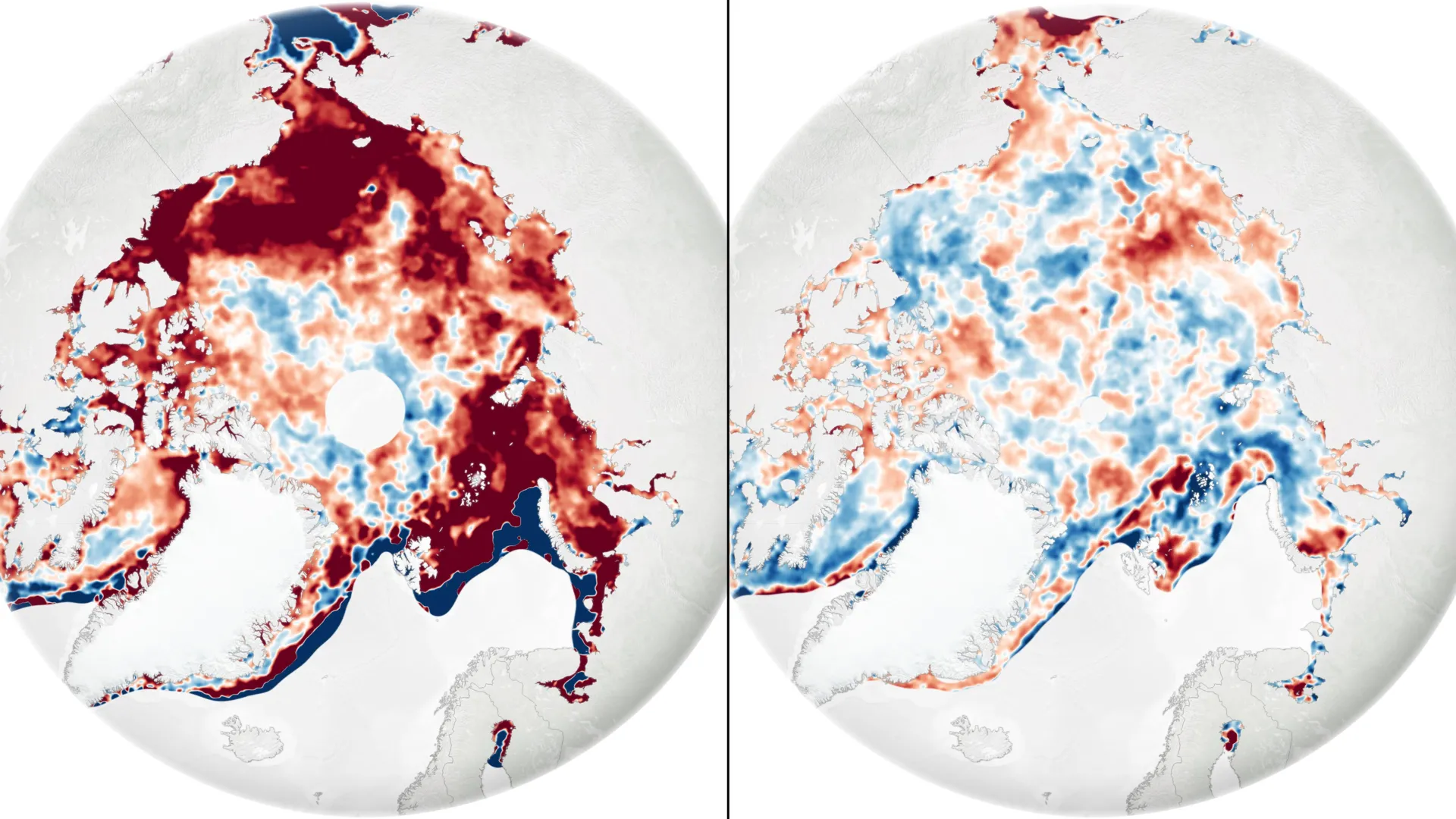
The recent stabilization of the Arctic sea ice melt season, after decades of accelerating decline, presents a nuanced and arguably unsettling development for ocean intelligence. While the headline – a roughly 40-day extension of the melt season compared to 1979 – underscores the profound impact of climate change, the leveling off around 2010 introduces a layer of complexity that demands careful scrutiny. This pause doesn't negate the long-term trend of Arctic ice loss; rather, it suggests a potential shift in the mechanisms driving that loss, and highlights the inherent unpredictability within complex climate systems. The interplay of factors like changing cloud cover and increasingly thin ice, as suggested by researchers, exemplifies the intricate feedback loops at play. Understanding these mechanisms is crucial, and further research into the Atlantic Circulation Weakens: Global Climate Reshaping Predicted Atlantic Circulation Weakens: Global Climate Reshaping Predicted offers vital context, as shifts in oceanic currents significantly influence Arctic temperatures and ice dynamics.
The apparent stabilization shouldn't be interpreted as a reprieve. It's more accurately seen as a temporary plateau, potentially masking underlying trends that could re-emerge with considerable force. The Arctic system is exhibiting a form of adaptive behavior, demonstrating the capacity to temporarily buffer the effects of warming, but this resilience is likely finite. The increasing prevalence of thinner ice, for instance, while contributing to the current pause, also renders the ice pack more vulnerable to future warming events. This vulnerability is further illuminated by our coverage of how Do Fish Experience Cold, or Simply Temperature Change?, as shifts in Arctic water temperatures impact marine ecosystems and, consequently, ice formation. The rapid expansion of Extreme Thermophile Amoeba Expands Limits of Complex Life's Heat Tolerance also demonstrates how even seemingly isolated biological adaptations can be affected by the broader climate shifts occurring in the Arctic.
The scientific community's current explanations—changing cloud cover and increasingly thin ice—offer valuable insights, but they are likely only partial. We need longitudinal, empirical data to fully calibrate our understanding of these complex interactions. The pause may represent a period of adjustment within the Arctic system, a recalibration of energy flows and ice formation processes. However, the continued warming trend, driven by anthropogenic greenhouse gas emissions, strongly suggests that this stabilization is not permanent. Climate models consistently project further Arctic warming, and it is reasonable to anticipate that this warming will eventually overwhelm the current buffering mechanisms, leading to another period of rapid ice loss—potentially even more dramatic than what we observed prior to 2010. The implications of such a scenario are far-reaching, impacting global sea levels, weather patterns, and ocean currents.
Ultimately, this stabilization serves as a stark reminder of the dynamic and often counterintuitive nature of climate change. It highlights the importance of rigorous, validated data and sophisticated modeling to accurately predict future trends. While a temporary pause in Arctic ice loss might seem, on the surface, less alarming than continuous decline, it shouldn't engender complacency. Rather, it underscores the urgency of continued monitoring and, crucially, accelerated efforts to mitigate climate change. The question now becomes: how much warming is already “baked in,” and what cascading effects will the eventual resumption of rapid ice loss trigger across the globe's integrated data ecosystem?