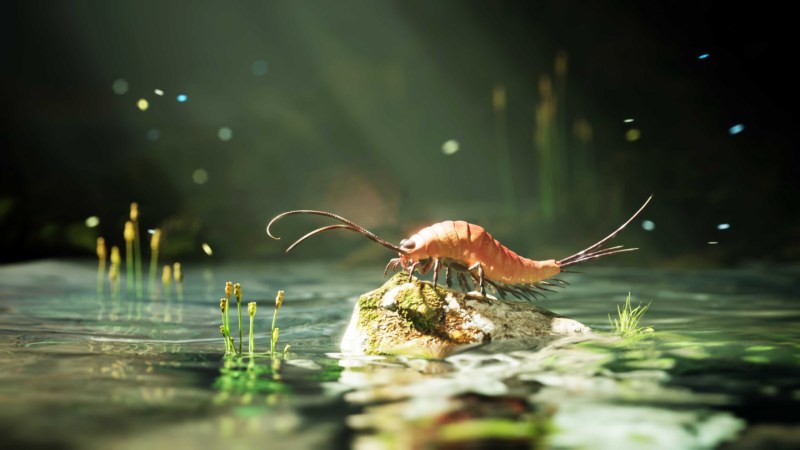
The fossil record has a notorious bias toward the dramatic and the complete, which makes the discovery of a many-legged oddball from deep time feel almost like a correction to the narrative. This ancient specimen does not simply add another entry to the catalog; it addresses a structural gap in our understanding of arthropod evolution. For researchers who have long inferred the transition from multi-segmented ancestors to the locked-in six-legged blueprint of modern insects, this find offers something rare: empirical grounding. It is a reminder that evolution does not proceed in tidy lines, but in branches, dead ends, and surviving anomalies that challenge our assumptions about what is "primitive" or "advanced." We would tell any reader that this is not just about counting legs; it is about recalibrating the timeline of when and how body plans became fixed.
The implications ripple outward from paleontology into the broader study of evolutionary biology, and they connect to work our publication has covered before. Consider how Gulf of Mexico Ecosystems Demonstrate Measurable Evolutionary Shifts shows that evolutionary change is not a distant phenomenon but an ongoing, observable process. That study, like this fossil, underscores that adaptation is a response to environmental pressures, whether they are ancient seas or modern climate shifts. Similarly, the story of Fossilized Poop Reveals Feathered Dinosaur Traits Linked to Survival demonstrates how a single trace fossil can alter our understanding of resilience and extinction. Both of those pieces, like this one, rely on the careful reading of fragmentary evidence to reconstruct a larger, coherent picture. The fossil record is not a collection of curiosities; it is a series of calibrated data points that, when integrated, reveal the mechanics of life's persistence.
Our honest take is that this discovery should temper the urge to tell a simple story about evolutionary progress. The six-legged form is not the inevitable result of a linear march toward efficiency; it is one outcome among many, shaped by constraints we are only beginning to map. For the reader who asks why this matters, the answer is practical: understanding the evolutionary origins of body architecture informs current biological research, from developmental genetics to the resilience of insect populations that underpin terrestrial ecosystems. It also sharpens our ability to predict how species might respond to rapid environmental change. The concrete point to watch is whether subsequent finds can link this specimen to the precise anatomical transitions that produced the insect head and thorax. If they do, we will not just have a curious fossil; we will have a validated sequence of evolutionary events that speaks directly to the fragility and adaptability of life on a changing planet.