legs
2 stories filed under legs on World Data Ocean. The newest of them: “A coastal specimen under 1cm prompts community identification and ecological inquiry” and “Ancient Insect Fossil Illuminates Evolution of Six-Legged Forms”. A beachcomber's find smaller than a centimeter has sparked a genuine community inquiry into coastal biodiversity. A many-legged oddball from deep time is helping close a persistent gap in the fossil record, offering a clearer view of how six-legged forms emerged. A Global Hub for Ocean Intelligence 4 World Data Ocean is a centralized digital platform where researchers, scientists, and ocean enthusiasts converge to… The list below is every legs story on World Data Ocean, newest first.

A coastal specimen under 1cm prompts community identification and ecological inquiry
A beachcomber's find smaller than a centimeter has sparked a genuine community inquiry into coastal biodiversity. Identification of this tiny specimen, legs included, is more than casual curiosity, it's a request for empirical data on its diet and its potential impact on a home aquarium's shrimp and sea cucumbers. This is the kind of validated, peer-driven observation that builds ocean intelligence. For deeper context on similar coastal discoveries, see our coverage of "Tidepool Anomalies in Puget Sound Inspire Citizen Science Inquiry."
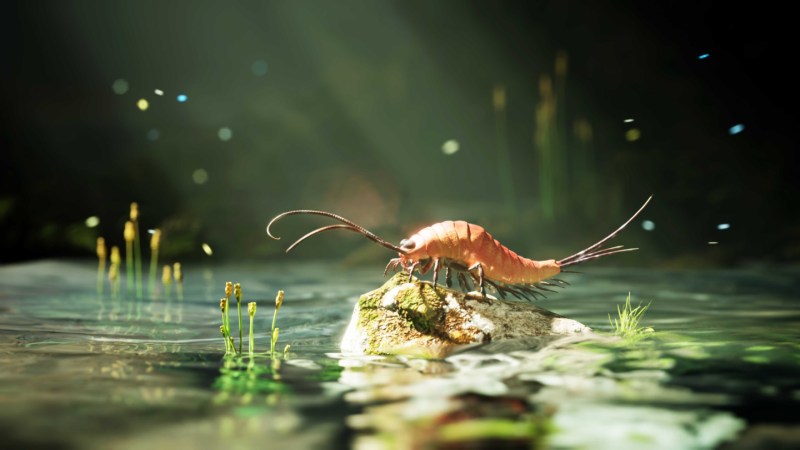
Ancient Insect Fossil Illuminates Evolution of Six-Legged Forms
A many-legged oddball from deep time is helping close a persistent gap in the fossil record, offering a clearer view of how six-legged forms emerged. The find is a reminder that evolution often experiments before it settles on a winning design. Understanding these ancient transitions sharpens our grasp of the planet's biological history. For more on how prehistoric traits shaped survival, see our related piece on fossilized feces revealing feathered dinosaur adaptations.