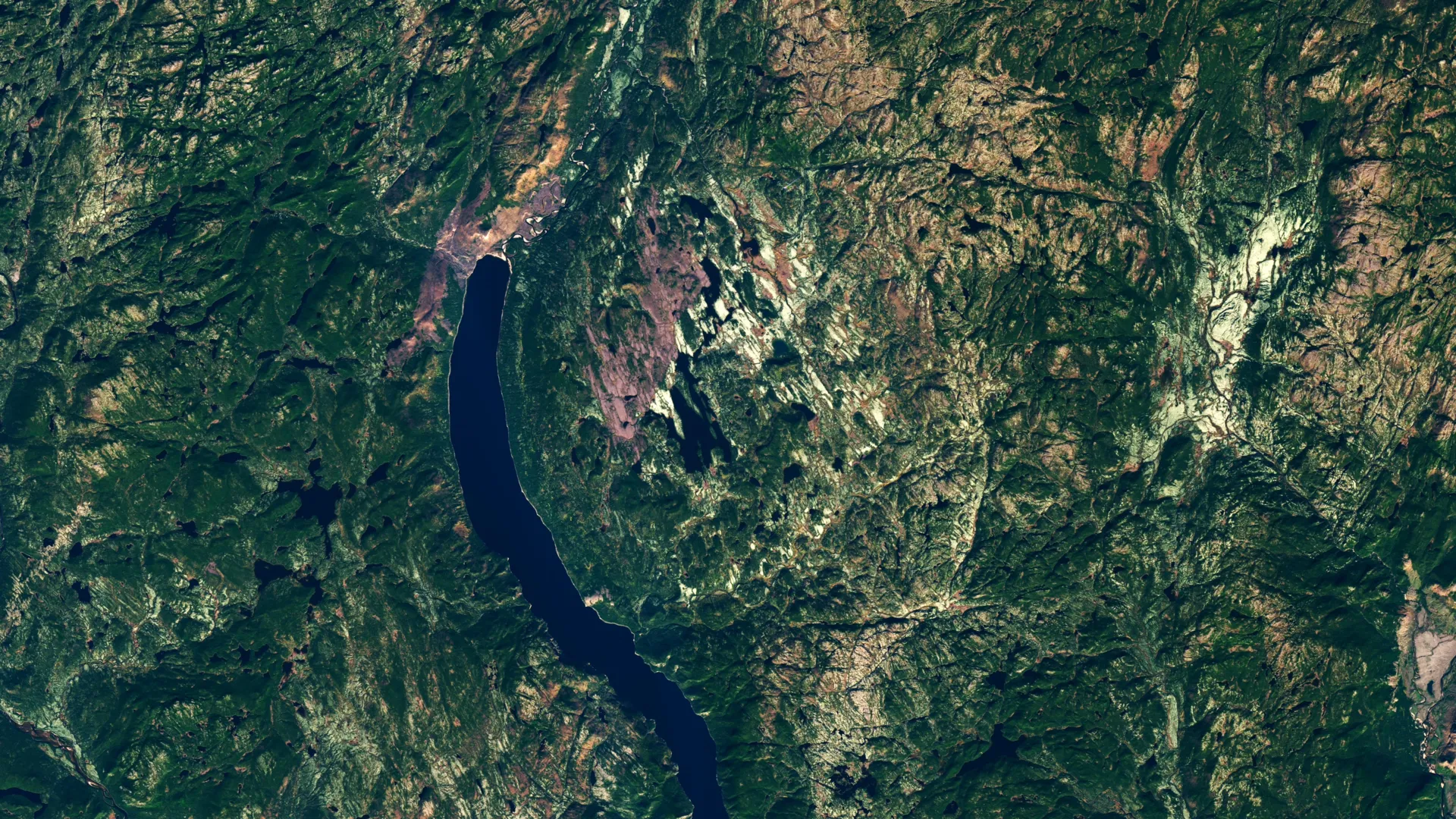
The serendipitous discovery of a 25-kilometer-wide impact crater in Quebec, unearthed by an amateur astronomer searching for a camping location, underscores a fundamental truth about our planet: Earth’s history is punctuated by events we are still uncovering. This finding, confirmed by the presence of shatter cones – distinctive rock formations created by intense shockwaves – provides a tangible reminder of the dynamic forces that have shaped our world. The timing, roughly 390 million years ago during the Devonian period, is particularly significant. It occurred before the proliferation of terrestrial plants and the evolution of amphibians, suggesting a potentially different impact on early ecosystems than a similar event occurring today. Understanding these ancient impact events is critical to calibrating our models of Earth's geological evolution and the long-term stability of our biosphere, particularly in light of ongoing concerns about near-Earth objects. This discovery builds upon our understanding of past geological events, much like the work being done to monitor volcanic activity, as detailed in Yellowstone's Eruption Sequence: Monitoring Volcanic Activity and Potential Impacts.
The significance extends beyond mere geological curiosity. Impact events, while rare, have demonstrably influenced Earth's climate and biological evolution. The Chicxulub impact, for instance, is widely believed to have contributed to the extinction of the dinosaurs. While the Quebec crater is considerably smaller, analyzing its formation and the subsequent environmental changes it induced can provide invaluable data points for refining our understanding of impact-related consequences. This highlights the broader field of astrogeology, where the study of planetary surfaces is intertwined with understanding Earth’s history. Furthermore, the increasing ability to identify such features from satellite imagery—a capability driven by technological innovation—demonstrates the expanding potential of remote sensing for scientific discovery. It’s a stark parallel to discussions about the potential for controlling the night sky with space-based technology, as explored in Big space mirrors could bring Earth on-demand light — and upend our night sky, showcasing how our relationship with the cosmos is evolving through technological advancements. The accidental nature of this discovery also emphasizes the importance of citizen science and the value of diverse perspectives in advancing scientific knowledge.
The presence of shatter cones is a crucial piece of empirical evidence, providing a direct link to the impact event. These unique rock formations are almost exclusively associated with high-pressure shockwaves, eliminating alternative explanations for their presence. Their identification confirms that the circular geological feature observed from satellite imagery is indeed an impact crater, rather than a result of tectonic activity or some other geological process. This meticulous validation process, a cornerstone of scientific rigor, is particularly important when dealing with historical events that occurred long before human observation. The ongoing analysis of the crater’s composition and the surrounding sedimentary layers will undoubtedly yield further insights into the impact's immediate and long-term effects on the local environment, potentially revealing subtle shifts in climate and ecosystem dynamics. Scientists are also increasingly leveraging historical records, including artistic depictions, to uncover clues about past environmental events, as seen in Historical art can hide scientific secrets, demonstrating the interdisciplinary nature of modern scientific investigation.
This discovery serves as a powerful reminder that Earth’s surface is a continuously evolving record of both internal and external forces. While our focus often centers on contemporary climate change and human impact, understanding the deep history of our planet—including the role of asteroid and comet impacts—is essential for putting present-day challenges into perspective. The integration of remote sensing data, geological fieldwork, and advanced analytical techniques is yielding unprecedented insights into Earth’s past. The question now is: how many more significant impact structures remain hidden beneath our feet, awaiting discovery, and what secrets do they hold about the resilience and fragility of life on Earth?