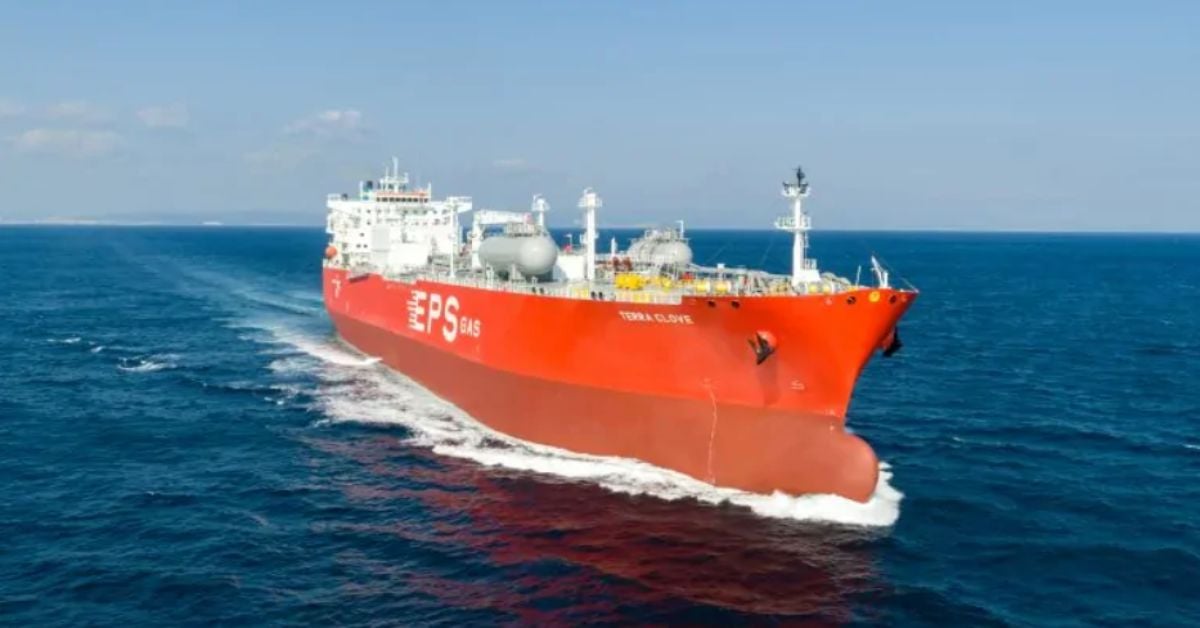
The naming of *Terra Clove* is a measurable step, not a breakthrough. That distinction matters because the maritime industry has a long history of celebrating prototypes while the systemic work of safety, training, and infrastructure lags behind. Eastern Pacific Shipping and its partners have delivered the world's first ammonia dual-fuel Very Large Ammonia Carrier, but the vessel's real value lies in what it will force the industry to confront: the gap between technical capability and operational reality. A recent study of enclosed space incidents found that Three decades of enclosed space incidents reveal systemic gaps between safety protocols and crew realities, a pattern that ammonia fuel, with its toxicity and handling requirements, will test severely.
The vessel itself is a calibrated engineering achievement. Powered by the first seagoing Everllence two-stroke ammonia engine, *Terra Clove* can carry 93,000 cubic metres of ammonia and burn the same cargo as fuel. When supplied with green ammonia, the lifecycle emissions reduction is significant. But the press release details what matters more: EPS personnel worked alongside engine builders to develop practical operating knowledge, and the partnership now includes a white paper on design, safety, and training for ammonia-fuelled VLACs. This is the kind of longitudinal, peer-reviewed work that turns a technological milestone into an integrated capability. It is also the kind of work that, as our analysis of plastic pollution shows, is essential when scaling any new material flow, Quantifying the global flow of plastics from production to impact demonstrates how quickly unmanaged systems create downstream consequences that far outpace initial solutions.
Our take is straightforward: *Terra Clove* is a useful platform for gathering empirical data on ammonia as a marine fuel, but the industry should resist the temptation to treat its delivery as proof that the fuel is ready for broad deployment. The vessel will bunker green ammonia from LOTTE Fine Chemical and conduct burning trials, translating its dual-fuel design into practical operating experience. That experience, measurable, documented, shared, is the only thing that will close the gap between the engine's theoretical efficiency and the safe, routine use of ammonia across a fleet. The strategic partnership between EPS and the Mærsk Mc-Kinney Møller Center for Zero Carbon Shipping, formalised at the naming ceremony, is the right institutional structure for that work.
The specific detail to watch is the crew training component. Ammonia is toxic and corrosive; a dual-fuel engine that works in a test cell may behave differently after months at sea with varying fuel quality and ambient conditions. The white paper due later this year, examining design, safety, and training for ammonia-fuelled VLACs, will be the first rigorous test of whether the industry can avoid repeating the safety failures documented in enclosed space incidents. If that paper yields actionable, peer-reviewed protocols, *Terra Clove* will have done its job. If it is filed away, the vessel becomes a costly demonstration of what could have been.