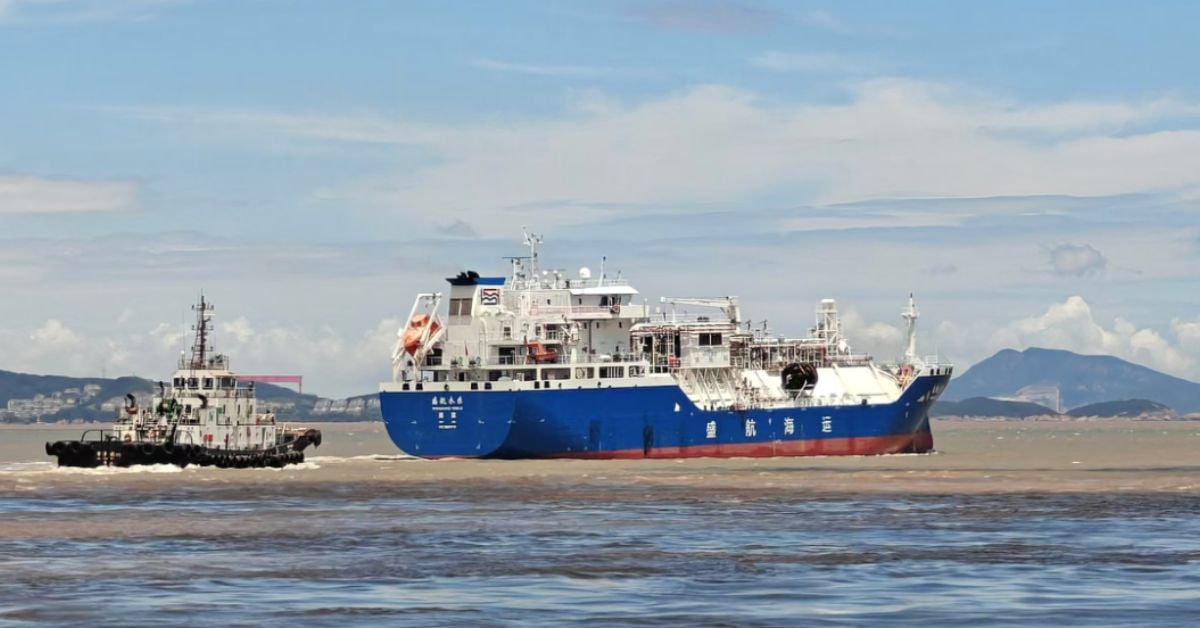
The conversion of the Shenghang Yongle into an ammonia bunkering vessel is a concrete step, not a symbolic one. The FKAB Marine Design L21 carrier, now equipped for ship-to-ship liquid ammonia fuel transfer, moves the maritime industry past the theoretical phase. We have spent years discussing ammonia's potential as a zero-carbon fuel; this vessel operationalizes that discussion. That distinction matters because the maritime sector does not need more whitepapers. It needs working infrastructure that can be measured, validated, and replicated.
The practical implications for fleet operators and port authorities are immediate. A vessel that can bunker ammonia safely is the missing link in the fuel supply chain. Without it, even the most advanced ammonia-capable engines are irrelevant. This launch signals that the logistics are catching up to the engineering. It also forces a conversation about safety protocols, crew training, and emergency response, areas where the industry's track record remains uneven. Consider the recent Cargo Ship Fire Prompts Evacuation Near Mykonos; Incident Under Investigation, which reminds us that operational risks persist across all vessel types, conventional or alternative-fueled. The difference here is that ammonia's toxicity demands a higher baseline of preparedness, not a different category of vigilance.
This is where our read on the news diverges from simple optimism. The Shenghang Yongle is a proof of concept, but it is not a silver bullet. The maritime industry has a history of adopting new fuels slowly, and for good reason: the cost of failure is catastrophic. The recent Bulk Carrier Freed After Prolonged Grounding Near Gladstone, Australia shows how routine operations can go wrong when conditions shift. Ammonia bunkering will face similar, if not more complex, variables. The question is not whether this vessel works, but whether the supporting ecosystem, from port storage to engine maintenance, can be scaled without compromising safety. That is an empirical question, and we should treat it as such.
Our take is straightforward: this is a validated step, not a finished journey. The takeaway a reader should quote is this: *The Shenghang Yongle proves ammonia bunkering is technically feasible; the next 24 months will determine if it is commercially and operationally viable.* We would tell any stakeholder watching this space to track the safety record of this vessel's first year of operation more than any promotional announcement. The geopolitical dimension also lingers. As discussions like Ukraine Supports India’s Initiative for Black Sea Shipping Routes demonstrate, maritime infrastructure is never purely technical. It is entangled with trade routes and alliances. The real test for ammonia will be whether it can integrate into this complex, real-time system without requiring a complete overhaul of existing supply chains. Watch the bunkering proceedures, the incident reports, and the port state inspections. That is where the true launch happens.