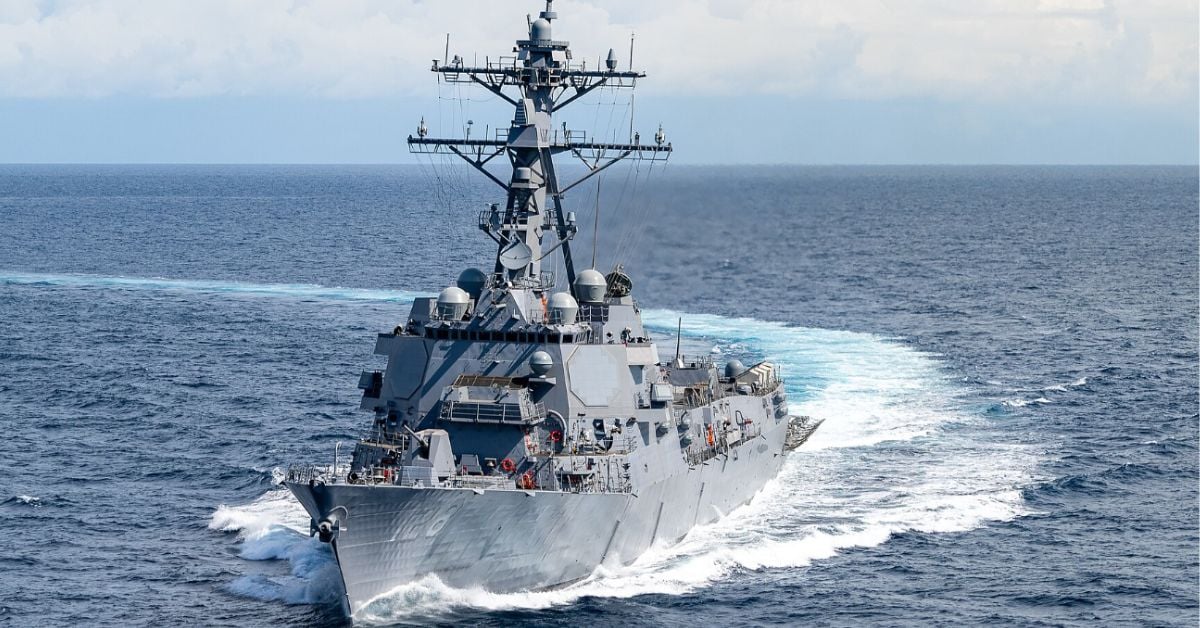
The USS Ted Stevens is not just another destroyer entering the fleet; it is a calibrated answer to a question the Navy has been asking for years about how to defend the high north. Commissioned in Whittier, Alaska, this Flight III Arleigh-Burke-class vessel integrates the AN/SPY-6(V)1 radar with the Aegis Baseline 10 combat system, creating a single platform capable of simultaneous anti-air, anti-submarine, and anti-surface warfare alongside ballistic missile defense. That integration is the story here, not the ceremony itself. For our readers, the practical takeaway is clear: the Navy is validating a sensor-to-shooter architecture designed for the Arctic's demanding electromagnetic and physical environment, and Alaska is the proving ground.
The choice of Whittier for the commissioning is strategic, not sentimental. As we have noted in our coverage of Validating DNA metabarcoding for fragile Arctic gelatinous zooplankton, the region's ecological complexity demands precise, real-time data collection. The same principle applies to naval operations. The Ted Stevens brings an upgraded cooling system and electrical power distribution network, upgrades that are unglamorous but essential for sustained operations in challenging environments. This is not about a single flashy weapon; it is about a vessel that can maintain sensor fidelity and combat systems readiness while coordinating with allies across the North Pacific. The ship's week-long transit from the shipyard to Norfolk, followed by its journey through the Panama Canal to Alaska, demonstrates a logistical confidence that matches its tactical ambitions.
We would be remiss not to connect this to the broader shift in maritime defense toward measured, layered responses. Our recent piece on Laser Deterrence Deploys in the Strait as Naval Defense Enters a New Measured Era highlighted how directed energy is changing the calculus of close-in defense. The Ted Stevens, with its Mk 41 vertical launching system, represents the kinetic complement to that approach: a vessel that can hold the line at range while newer technologies mature. The ship honors a senator who flew dangerous missions over the Himalayas in World War II, a fitting namesake for a platform designed to project power in another unforgiving theater. Ted Stevens understood Alaska's strategic position, and this commissioning reinforces that legacy with hardware, not just rhetoric.
The open question is how this integrated capability will be exercised in the coming months. The Navy has stated the destroyer strengthens ballistic missile defenses while operating with allies, but the real test will come in joint exercises above the Arctic Circle, where radar propagation and cooling systems face their true trial. Watch for the ship's first deployment to the Bering Sea and whether its Aegis Baseline 10 software can fuse data from distributed sensors, including allied assets, into a single operational picture. That is the measurable outcome that will tell us if the Ted Stevens is a symbol or a genuine leap in ocean intelligence. The commissioning was the easy part; proving the integration under real operational pressure is the work ahead.