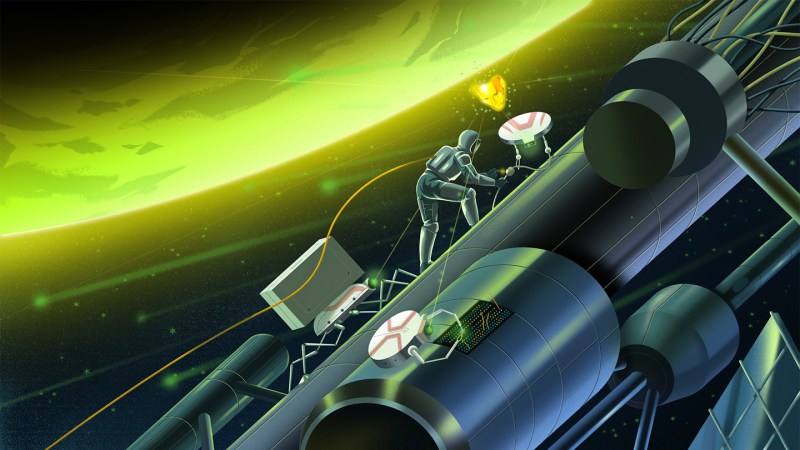
The premise that artificial intelligence can reliably pilot a spacecraft through the unknown is a convenient fiction. It works beautifully on screen because scripts demand a decisive resolution. In reality, the current state of AI navigation is less about cosmic autonomy and more about constrained problem-solving within tightly defined parameters. We are not at a point where a machine can be trusted to make a judgment call in a crisis that a human pilot would find straightforward. This is not a failure of engineering; it is a fundamental characteristic of the technology we have built.
The conversation around AI in space often drifts toward a binary: either the machine is fully in control or it is not. That framing misses the practical middle ground where most of our work actually happens. Consider the recent push by the US Navy to integrate autonomous systems into maritime operations. That effort is not about removing humans from the loop; it is about augmenting their awareness with validated, real-time data. Similarly, the international pressure to keep the Strait of Hormuz open for shipping lanes is a logistical and diplomatic challenge that requires human judgment at every turn. In both cases, the data is essential, but the decision-making authority remains firmly with people. Space navigation should be no different. The question is not when AI will be ready to take over, but how we design systems that use AI to inform human decisions, not replace them.
What does this mean for you, the researcher, the policymaker, or the student following these developments? It means that when you see a headline about an AI navigating a probe or a drone, you should ask what happens when the model encounters a scenario it has never seen. The answer is often that it fails, sometimes gracefully, sometimes not. The recent experiment with the "Dragon Hatchling" model, which skips words in its reasoning to reduce computation, is an interesting look at efficiency, but it also highlights the fragility of these systems. A more efficient model is not necessarily a more reliable one. The takeaway here is that human oversight is not a stopgap for a perfect AI; it is the foundational requirement for any system that operates in an environment where failure has real consequences. You should not trust an AI to be your pilot; you should trust it to be a very well-informed advisor.
The concrete point to watch is the development of what we might call "explainable autonomy." As these systems are deployed in more critical roles, the demand for them to explain their reasoning in a way that a human can audit will grow. The Navy's integration center and the diplomatic efforts in the Gulf are early indicators of this trend. If an autonomous system makes a decision that a human would not have made, we need to know why. The next major step is not a more powerful algorithm, but a more transparent one. We will accept nothing less, because the cost of being wrong is too high.