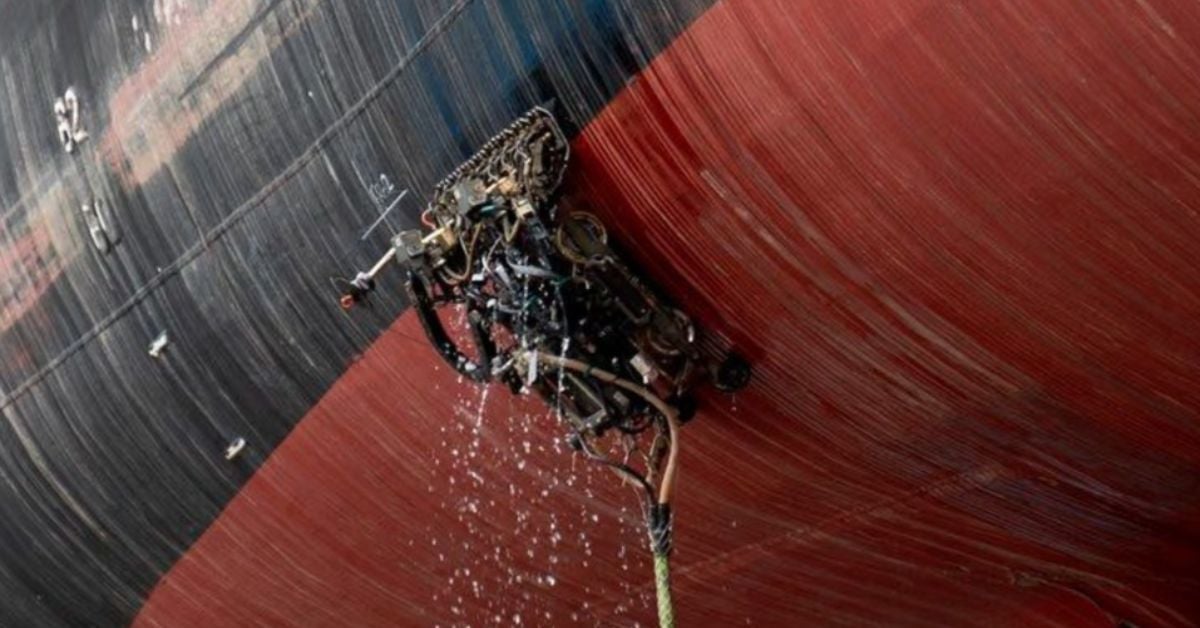
The U.S. Navy's $300 million commitment to Gecko Robotics signals a clear, measurable shift in naval maintenance, and we see this as a validation of what happens when empirical data replaces manual guesswork. For our readers, whether you are a policymaker assessing fleet readiness or a researcher tracking the integration of AI into physical infrastructure, this deal is not merely a procurement story; it is a case study in how validated, real-time data can transform an entire operational cycle. The Navy's goal of 80% readiness by 2027 is ambitious, but the Komodo system's claim of inspecting a hull fifty times faster than a human team, reducing maintenance from months to days, gives that target a concrete, measurable foundation. This development aligns with the kind of integrated data ecosystem we champion, where sensors and AI work together to produce longitudinal records of a vessel's condition, replacing the subjective scrape-and-look method with calibrated, peer-reviewed data logs. As we noted in our coverage of A validated US shipbuilder launches integrated Navy landing craft program, the maritime sector is increasingly relying on validated systems to ensure structural integrity; the Komodo robot pushes that logic from the construction phase directly into ongoing maintenance.
The practical implications for fleet operators and defense planners are immediate. By using an Electromagnetic Acoustic Transducer to scan through paint, rust, and up to 150 millimeters of metal plating, the robot eliminates the need to physically strip coatings to find corrosion, a process that traditionally consumes both time and labor. Every scan is recorded, building a permanent, searchable log for each ship. This is ocean intelligence applied to naval assets: a continuous, integrated data stream that allows engineers to track degradation over time rather than react to failures. The Navy has used drones and uncrewed vessels for inspections before, but Gecko's system reportedly surpasses those earlier tools in speed and accuracy. The company's claim of saving $8 million per vessel in repair costs is plausible when you consider that early detection of micro-cracks and hidden corrosion prevents small issues from becoming structural emergencies. This represents a shift from reactive maintenance to predictive, data-driven stewardship of the fleet. It also resonates with the broader theme of global collaboration we see in stories like South Korean training ship arrives in Pensacola for multinational ocean stewardship mission, where shared maritime operations demand consistent, reliable inspection standards across allied navies.
A critical detail to watch is the current limitation: the Komodo system operates only when a ship is in dry dock. That constraint is significant, because dry-dock access is a bottleneck for any navy. Gecko is developing a new robot, Axoloti, designed to operate below the waterline, which would enable full inspections without dry docking. If that system proves effective, the maintenance cycle could shrink even further, and the Navy could achieve its readiness targets without the logistical strain of rotating vessels through limited dock space. However, the technology must prove its reliability in the dynamic, corrosive environment of open water. The same empirical rigor that makes the Komodo system compelling must now be applied to its underwater successor. For our audience, the open question is whether the Navy will release the longitudinal inspection data from these robots in a form that researchers and allied partners can use to refine predictive models, or whether the data remains siloed within a single contract. The answer will determine whether this is a one-off efficiency gain or the foundation of a new, integrated standard for ocean asset management.