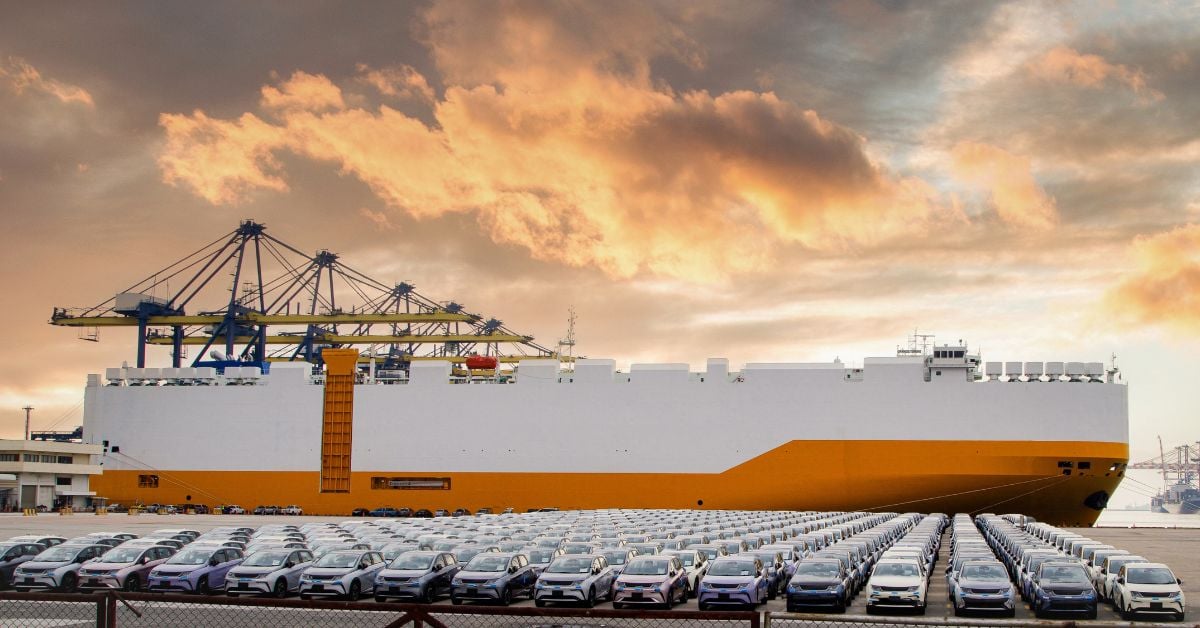
The shift from legacy terminal operating systems to AI-driven logistics is not a story about software upgrades. It is a story about whether global supply chains can absorb the pressure we are placing on them. The article's focus on berth planning and gate queues points to a deeper truth: the bottleneck was never just physical. It was informational. Legacy TOS platforms were built for a slower era, one where schedules had slack and data moved at the speed of paper. That era is over. The question now is whether ports can recalibrate fast enough to keep pace with climate-driven disruptions and the compounding demands of global trade.
This is where the connection to adjacent work becomes instructive. Consider how AI Reasoning Explored: Novel Model Omits Words to Reduce Computation challenges the assumption that more computation always means better outcomes. The same logic applies to port operations. An AI-driven TOS does not simply do the old job faster; it redefines what the job is. By automating berth allocation and sequencing, it removes the human latency that once hid inside every idle crane and waiting truck. This is not about replacing judgment but about freeing it from repetitive decisions. Similarly, Optimizing Container Terminal Efficiency Through Integrated Crane and Truck Coordination reinforces that coordination, not capacity, is the real constraint. The article's findings align with that view: the gains come from integration, not from adding more equipment.
Our take is straightforward. We see this as a necessary evolution, not a trend. The practical implication for port operators, shippers, and logistics managers is that the competitive advantage will shift to those who can adopt these systems early and integrate them with broader data ecosystems. Waiting for proof at scale is a luxury the current climate will not afford. The ports that thrive will be the ones that treat their data as a first-class asset, not a byproduct. That means investing in AI that can learn from real-time operations and feed back into planning, not just dashboards that display the problem.
One specific consequence to watch is the impact on gate queues. If AI-driven scheduling can cut turnaround times by even a fraction, the ripple effects on fuel consumption, emissions, and driver hours are measurable. That is not a soft benefit. It is a hard, auditable outcome. We would tell a reader asking whether this matters to them: if your cargo moves through a major port, you are already paying for the inefficiency. The only question is whether you are paying for the old system or investing in the new one. The concrete point to track is whether ports begin publishing AI-optimized berth schedules as standard practice. If they do, we will know the transformation has moved from pilot to standard. If they do not, the bottleneck simply moves further up the chain.